
Small Group Tutorials

Here to help students catch up, keep up, and move ahead. Book a consultation here.

Direct WhatsApp

Primary 3 Science Tuition Center Sengkang

Primary 3 Science Tuition Center Sengkang: Nurturing Curiosity and Building a Strong Foundation

Primary 3 is where Science becomes a formal school subject.

For many children, this is exciting. They are naturally curious about animals, plants, magnets, materials and the world around them. They enjoy asking questions, examining objects and discovering why things happen.

Yet learning Science in school requires more than curiosity.

A child must learn how to observe carefully, compare fairly, classify accurately, identify evidence, explain relationships and communicate an answer using the correct scientific ideas. An everyday explanation may sound sensible in conversation but still be incomplete in a Science worksheet.

This is why choosing a suitable Primary 3 Science tuition center in Sengkang can make a meaningful difference.

Good tuition should not simply give a child more worksheets. It should help the child build a clear and dependable way of thinking.

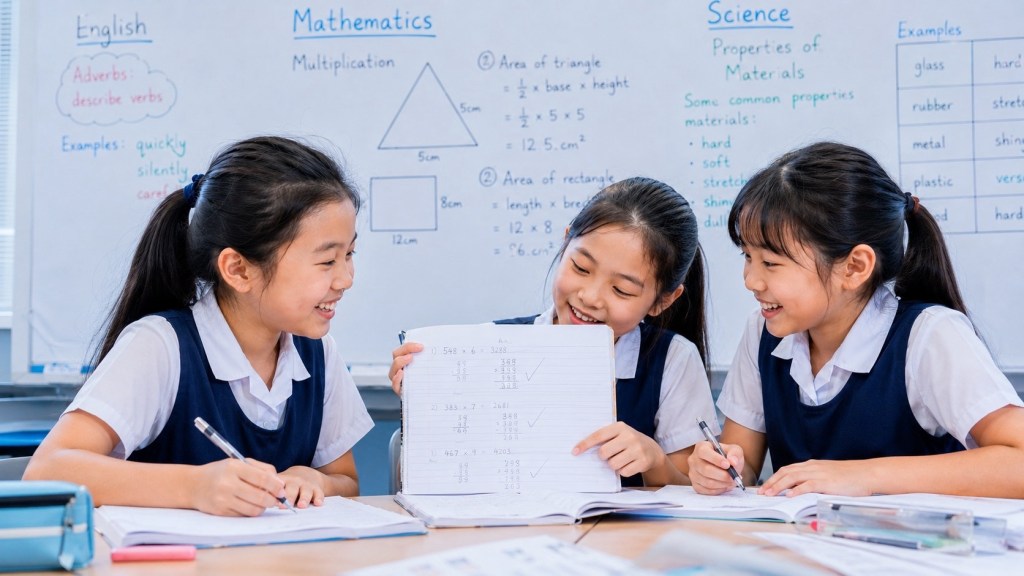
At eduKate Sengkang, Primary 3 Science tuition is conducted in small groups of up to three students. This allows the tutor to observe how each child thinks, identify the earliest point of confusion and adjust the lesson before small misunderstandings become larger learning gaps.

For a child who is struggling, the tutor creates a clearer route back into the subject.

For a child who is progressing comfortably, the tutor opens a wider route towards deeper understanding, better reasoning and more confident application.

The destination is not merely a better result for the next school assessment. It is a strong Science foundation that can continue supporting the child through Primary 4, Primary 5, Primary 6 and eventually the PSLE.


Primary 3 Is the Beginning of Scientific Thinking

Before Primary 3, children already encounter Science in daily life.

They notice that some objects float while others sink. They watch seeds grow into plants. They see shadows move, magnets attract certain materials and animals behave differently in different environments.

Primary 3 Science gives structure to these observations.

Under Singapore’s current Primary Science curriculum, the syllabus is organised around the broad themes of Diversity, Cycles, Systems, Interactions and Energy. It develops not only scientific knowledge, but also scientific practices, values, ethics and attitudes. The curriculum aims to develop students as inquirers who can connect Science with life and society. (Ministry of Education)

At Primary 3, students begin working with foundational topics such as:

  • living and non-living things;
  • the diversity of plants and animals;
  • the diversity and properties of materials;
  • life cycles of plants and animals; and
  • interactions involving magnets.

The learning is accompanied by important skills such as observing, comparing, classifying, inferring, predicting, analysing, evaluating and communicating.

These may appear to be simple topics. However, the thinking beneath them is important.

When a child classifies an animal, the task is not merely to remember the name of a group. The child must notice relevant characteristics, separate useful information from distracting information and explain the basis of the classification.

When a child studies materials, it is not enough to say that something is “strong” or “soft”. The child must understand which property is being tested, how that property affects the use of the material and why one material may be more suitable than another.

When a child studies life cycles, the child must recognise sequences, compare stages and explain changes accurately.

Primary 3 Science therefore begins teaching children how to organise reality.

That is the real foundation being built.


Curiosity Is the Beginning, Not the Entire Journey

A curious child has a valuable advantage.

Curiosity creates the desire to look closer, ask questions and discover relationships. It gives Science its energy.

However, curiosity must gradually be converted into disciplined thinking.

A child may say:

“The plant grew because it was healthy.”

That sounds reasonable, but it may not explain the specific condition being tested.

A more scientific response might identify that the plant received sufficient water, light or another necessary condition, depending on the experiment.

Similarly, a child may say:

“The magnet is strong, so it attracted the object.”

The answer may still be incomplete if the question requires the child to identify the material of the object, compare distances or explain the result using evidence from an investigation.

Primary 3 students are learning that Science answers require precision.

They must learn to ask:

  • What exactly did I observe?
  • Which information is relevant?
  • What changed?
  • What stayed the same?
  • What evidence supports my answer?
  • Which scientific concept explains the result?
  • Have I answered what the question asked?

A well-taught Science lesson preserves curiosity while adding structure.

The child should not become afraid to explore. Instead, the child learns how to explore more intelligently.


Why Some Primary 3 Students Find Science Difficult

Science can feel easy during classroom discussions because the topics are familiar. Difficulties often become visible only when the child must complete an assessment independently.

The child may understand the general idea but struggle to express it accurately.

Common difficulties include:

1. Weak Scientific Vocabulary

Words such as propertymaterialorganismcharacteristicstageattractrepelobserve and conclude have precise meanings.

When these meanings are uncertain, the child may misunderstand both the question and the concept.

2. Confusing Observation with Inference

An observation describes what can be directly noticed or measured.

An inference is an explanation based on what was observed.

For example:

  • “The leaves are drooping” is an observation.
  • “The plant may not have received enough water” is an inference.

Children frequently mix the two. Unless corrected early, this confusion can affect later work involving experiments, data and conclusions.

3. Memorising Without Understanding

A child may remember that certain animals belong to a particular group but be unable to identify an unfamiliar example.

This happens when the child has memorised individual answers rather than understood the characteristics used for classification.

4. Giving Everyday Answers

Children naturally use conversational language.

Science questions require them to connect a claim with evidence and an appropriate concept. An answer can sound sensible yet remain too vague to earn the intended mark.

5. Missing Important Details in the Question

Words such as compareexplainstatedescribeidentify and give a reason require different forms of response.

A child may know the content but lose marks because the answer does not match the command word.

6. Difficulty Applying Knowledge

A familiar worksheet may be manageable. A question with a new diagram, animal, material or experimental arrangement can feel completely different.

The child must recognise that the underlying concept remains the same even when the surface details change.

This ability to transfer knowledge is one of the most important parts of Science learning.


The Quiet Work of a Good Primary 3 Science Tutor

The most useful tutor is not always the one who speaks the most or gives the thickest set of notes.

The most useful tutor notices.

The tutor notices whether the child is guessing, recalling, reasoning or copying a familiar pattern. The tutor notices whether an incorrect answer came from a missing fact, weak vocabulary, careless reading or a deeper misconception.

These differences matter.

Two students may write the same wrong answer for completely different reasons.

One may not know the concept.

Another may know the concept but misunderstand the diagram.

A third may understand everything but fail to express the answer clearly.

Giving all three children the same correction would be inefficient.

At eduKate Sengkang, the tutor first identifies where the child’s thinking moved away from the question. The lesson can then be adjusted at the right point.

Sometimes the child needs a simpler example.

Sometimes the child needs the concept represented visually.

Sometimes the child needs to compare two similar situations.

Sometimes the child needs to slow down and identify the evidence before attempting an explanation.

Sometimes the child is ready to move beyond the worksheet into more demanding applications.

This is how small-group tuition becomes personal without making the child feel singled out.

The route changes quietly. The child simply begins to understand more clearly.


A Better Route for Students Who Are Struggling

A weaker Science student does not always need more difficult work.

The child often needs a better sequence.

When learning has become confusing, repeatedly assigning full examination papers can produce more errors without resolving the reason behind them.

A more effective route begins by tracing the difficulty backwards.

The tutor may check whether the child can:

  1. understand the important vocabulary;
  2. recognise the scientific concept;
  3. identify relevant information in the question;
  4. separate observation from inference;
  5. connect evidence to the concept;
  6. form a complete answer; and
  7. check whether the answer addresses the question.

This creates a clearer corridor through the subject.

Instead of seeing Science as a collection of unrelated facts, the child begins to notice recurring patterns.

Classification questions require criteria.

Comparison questions require similarities, differences or both.

Experimental questions require attention to variables, observations and evidence.

Explanation questions require a concept connected to the situation.

Once these structures become familiar, Science feels less unpredictable.

The child no longer has to hope that a remembered answer will fit. The child has a method for approaching the question.

That change can be deeply reassuring.

Confidence should not be manufactured through easy praise. It should grow from the child repeatedly experiencing:

“I know how to begin.”


A Wider Route for Stronger Primary 3 Science Students

Strong students also need appropriate teaching.

A child who completes standard work quickly may appear to need little support. However, repeated practice at the same level can create a different problem: the child becomes efficient without becoming more thoughtful.

A strong Primary 3 Science student should be given opportunities to:

  • compare closely related concepts;
  • explain why an alternative answer is incorrect;
  • interpret less familiar diagrams;
  • identify hidden assumptions;
  • evaluate the fairness of a simple investigation;
  • support conclusions with evidence;
  • apply concepts to unfamiliar situations;
  • communicate answers more precisely; and
  • connect ideas across different topics.

The objective is not to rush through future chapters merely for the appearance of acceleration.

It is to increase the width of the child’s thinking.

For example, a child who knows that a magnet attracts certain materials can be asked to predict how distance may affect an observation, design a simple comparison or explain why an object’s appearance alone does not determine whether it will be attracted.

A child who can classify common animals can work with unfamiliar organisms and explain the characteristics used.

A child who knows a life cycle can compare two life cycles and identify which stages are similar or different.

This gives the stronger student depth, flexibility and intellectual range.

The work remains suitable for the child’s age, but the thinking becomes richer.


Why Primary 3 Science Tuition Should Not Become Early PSLE Drilling

Primary 3 is not Primary 6.

A nine-year-old child should not spend the year trapped in premature examination anxiety.

However, this does not mean that Primary 3 learning is disconnected from future assessment.

The current PSLE Science assessment from 2026 examines both knowledge with understanding and the application of knowledge through scientific inquiry. Students are expected to interpret and analyse information, evaluate observations and methods, make predictions and communicate explanations and reasoning.

The written PSLE Science paper contains a multiple-choice component worth 60 marks and a structured component worth 40 marks.

The most sensible preparation therefore begins with thinking, not pressure.

A Primary 3 child does not need to be treated like a Primary 6 candidate. The child needs to begin developing the habits that later assessments will require:

  • reading carefully;
  • observing accurately;
  • applying concepts;
  • recognising evidence;
  • explaining cause and effect;
  • using scientific language; and
  • checking whether an answer is complete.

When these habits are established early, later examination preparation becomes refinement rather than rescue.


Why Three-Student Science Tuition Works

Class size affects what a tutor can see.

In a large class, a child may appear attentive while quietly misunderstanding the concept. The completed worksheet reveals only the final answer. It may not reveal how the child arrived there.

In a three-student class, the tutor can listen to the reasoning.

A student can be asked:

“What made you choose this answer?”

That short question is valuable.

It reveals whether the child understood the concept, eliminated options logically, relied on a keyword or simply guessed.

With up to three students, there is enough interaction for children to hear alternative explanations and enough individual attention for the tutor to correct each child closely.

The group also provides a healthy degree of independence.

The tutor does not sit over one child for every second of the lesson. Students still need to attempt, think, explain and check their own work. At the same time, misconceptions are less likely to remain unnoticed for long.

This balance is important.

Children benefit from guidance, but they must also learn to function without constant prompting.

A well-managed three-student class offers:

  • close observation;
  • timely correction;
  • active discussion;
  • individual questioning;
  • suitable pacing;
  • peer explanation;
  • independent attempt time; and
  • sufficient space for the tutor to adjust the lesson.

The class is small enough to be attentive and active enough to remain lively.


What Happens During Primary 3 Science Tuition at eduKate Sengkang?

Each child arrives with a different starting point.

Some children enjoy Science but write incomplete answers.

Some are careful with facts but slow to apply them.

Some have strong general knowledge but weak school vocabulary.

Some are doing well and need more challenging questions.

Some have already decided that Science is difficult.

The tutor begins by making the child’s learning pattern visible.

Concept Building

The child first needs a clear mental model of the topic.

The tutor explains the central idea, connects it to familiar experiences and distinguishes it from similar ideas. Diagrams, examples, objects and comparisons may be used where appropriate.

Vocabulary Development

Important scientific terms are taught in context.

The child learns not merely to recognise a word, but to use it accurately in an explanation.

Guided Questioning

The tutor asks questions that reveal the child’s reasoning:

  • What did you observe?
  • How are these two examples similar?
  • What is the basis of your classification?
  • Which information supports your answer?
  • What changed in the investigation?
  • Which scientific concept explains the result?

This teaches the child to think in a sequence.

Multiple-Choice Reasoning

Students learn to examine every option rather than select the first familiar statement.

They are taught to identify the concept being tested, eliminate answers for specific reasons and notice qualifiers that change the meaning of a statement.

Structured Answering

The tutor helps the child move from a general idea to a complete scientific explanation.

A useful answer commonly requires:

  1. a direct response to the question;
  2. relevant evidence or observation; and
  3. the concept that connects the evidence to the conclusion.

The exact structure depends on the question, but the child learns that answers must be purposeful.

Correction and Reflection

Corrections should improve future performance.

The child is guided to understand why the original answer failed, what should replace it and how to recognise a similar situation next time.

The objective is not merely to produce a neat corrected worksheet. It is to change the thinking that produced the error.

Gradual Independence

As understanding improves, support is reduced.

Prompts become shorter. Questions become less familiar. The child takes greater responsibility for identifying the concept and constructing the answer.

This is how tuition prepares a student to work independently in school.


Science and English Are Closely Connected

Some Primary 3 Science difficulties are partly language difficulties.

A child may know the Science concept but misunderstand the wording of the question. Another may understand the diagram but lack the vocabulary needed to express the answer.

Science requires children to:

  • read accurately;
  • follow sequences;
  • compare information;
  • interpret command words;
  • recognise relationships;
  • select precise vocabulary; and
  • write complete explanations.

This does not mean Science tuition should become an English lesson.

It means the tutor must notice when language is blocking scientific understanding.

A child who does not understand the difference between describe and explain may repeatedly produce the wrong type of answer. A child who reads allonlymost likely or except too quickly may make avoidable mistakes.

Close teaching allows these issues to be corrected at the moment they appear.

Over time, the child becomes a more careful reader and a more precise communicator.


Building Curiosity Without Creating Confusion

Children should continue asking questions.

Why do some seeds travel through the air?

Why are certain materials chosen for raincoats?

Why do some animals undergo very different stages in their life cycles?

Why does a magnet attract one object but not another?

These questions make Science meaningful.

However, not every interesting fact needs to be introduced immediately. Too much disconnected information can make a young child feel knowledgeable without giving the child a coherent framework.

Good teaching selects the right amount of enrichment.

The tutor connects new information to the concept being studied and makes the relationship clear. This helps the child build knowledge in organised layers.

Curiosity remains alive, but it is no longer scattered.

The child learns that a question can lead to an observation, an investigation, evidence and a reasoned explanation.

That is a powerful intellectual habit.


When Should Parents Consider Primary 3 Science Tuition?

Tuition may be helpful when a child:

  • enjoys lessons but performs inconsistently in assessments;
  • gives answers that are sensible but too vague;
  • memorises notes without being able to apply them;
  • struggles to understand Science vocabulary;
  • frequently misreads diagrams or question instructions;
  • has difficulty explaining cause and effect;
  • rushes through multiple-choice questions;
  • becomes discouraged by corrections;
  • needs more challenge than routine schoolwork provides; or
  • would benefit from a calmer and more closely guided learning environment.

Parents do not need to wait for a serious decline.

Early support can be gentle.

At Primary 3, a tutor often has the opportunity to correct the learning process before the child develops years of unhelpful habits.

The aim is not to label the child as weak.

It is to make learning easier to navigate.


What Parents Should Look for in a Primary 3 Science Tuition Centre

A suitable tuition centre should do more than promise syllabus coverage.

Parents should consider whether the programme provides:

Clear Explanations

Can the tutor make an abstract idea understandable without oversimplifying it?

Close Correction

Will incomplete reasoning and misconceptions be noticed, or will the child simply receive an answer key?

Appropriate Differentiation

Can the tutor support a child who needs repair while still stretching a child who is ready for greater depth?

Scientific Answering Skills

Does the programme teach the child how to interpret questions and communicate explanations?

Application Practice

Will the child encounter unfamiliar examples rather than repeat only familiar worksheet patterns?

Manageable Class Size

Can the tutor genuinely observe how the child thinks?

A Calm Learning Environment

Does the child have enough psychological space to attempt, make mistakes, ask questions and improve?

Long-Term Progression

Is the child being prepared only for the next test, or is the tutor building habits that will remain useful in later years?

The right tuition should make the subject clearer, not noisier.


Why Choose eduKate Sengkang for Primary 3 Science Tuition?

At eduKate Sengkang, we believe young students learn best when the tutor can see both the answer and the thinking behind it.

Our three-student small-group format allows lessons to remain focused, responsive and personal.

A child who is uncertain can slow down, repair the missing step and regain control.

A child who is secure can move into deeper questions and broader applications.

A child who is quiet cannot disappear into the back of a large room.

A child who is quick is not left repeating work that no longer develops the mind.

The tutor continually adjusts the level of explanation, questioning and practice so that each student has a productive route forward.

This is not about pushing every child at the same speed.

It is about giving each child the right work at the right moment.

For families looking for a Primary 3 Science tuition center in Sengkang, eduKate offers a calm and closely guided environment where children can strengthen concepts, improve answering skills and develop the confidence to think independently.

Less noise. More structure. Better progress.


Frequently Asked Questions About Primary 3 Science Tuition in Sengkang

Is Primary 3 too early to begin Science tuition?

Primary 3 is the first year of formal Science learning, so it is an appropriate time to establish good habits. Tuition at this stage should not create pressure. It should help the child understand concepts, use scientific vocabulary and approach questions systematically.

Should my child attend tuition even if school results are acceptable?

Results show only part of the picture.

A child may be scoring reasonably well through memory while still having difficulty with unfamiliar applications. Tuition can also benefit strong students who need greater depth, sharper reasoning and more demanding questions.

The decision should be based on how the child is learning, not only on the current score.

Will the lessons follow the current Primary 3 Science syllabus?

Lessons are designed around the current Primary Science curriculum and the concepts, skills and question types relevant to Primary 3 students.

Does Primary 3 Science tuition focus on open-ended questions?

Both multiple-choice and structured questions matter.

Students need factual understanding, careful option analysis and the ability to communicate explanations. Open-ended work is introduced at an age-appropriate level so that students learn to express their thinking clearly from the beginning.

What happens if my child has weak foundations?

The tutor identifies the earliest weak point and rebuilds from there.

The child may need support with vocabulary, classification, observation, question interpretation or answer construction. Repairing the correct point is more effective than simply assigning more papers.

What happens if my child is already strong in Science?

The tutor can increase the depth and unfamiliarity of the work.

Stronger students may compare concepts, justify conclusions, evaluate simple investigations and solve questions requiring more flexible application. They receive a wider learning route rather than unnecessary repetition.

Why are classes limited to three students?

A three-student group allows the tutor to observe individual reasoning, provide close correction and adjust the pace while preserving interaction and independent thinking.

Will tuition make my child dependent on the tutor?

The objective is the opposite.

Guidance is used to teach a repeatable thinking process. As the child becomes more capable, prompts are gradually reduced so that the student can approach schoolwork and assessments independently.

How can parents support Primary 3 Science at home?

Parents can connect Science to daily life by discussing materials, plants, animals, life cycles and simple observations.

Ask the child what was noticed, how two things differ and what evidence supports an idea. Avoid taking over the homework. A calm conversation can help the child learn to articulate scientific thinking.


A Strong Foundation Creates More Possibilities

Primary 3 Science is the beginning of a long learning journey.

The child is not merely collecting facts about plants, animals, materials or magnets. The child is learning how to look at the world carefully and explain it responsibly.

That requires curiosity.

It also requires language, structure, evidence, precision and practice.

When a child struggles, the answer is not always to push harder along the same road. Sometimes the child needs a clearer route, a missing concept restored or a difficult step divided into manageable parts.

When a child is already doing well, the answer is not to leave the child standing still. The child needs wider questions, deeper connections and room to develop stronger reasoning.

This is what thoughtful tuition should provide.

At eduKate Sengkang, our Primary 3 Science tuition helps students understand what they are learning, see how ideas connect and develop methods they can continue using as Science becomes more demanding.

A good beginning does more than improve the next result.

It gives the child somewhere strong to stand.

Primary 3 Science Tuition at eduKate Sengkang

Three-student small-group classes.
Clear explanations.
Close correction.
Stronger foundations.
Wider possibilities.

Science is a subject that encourages curiosity and helps students understand the world around them. At the Primary 3 level, students are introduced to important scientific concepts that lay the foundation for their future studies. Primary 3 Science tuition is designed to support students in developing a deep understanding of these concepts while fostering a love for exploration and learning. In Sengkang, we offer tailored tuition programs that focus on enhancing your child’s knowledge, skills, and confidence in Science.

For more information on the primary school curriculum in Singapore, visit the MOE Primary Curriculum.


A Science Enrichment course for Sengkang students offers unique advantages, especially as students face increasingly complex topics in the MOE SEAB Science curriculum. Here’s why such a course is invaluable:

1. Bridging Knowledge Gaps and Reinforcing Core Concepts

  • Many students struggle with challenging science concepts like physics and chemistry, which are essential for PSLE and secondary-level exams. A Science Enrichment course offers additional, focused instruction on these fundamental areas, building a strong conceptual base that helps prevent future academic struggles.

2. Enhanced Problem-Solving Skills

  • Science enrichment goes beyond rote learning by emphasizing practical problem-solving. Students engage in activities that involve critical thinking, experiments, and hands-on learning, which build real-world applications of classroom knowledge. This not only deepens their understanding but also equips them with strategies to tackle diverse question types in exams.

3. Advanced Exposure and Curiosity Building

  • A key benefit of enrichment courses is the opportunity to explore science topics beyond the standard curriculum, like environmental science, technology, or basic genetics. By exposing students to a broader range of scientific ideas, these programs cultivate curiosity, inspiring students to engage more enthusiastically with the subject.

4. Focused Exam Preparation and Stress Management

  • Enrichment courses often provide targeted exam preparation, with practice tests and feedback that address specific exam requirements in Sengkang’s MOE SEAB Science syllabus. Additionally, they offer stress-management techniques, teaching students to handle exam pressure effectively and approach exams with confidence.

5. Small Group Interaction and Collaborative Learning

  • In smaller, enrichment-focused classes, students benefit from closer interaction with their tutors and peers. This allows for a more customized learning experience where students can ask questions freely, share ideas, and work on projects together, making learning more dynamic and enjoyable.

6. Early Preparation for Higher-Level Science

  • Enrichment courses that start early lay the groundwork for future success, especially for students aiming for top results in PSLE, GCE O-Levels, and beyond. With an early focus on science, students can approach advanced topics with greater ease and a solid foundational understanding, helping them maintain an academic edge.

A Science Enrichment course for Sengkang students doesn’t just aim to improve grades; it fosters a genuine interest in science, develops critical skills, and supports a holistic learning journey that extends well beyond exams.

Why Science Tuition is Essential for Primary 3 Students

1. Building a Strong Foundation for Future Science Learning

At the Primary 3 level, students are introduced to basic scientific concepts, such as the life cycle of plants and animals, the water cycle, and materials’ properties. These foundational topics are crucial for their later learning in upper primary and secondary school. Science tuition ensures that students grasp these concepts thoroughly, helping them build a solid foundation for more advanced topics in the future.


2. Developing Critical Thinking and Inquiry Skills

Science isn’t just about memorizing facts; it’s about developing the ability to think critically, ask questions, and explore new ideas. Our Primary 3 Science tuition focuses on fostering these inquiry skills by encouraging students to think analytically, solve problems, and conduct simple experiments. By developing these skills early on, students become more confident in approaching Science topics and exams.


3. Personalized Learning to Address Individual Needs

Every student learns at their own pace, and some may need additional support to fully understand certain concepts. Science tuition provides personalized instruction that targets each student’s specific learning needs. Whether a student struggles with certain topics or needs more challenging material, our tuition program is designed to cater to their unique learning style, ensuring they make steady progress in their studies.


To create an effective science tuition program like eduKate’s Science Tuition Sengkang, particularly focused on exam preparation, a strategic approach is essential. Here’s how such a program can effectively boost students’ grades and exam readiness:

1. Foundation Building through Conceptual Mastery

  • Initial Assessment: Begin with a diagnostic test to understand each student’s grasp of foundational concepts.
  • Customized Lessons: Address individual learning gaps, focusing on core topics like energy, ecology, and matter, often challenging in the Sengkang Primary and Secondary syllabi.
  • Interactive Teaching: Use hands-on experiments and visual aids to transform abstract science concepts into tangible learning experiences, deepening understanding and retention.

2. Targeted Exam Strategies

  • Past Exam Papers: Include extensive practice using past PSLE and GCE O-Level science papers from MOE SEAB to familiarize students with exam formats and question types.
  • Time Management Techniques: Teach students how to allocate time efficiently for each section, a crucial skill to reduce stress and improve accuracy.
  • Marking Scheme Insight: Educate students on how to tailor their answers to align with marking schemes, maximizing their score potential.

3. Active Engagement in Small Groups

  • 3-Pax Small Group Classes: These promote active discussion, allowing students to learn from each other while ensuring they receive enough personalized attention from the tutor.
  • Collaborative Learning: Encourage peer-to-peer learning within small groups to increase confidence and foster a deeper understanding of complex topics.

4. Continuous Assessment and Feedback

  • Regular Quizzes: Weekly quizzes assess knowledge retention and readiness for more advanced topics.
  • Real-Time Feedback: Tutors provide immediate feedback during classes and via online channels like WhatsApp, helping students correct mistakes quickly.
  • Mock Exams: Conduct full-length mock exams under timed conditions to help students gain confidence and familiarity with high-pressure exam situations.

5. Progressive Reinforcement and Review

  • Reinforcement of Key Concepts: Regularly revisit difficult topics, especially those heavily weighted in exams, like genetics or thermodynamics.
  • Personalized Study Plans: Develop individual study plans that emphasize frequent review cycles, especially for students who start early, allowing for a gradual and solid grade improvement.
  • Parent-Tutor Updates: Keep parents informed of their child’s progress with bi-weekly reports and consultations, ensuring a supportive environment for continued improvement.

6. Motivation and Confidence Building

  • Goal Setting: Work with students to set realistic, achievable goals, encouraging them to visualize their success.
  • Positive Reinforcement: Celebrate small victories, reinforcing their confidence as they see tangible improvements in grades.
  • Stress Management Techniques: Incorporate relaxation techniques, such as deep breathing exercises before exams, helping students manage exam anxiety effectively.

Through this combination of targeted lessons, continuous feedback, and exam-focused techniques, eduKate’s Sengkang Science Tuition can effectively prepare students for exams, fostering consistent grade improvements. Starting early, many students witness grade jumps, often from 1-3 levels, positioning them for academic success in their upcoming exams.

Key Areas Covered in Primary 3 Science Tuition

A. Life Sciences: Understanding Plants and Animals

In Primary 3, students are introduced to the basics of life sciences, including the study of plants and animals. Our Science tuition helps students explore topics such as plant parts and functions, animal life cycles, and the relationships between living organisms. Through engaging lessons and hands-on activities, students gain a deeper understanding of the natural world and how different organisms interact.


B. Physical Sciences: Learning About Materials and Water

Students in Primary 3 also begin to learn about the physical properties of materials and the water cycle. Our tuition program breaks down these topics into manageable concepts, helping students understand the different types of materials, their uses, and their properties. Lessons on the water cycle explore how water moves through the environment, from evaporation to condensation and precipitation, helping students understand the processes behind everyday phenomena.


C. Inquiry-Based Learning and Hands-On Activities

At the heart of Science learning is inquiry and exploration. Our Primary 3 Science tuition encourages students to ask questions, conduct simple experiments, and engage in hands-on activities that bring science concepts to life. By fostering a sense of curiosity and encouraging exploration, students become more enthusiastic about learning Science and develop important problem-solving skills that are valuable in all areas of study.


D. Preparing for Science Assessments and Examinations

Science assessments and examinations require students to not only recall facts but also apply their knowledge to solve problems. Our tuition program prepares students for these assessments by teaching them how to analyze questions, identify key information, and apply scientific concepts to different scenarios. Through regular practice and mock tests, students become more comfortable with exam formats and develop the confidence needed to succeed.


Success Stories

Our Primary 3 Science tuition program has helped many students in Sengkang improve their understanding of Science and excel in their school assessments. For instance, Chloe, a Primary 3 student, struggled with understanding the water cycle. Through personalized tuition sessions, she gained a clearer understanding of the topic and performed exceptionally well in her Science exam.

Similarly, Alex, who was initially unsure about plant parts and functions, made significant progress after joining our tuition program. His newfound confidence in Science led to improved grades and a greater interest in exploring more advanced topics.

You can read more success stories and testimonials from parents and students on our Facebook page.


How to Get Started

Consultation

If you’re interested in helping your child excel in Primary 3 Science, we offer a consultation to assess their current Science proficiency and learning needs. During this consultation, we develop a personalized learning plan to ensure your child gets the support they need to succeed.

Trial Lessons (Available Upon Request)

Due to our 3-pax-per-class limit, trial lessons are available depending on availability. Please inquire during your consultation to see if a trial lesson is open in our Primary 3 Science tuition classes.

For more information or to schedule a consultation, visit EduKate Singapore or contact us on Facebook.


Conclusion

Primary 3 Science is a pivotal year for building foundational knowledge and developing a love for learning. Our Science tuition in Sengkang focuses on helping students grasp key concepts, develop inquiry skills, and perform well in their school assessments. With personalized guidance, engaging lessons, and hands-on activities, students can gain the confidence and skills needed to excel in Science and beyond.

Help your child build a strong foundation in Science—enrol in Primary 3 Science tuition today and watch them thrive!