
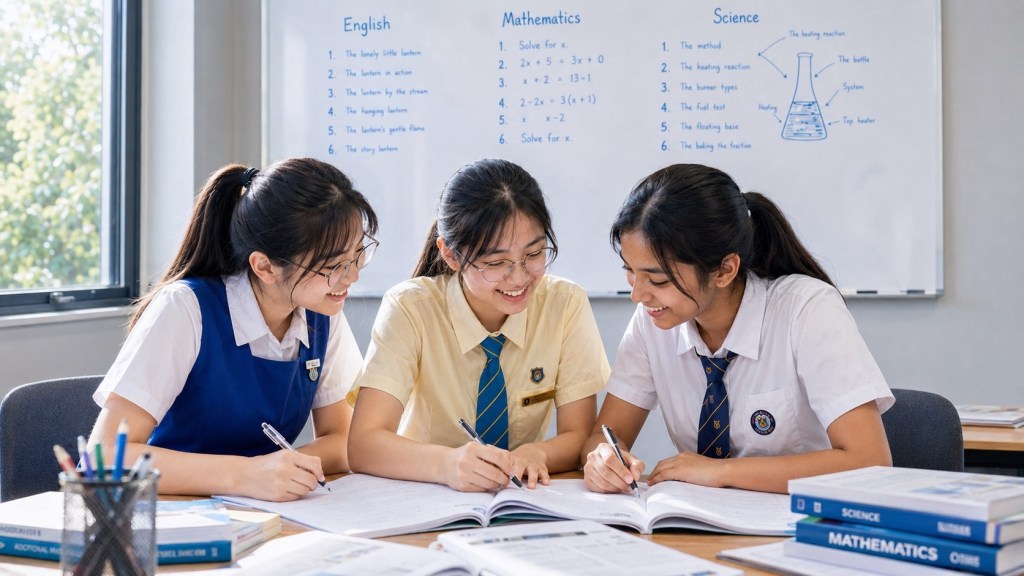
Direct Answer: Generation works in learning when the learner tries to produce an answer, prediction, explanation, solution step, example or relationship before the complete answer is supplied. The attempt activates prior knowledge, exposes the learner’s current model and creates a gap that feedback can resolve. Generation can strengthen learning because the learner has to retrieve and organise information rather than merely recognise it. It is most useful when the task is within reach, feedback follows, misconceptions are corrected and the learner later retrieves or applies the improved model independently. Generation is not a reason to make novices discover everything from scratch. The educational value comes from producing enough of the route to make the later explanation, example or feedback more meaningful.
HOW LEARNING WORKS · GENERATION
Trying before seeing changes what the learner notices when the answer arrives.
Generation creates a provisional model. Feedback then has something specific to confirm, repair or replace.
The simplest definition
Generation is the act of producing information from one’s own current knowledge before receiving the complete target response.
Generation can take many forms: predicting an experimental result, completing a missing step in a worked example, attempting a problem before reading the solution, recalling a definition, proposing an explanation, creating an example, estimating an answer or answering a pretest question before instruction.
The generation mechanism
CUE / QUESTION → PRIOR KNOWLEDGE ACTIVATES → LEARNER GENERATES RESPONSE → RESPONSE CREATES EXPECTATION → CORRECT ANSWER / EVIDENCE ARRIVES → MATCH OR MISMATCH → ATTENTION SHIFTS TO GAP → MODEL IS REPAIRED → LATER RETRIEVAL / APPLICATION
The mismatch can be useful because it makes the difference between the learner’s current model and the target more visible.
1. Generation changes the learner from receiver to producer
When the answer is presented first, the learner can recognise it without revealing what they could have produced independently.
Generation removes that support temporarily. The learner has to retrieve, infer or construct. This makes current knowledge visible.
2. Prediction creates a model before evidence arrives
Prediction is especially useful because it creates a committed expectation.
Before a Science demonstration, ask what should happen and why. Before revealing a graph, ask what shape is expected. Before reading the ending of an argument, ask what conclusion should follow.
When the outcome differs, the learner has a precise discrepancy to investigate.
3. Pretesting can prepare attention for later teaching
A learner who attempts questions before instruction often gets many wrong. The value is not the score.
The questions reveal which distinctions matter and can increase attention when the relevant information later appears. The learner has already encountered the shape of the problem.
Pretesting works best when feedback or instruction follows. Failure without resolution is not the goal.
4. Generation should be possible enough to be meaningful
If the learner has no relevant knowledge, generation can become random guessing.
Good tasks sit near the edge of existing knowledge. The learner may not know the exact answer but can produce a plausible attempt, partial route or structured prediction.
5. Partial generation can be better than full discovery
A novice need not invent the whole solution.
They might complete one missing line, choose between two explanations, predict the next operation or identify the relevant principle. This preserves the generation effect while keeping search bounded.
6. Worked examples can be turned into generation tasks
Cover the next step and ask the learner to predict it. Remove selected lines. Ask which formula should be used before revealing the solution. Require an explanation of why a step follows.
This moves the learner gradually from studying a route to producing it.
7. Generation and retrieval overlap
When the target knowledge has already been learned, generation often becomes retrieval. The learner produces from memory rather than infers from partial information.
Both mechanisms reduce reliance on recognition and make internal availability visible.
8. Error during generation is not automatically harmful
An incorrect attempt can be educational if the correct answer follows and the learner notices why their model failed.
The risk appears when the error is repeated, left unresolved or becomes more familiar than the correction. Feedback must be sufficiently clear to replace the wrong route.
9. Generation can increase curiosity
Once learners commit to a prediction, they often care more about the outcome. The unanswered question becomes personally informative.
This can turn passive explanation into a resolution event: “Was my model right?”
10. Generation can improve calibration
Learners often believe they know something because it looks familiar. Asking them to generate before checking reveals the difference between recognition and availability.
This makes generation a metacognitive diagnostic tool as well as a learning tool.
11. Generation in Mathematics
Before seeing the worked route, ask the learner to identify the unknown, choose a representation, estimate the answer, select a method or produce the first step.
These small acts reveal whether the learner recognises the structure rather than merely following completed algebra.
12. Generation in Science
Ask for predictions, possible mechanisms, expected trends or what evidence should count before revealing results.
The learner then compares the observed evidence with the generated model.
13. Generation in English
Ask learners to infer a word from context before giving the definition, predict the next paragraph, generate a thesis before viewing a model answer, or propose evidence before seeing the teacher’s selection.
Generation helps expose the reasoning behind the later comparison.
14. The answer should not arrive too early
If the learner checks after two seconds, the task becomes recognition again.
Give enough time for a genuine attempt. The required time varies with task complexity, but the learner should produce something inspectable before the answer appears.
15. The answer should not arrive too late either
Extended unguided search can consume attention and reinforce ineffective approaches.
Generation should create a useful attempt, not an endurance test. Once the learner has committed a model, feedback can do its work.
16. Generation becomes stronger when followed by explanation
After feedback, ask why the generated response differed from the correct one. Which assumption failed? Which feature was missed? Which rule should have controlled the choice?
This turns mismatch into model repair.
17. The final test is later generation without the cue-rich lesson
A successful generation activity should make future generation more accurate.
Return later. Change the surface. Ask again without the teacher’s prompts. If the learner can now produce the relevant relationship independently, the earlier attempt helped build a durable route.
What generation is not
- Generation is not unguided discovery of everything.
- Random guessing is not productive generation.
- Getting the pretest wrong is not the learning goal.
- Errors need feedback and repair.
- Generation can be partial.
- Seeing the answer before attempting removes much of the mechanism.
- Immediate performance may look worse while later learning improves.
A generation diagnostic map
| What adults see | Possible issue | Useful next move |
|---|---|---|
| Learner waits for example before trying | Recognition dependence | Require one prediction or first step |
| Guesses randomly | Too little prior knowledge | Restore prerequisite or narrow the task |
| Wrong prediction repeated later | Feedback did not repair model | Explain mismatch and retest |
| Strong with model answer, weak alone | Generation never required | Fade model and require reconstruction |
| Pretest creates frustration | Task interpreted as evaluation rather than preparation | Clarify that errors are diagnostic and feedback follows |
| Correct immediately every time | Task may be below learning edge | Increase variation or remove cues |
A practical generation cycle
- Activate relevant prior knowledge.
- Pose a question with a reachable gap.
- Require a prediction, attempt or partial answer.
- Make the learner commit the response.
- Reveal evidence, explanation or correct answer.
- Compare with the generated model.
- Explain the mismatch.
- Repair.
- Retry on a related case.
- Return later without support.
For parents
- “What do you think the answer might be before we check?”
- “What would you predict?”
- “Can you do the first step without looking?”
- “What changed when you saw the correct answer?”
- “Can you now try another one without the model?”
For students
- Attempt before revealing the solution.
- Predict before a demonstration or graph reveal.
- Cover the next line of a worked example and generate it.
- Use wrong attempts to locate the exact missing relationship.
- After correction, generate again without looking.
- Return after delay to test whether the route now belongs to you.
How do we know generation is working?
- Learners attempt before checking more often.
- Predictions become more structured.
- Feedback attracts attention to specific gaps.
- Recognition dependence decreases.
- Calibration improves.
- Worked examples can be faded.
- Fresh generation becomes more accurate.
- Delayed retrieval and transfer improve.
The complete generation chain
CUE → GENERATE → COMMIT → COMPARE → NOTICE GAP → EXPLAIN → REPAIR → REGENERATE → TRANSFER → RETURN
Read next
- How Learning Works
- How Productive Struggle Works in Learning
- How Retrieval Practice Works
- How Worked Examples Work in Learning
- How Self-Explanation Works in Learning
- MindOS Generation State
Evidence boundary
Generation overlaps with research on retrieval practice, pretesting, prediction and productive failure. The strongest educational use is bounded generation followed by corrective information. It should not be interpreted as evidence that minimally guided discovery is always preferable to explicit instruction, especially for novices facing complex unfamiliar material.
