
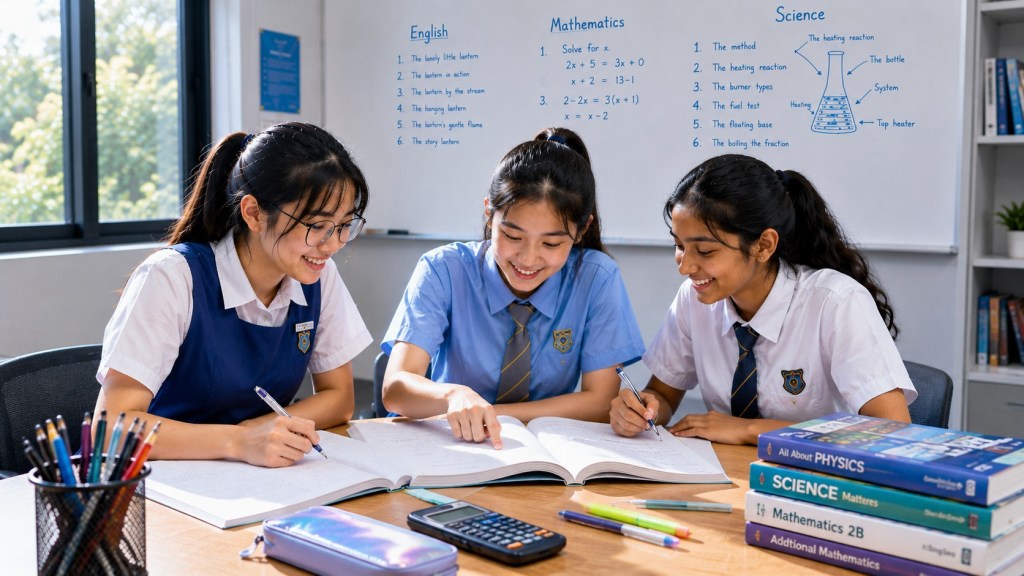
Direct Answer: Experiential learning works when a learner does more than participate in an activity. The experience provides observations, consequences, surprises and problems; learning happens when the learner examines what occurred, connects it to prior knowledge and formal concepts, explains the pattern, tests a revised model, and carries the result into another situation. Experience is therefore input, not proof of learning. A field trip, experiment, project, internship, simulation, service activity or real-world task can be memorable while leaving the underlying concept weak. Strong experiential learning defines what the learner should notice, preserves evidence from the experience, builds reflection and explanation into the activity, distinguishes observation from inference, and ends with a fresh application that shows whether the learner can use what the experience was meant to teach.
HOW LEARNING WORKS · EXPERIENTIAL LEARNING
Experience is vivid. Learning is the model the learner builds from it.
Doing gives the learner something real to inspect; reflection, explanation and transfer determine whether that experience becomes usable knowledge.
The simplest definition
Experiential learning is learning built from direct or simulated experience through observation, reflection, conceptualisation and subsequent application.
The activity can be physical, social, professional, creative or intellectual. What makes it educational is not merely participation. It is the conversion of experience into a model the learner can explain and reuse.
The experiential-learning mechanism
PREPARE → EXPERIENCE → OBSERVE → RECORD → REFLECT → CONNECT TO CONCEPT → EXPLAIN → TEST ALTERNATIVE → APPLY AGAIN → TRANSFER → RETURN
Every stage can fail. The learner can have a rich experience without noticing the relevant feature, reflect without evidence, invent a causal explanation, or remember the event without being able to use the principle later.
1. Experience alone is not the teacher
People have experiences constantly. They do not automatically learn accurate general rules from them.
A student can visit a museum and remember the architecture but not the historical question. They can perform an experiment and remember the colour change but misunderstand what it demonstrates. They can complete a group project and learn that one outspoken person usually takes control.
The activity must be connected to a learning job.
2. Define what should become different in the learner
Before the experience, state the intended capability.
“Visit the gallery” is an activity. “Compare how two artists use scale to control attention and defend the comparison with visible evidence” is a learning job.
“Build a bridge model” is an activity. “Use the failure of the model to explain how load path and geometry affect stability” is a learning job.
3. Preparation controls what the learner can notice
Prior knowledge changes perception.
A learner visiting a wetland with no relevant concepts may see birds, water and plants. A learner who understands food webs, adaptation and variable measurement can notice relationships and ask different questions.
Prepare enough knowledge to make the experience interpretable without explaining away everything before it happens.
4. Observation should be separated from interpretation
“The metal strip bent” is an observation. “The material is weak” is an interpretation. “Heat caused the bend” is a causal claim that needs evidence about conditions.
Experience can make inference feel certain because the learner witnessed the event. Teach them to record what happened before explaining why.
5. Preserve evidence from the experience
Field notes, measurements, photographs, sketches, quotations, timestamps and artefacts can preserve observations for later analysis.
The record should match the learning goal. A hundred photographs do not help if the learner cannot identify which one contains evidence for the question.
External records support reflection because memory for an event is selective and reconstructive.
6. Reflection is not “How did you feel?” alone
Emotion can be part of experience, but educational reflection needs to examine the learning object.
Ask: What did you predict? What occurred? What evidence surprised you? Which concept explains it? What alternative explanation remains possible? What would you change next time?
Yale’s Poorvu Center explicitly places reflection at the centre of experiential learning and notes that experience by itself is insufficient. Yale Poorvu Center: Experiential Learning.
7. Reflection should return to concepts
A learner can produce a thoughtful diary without changing subject knowledge.
The reflection should connect concrete observations to definitions, models, theories or relationships from the curriculum. “This reminded me of friction” is a start. “The increased surface resistance explains why more force was required under these conditions” is a stronger conceptual connection.
8. The experience can challenge misconceptions
Prediction before action is valuable because it exposes the learner’s current model.
If the outcome differs, ask why. The discrepancy can create a conceptual-change opportunity.
Do not assume the learner will infer the correct explanation from surprise alone. Contradiction needs interpretation and a better replacement model.
9. Failure can become high-value evidence
A bridge collapses, a presentation confuses the audience, a coding project fails a test, or an experiment yields noisy data.
The failure becomes educational when the learner diagnoses the mechanism rather than merely repeating the activity.
Ask where the first assumption broke, which evidence supports the diagnosis, and what controlled change should be tested next.
10. A second attempt converts reflection into learning
Reflection without another attempt can remain verbal.
Change the design, revise the interview question, alter the measurement procedure, restructure the paragraph or choose another strategy. Then observe whether the predicted improvement occurs.
This closes the loop between experience and experimentation.
11. Experiential learning and active learning overlap but are not identical
Active learning is a broad family of designs in which learners do cognitively meaningful work rather than only receive information.
Experiential learning is more specific: it uses an experience as a source of observations and consequences that are then examined and connected to concepts.
A retrieval quiz is active learning but not normally experiential learning. A field investigation followed by analysis and concept application is experiential.
12. Real-world context can increase meaning—and complexity
Authentic settings contain ambiguity, irrelevant information and constraints that textbook problems simplify away.
This is valuable when the learner is ready to decide what matters. It can overload novices if they have not yet learned the basic distinctions.
Authenticity should be introduced according to the learning objective, not used as a status symbol.
13. Simulations can create controlled experience
Not every learning experience needs to be physically real.
A simulation can let learners change variables, observe consequences and repeat conditions safely or cheaply. The educational job remains the same: distinguish what the simulation represents, what assumptions it makes and what conclusions are justified.
A model’s behaviour is evidence about the model, not automatically about the real world.
14. Service learning should preserve the community as more than a teaching prop
Experiences involving communities carry ethical responsibilities.
Learning goals should not justify intrusive data collection, false promises or treating people merely as objects of student reflection. Permissions, privacy, reciprocity and accurate representation matter.
Educational usefulness does not override rights or dignity.
15. Mathematics experiential learning should return from context to structure
Measure a room, compare travel times, budget a project or collect data from a school activity.
Then identify the mathematical model: ratio, rate, area, probability, optimisation, uncertainty or error. The context gives the quantities meaning; the abstraction makes the mathematics reusable.
Finish with a different context that uses the same structure.
16. Science experiential learning should protect evidence quality
Hands-on activity is not automatically inquiry.
Ask which variable changed, what was measured, what control is needed, whether the observation is repeatable, and what the evidence can support.
The excitement of seeing something happen should not replace the discipline of explaining what the observation means.
17. English experiential learning can turn audience into evidence
Students can interview, present, publish, debate, guide a visitor or write for a real audience.
The experience exposes consequences of language choice: confusion, persuasion, misunderstanding, interest, tone and credibility.
Reflection should connect audience response to specific language and structural choices rather than “they liked it.”
18. Group experiences can hide individual learning
A team can complete a project while roles distribute the learning unevenly.
Require individual reflection and a fresh individual task. Ask each learner what they observed, what concept changed and what they can now do independently.
The shared product is not enough.
19. The experience needs a World Return
The learner should bring the experience back into the wider knowledge system.
What general principle was learned? Where else could it apply? What new question appeared? Which assumption became visible? Which future decision will change?
Without this return, the event remains an isolated memory.
20. The final receipt is a changed response in a new situation
After the activity, use a fresh case.
If the learner can recognise the relevant structure, explain why it applies, adapt the earlier lesson and act more intelligently, the experience has become transferable learning.
If they can only retell what happened, the experience may still need conceptual work.
What experiential learning is not
- Doing is not automatically learning.
- A memorable event is not proof of conceptual understanding.
- Reflection should examine evidence and concepts, not emotion alone.
- A simulation is a model with assumptions, not reality itself.
- Group products do not prove individual learning.
- Real-world complexity should match learner readiness.
- The final test is transfer into another situation.
An experiential-learning diagnostic map
| What adults see | Possible experiential-learning issue | Useful next move |
|---|---|---|
| Student enjoyed activity but cannot explain concept | Experience not connected to abstraction | Return to observations and map them to the formal idea |
| Reflection is mainly feelings | Evidence analysis missing | Ask what happened, why, and what supports the explanation |
| Project failed and student only repeats it | No diagnostic reflection | Identify first failed assumption and controlled change |
| Simulation result treated as real-world proof | Model boundary lost | State assumptions and what external evidence is needed |
| One group member owns all expertise | Uneven learning | Add individual explanation and fresh task |
| Can retell event but not use principle elsewhere | Transfer incomplete | Apply concept to a different context |
A practical experiential-learning cycle
- Define what the learner should become able to do.
- Prepare prerequisite concepts and observation questions.
- Make a prediction where useful.
- Enter the experience.
- Record observations and evidence.
- Separate observation from interpretation.
- Reflect on surprise, failure and pattern.
- Connect the experience to formal concepts.
- Explain the mechanism or relationship.
- Change one condition and try again.
- Apply the principle to a new situation.
- Return the learning to the wider knowledge map.
For parents
- “What did you actually observe?”
- “What surprised you?”
- “Which school concept helps explain that?”
- “What would you change if you repeated it?”
- “Where else could the same idea apply?”
For students
- Enter experiences with a question.
- Record what happened before explaining why.
- Use evidence, not memory alone.
- Connect observations to formal concepts.
- Treat failure as diagnostic information.
- Run a second attempt where possible.
- Test the lesson in another context.
How do we know experiential learning is working?
- Observations become more precise.
- Reflection increasingly uses evidence and concepts.
- Learners distinguish event from explanation.
- Failures produce better hypotheses and second attempts.
- Formal knowledge becomes easier to connect to real situations.
- New situations trigger relevant prior learning.
- Individual performance improves beyond the shared experience.
The complete experiential-learning chain
PREPARE → EXPERIENCE → OBSERVE → REFLECT → CONCEPTUALISE → EXPLAIN → EXPERIMENT → TRANSFER → RETURN
Research and evidence boundary
Experiential learning is a broad educational family rather than one single standardised intervention. Yale’s Poorvu Center describes it as learning through concrete experience, reflective observation, conceptualisation and experimentation, and explicitly stresses that experience alone is insufficient without reflection. Its current guidance includes fieldwork, community engagement, museums and other real-world contexts. These sources support structured experience plus reflection; they do not show that every field trip, project or hands-on activity automatically improves learning. Yale Poorvu Center: Experiential Learning; Yale: Structuring Experiential Learning.
