
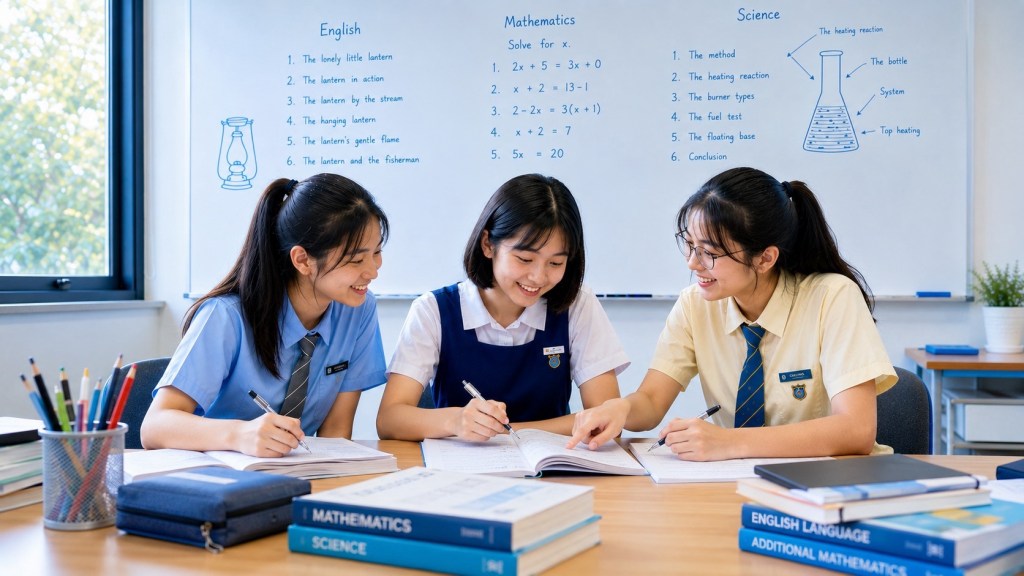
Sengkang Secondary 1 English Tuition: Elevate Your Child’s Language Skills with eduKate Singapore
Secondary 1 is not simply another school year. It is the point at which English becomes more demanding, more analytical and much less forgiving of weak foundations.
A child who managed Primary School English through familiarity, memorised phrases or natural language ability may suddenly discover that these are no longer enough. Secondary English requires students to read beneath the surface, organise longer responses, explain ideas precisely and adjust their language for different audiences and purposes.
This is why the right Sengkang Secondary 1 English tuition can make such a meaningful difference.
At eduKate Singapore in Sengkang, our aim is not to make every student complete the same worksheet at the same speed. It is to understand how each child currently uses English, identify what is holding that child back and guide the student towards a stronger and more suitable learning path.
Students who need stability receive clearer steps, closer correction and carefully selected practice. Students who are already doing well receive wider reading, deeper questions and more demanding opportunities to express themselves.
The destination is improvement. The route should fit the student.
Why Secondary 1 English Feels Different
Primary School English often gives students relatively familiar structures. They learn comprehension techniques, composition formats, grammar rules, vocabulary and oral communication within a carefully supported environment.
Secondary 1 English begins to remove some of that support.
Texts become longer and more layered. Questions may require interpretation rather than direct retrieval. Writing tasks expect stronger organisation and greater awareness of purpose. Students are increasingly expected to explain not only what a text says, but also how meaning is created.
This can be a significant adjustment.
A student may understand a passage generally but struggle to produce a precise answer. Another may have many ideas but lack the sentence control needed to communicate them. A confident speaker may write loosely, while a quiet student may have strong observations but hesitate to express them.
These are different learning problems. They should not be treated with one standard solution.
Effective Secondary 1 English tuition in Sengkang begins by identifying the actual difficulty beneath the result.
Secondary 1 English in the Full SBB and SEC Years
Singapore’s secondary school system has entered a more flexible phase.
Starting with the 2024 Secondary 1 cohort, the former Express, Normal (Academic) and Normal (Technical) streams were replaced by Full Subject-Based Banding. Students are posted through Posting Groups 1, 2 and 3 and may take subjects, including English Language, at different G1, G2 or G3 subject levels according to their strengths and learning needs.
This flexibility creates opportunities, but it also makes a strong foundation increasingly important.
A student’s current subject level does not have to define the child permanently. When students demonstrate stronger understanding and readiness, there may be opportunities to study subjects at a more demanding level. Tuition should therefore do more than help a child survive the next test. It should build the language control, confidence and consistency required for future progression.
The current G2 and G3 English Language syllabus also treats language as more than reading and writing. Viewing and representing are integrated with listening, reading, speaking and writing, reflecting the wider range of texts and communication formats students encounter today.
From 2027, the Singapore-Cambridge Secondary Education Certificate, or SEC, replaces the separate N-Level and O-Level examinations. Graduating students will sit for subjects at their respective G1, G2 or G3 levels.
For a Secondary 1 student, this means the work completed now matters.
The habits built in the first year of secondary school will influence how comfortably the student handles Secondary 2, upper-secondary English and the eventual SEC examination years.
English Is More Than One School Subject
Parents sometimes consider English tuition only after composition marks fall or comprehension results become inconsistent.
However, English supports almost every part of secondary education.
Students need language to understand Science explanations, interpret Humanities sources, follow Mathematics word problems, contribute to project discussions and present their ideas clearly. Even when a student knows the content, weak language can make that knowledge difficult to demonstrate.
A strong English student can usually:
- read instructions accurately;
- identify the real demand of a question;
- distinguish important details from supporting information;
- explain reasoning in complete sentences;
- adapt tone and vocabulary for different purposes;
- organise ideas so that another person can follow them;
- evaluate information instead of accepting it immediately;
- speak with greater clarity and confidence.
This is why Secondary 1 is such an important time to strengthen English.
The subject is not merely preparing students for one examination. It is building the language through which much of their education will be understood and expressed.
Why Some Students Struggle After Entering Secondary School
A disappointing Secondary 1 result does not always mean that a student is weak in English.
Sometimes the student has entered a more demanding environment without updating the way he or she studies.
The student is still answering like a Primary School pupil
The child may copy large sections from a passage, provide vague explanations or rely on keywords without understanding how the ideas connect.
The student reads but does not analyse
Some students can follow the story or topic but miss tone, intention, implication and the writer’s choice of language.
The student has ideas but cannot organise them
The student may begin writing immediately without deciding what the response needs to achieve. The result is often repetitive, uneven or difficult to follow.
The student knows grammar rules but does not apply them
Rules completed correctly in isolated exercises may disappear during continuous writing.
The student has a limited working vocabulary
The issue is not always the number of words the student recognises. The problem may be an inability to use vocabulary naturally, precisely and appropriately.
The student is afraid of being wrong
A hesitant learner may avoid answering, writing or discussing ideas. Without enough attempts, the tutor has little language to examine and correct.
The student is capable but insufficiently stretched
Strong students can also become stuck. Work that is too easy may preserve their marks while limiting their growth. They need richer texts, harder questions and more exacting feedback.
A thoughtful tutor does not respond to all these students in the same way.
The Right Help Begins with the Right Diagnosis
At eduKate Singapore, we first look at how a student is thinking.
A low comprehension mark may come from weak vocabulary, careless reading, misunderstanding the question or difficulty expressing an answer. These may produce a similar score, but they require different forms of teaching.
The same is true for writing.
A composition can be weak because the student lacks ideas. It can also be weak because the ideas are poorly sequenced, insufficiently developed or expressed through inaccurate sentences. Giving the student more model essays will not necessarily solve the underlying issue.
Good tuition should therefore ask:
- What can the student already do independently?
- Where does the student begin to lose accuracy?
- Is the weakness in knowledge, interpretation or expression?
- Does the student need more structure or more challenge?
- Which correction will produce the greatest improvement?
- Can the student apply the lesson to a new task?
This allows the tutor to direct attention towards the work that matters most.
It is a quieter way of teaching, but often a more productive one.
Supporting Students Who Need a Stronger Foundation
Some Secondary 1 students arrive at tuition feeling overwhelmed.
They may take a long time to begin writing, avoid unfamiliar passages or lose confidence when several corrections appear on one page. Giving these students harder work immediately can deepen the problem.
They first need a better route into the subject.
Rebuilding sentence control
Students learn to recognise what makes a sentence complete, accurate and clear. Instead of correcting errors without explanation, the tutor shows the student why the sentence failed and how it can be rebuilt.
Attention may be given to:
- subject-verb agreement;
- sentence boundaries;
- tense consistency;
- pronoun reference;
- punctuation;
- awkward phrasing;
- incomplete explanations;
- unnecessary repetition.
The objective is not flawless writing in one lesson. It is to reduce recurring errors until accuracy becomes more natural.
Making comprehension visible
Students are taught to slow down and identify the relationship between the passage, the question and the required answer.
They learn to ask:
- What is the question really asking?
- Which part of the text contains the evidence?
- Must the answer be inferred?
- Which words need to be explained in context?
- How much detail is necessary?
- Have I answered precisely?
This gives the student a repeatable process rather than a collection of guesses.
Providing manageable writing structures
A weaker writer often needs a clear framework before creativity can emerge.
The tutor may help the student plan the purpose of each paragraph, select relevant details and connect one idea to the next. As control improves, the support is gradually reduced.
The aim is independence, not permanent dependence on a template.
Restoring confidence through correction
Confidence should not be created by pretending mistakes do not matter. It should come from showing students that mistakes can be understood and repaired.
When a child sees that an unclear paragraph can become clearer, or that a difficult passage can be broken into manageable parts, English begins to feel less unpredictable.
Progress becomes something the student can participate in.
Stretching Students Who Are Already Strong
High-performing students also need carefully designed tuition.
A student who regularly receives good marks may still rely on familiar vocabulary, safe essay structures and straightforward interpretations. These habits may continue to work for a time, but they can limit the student’s eventual ceiling.
Stronger students need wider intellectual space.
Moving from correct answers to perceptive answers
The tutor encourages the student to consider tone, perspective, intention and subtle differences in language.
Instead of accepting the first reasonable interpretation, the student learns to test it against the text.
Developing greater precision
Strong English is not created by using the longest available word. It comes from selecting the most appropriate word.
Students are taught to distinguish between language that is merely impressive and language that is exact.
Building mature writing
Advanced students work on controlling pace, emphasis, paragraph development and voice. They learn how to sustain an idea, create deliberate effects and edit writing at a deeper level.
Reading beyond the obvious
Students may engage with articles, speeches, narratives, commentaries, visual texts and contemporary issues. This broadens their awareness of how language operates in different contexts.
Learning to defend an interpretation
A strong response should be supportable. Students learn to explain why an interpretation is reasonable and how particular details contribute to meaning.
This is how a capable student moves from competence towards mastery.
The tutor does not simply make the path harder. The tutor makes it wider.
What Students Learn in Sengkang Secondary 1 English Tuition
A well-designed programme should connect the different areas of English rather than treating them as unrelated components.
1. Reading and Viewing Comprehension
Students learn how to read actively.
This includes identifying main ideas, understanding supporting details, recognising relationships between paragraphs and interpreting words in context.
They also learn to examine:
- tone and attitude;
- implied meaning;
- purpose and audience;
- evidence and explanation;
- visual information;
- the effect of language choices;
- differences between fact, opinion and interpretation.
The goal is not only to complete a comprehension exercise. It is to become a more alert and independent reader.
2. Writing with Purpose
Secondary writing requires more than a good opening and several descriptive phrases.
Students need to understand:
- what the task requires;
- who the intended reader is;
- what tone is suitable;
- how ideas should be ordered;
- which details deserve development;
- how paragraphs work together;
- how to revise an early draft.
During tuition, students may plan, write, discuss, edit and rewrite. This makes the thinking behind good writing visible.
3. Grammar in Real Contexts
Grammar is most useful when students can apply it to their own communication.
Instead of relying entirely on disconnected exercises, grammar is connected to sentences and paragraphs the student has written. This helps the learner understand how accuracy affects meaning.
4. Vocabulary and Expression
Students develop vocabulary through context, comparison and use.
They learn:
- connotation;
- word families;
- collocations;
- register;
- precise verbs;
- alternatives to vague expressions;
- how meaning changes according to context.
More importantly, they practise using new vocabulary naturally.
5. Listening and Speaking
Students need opportunities to express ideas aloud, respond to another person and develop a clear line of thought.
Small-group discussions allow students to practise:
- explaining opinions;
- supporting a view;
- responding to questions;
- listening for key information;
- clarifying uncertain points;
- speaking with appropriate pace and tone.
For quieter students, this can provide a gentler environment in which to develop confidence.
6. Editing and Self-Correction
One of the most valuable skills a student can learn is how to improve work before submitting it.
Students are guided to check for:
- missing content;
- unclear ideas;
- weak paragraph links;
- grammar mistakes;
- repetitive vocabulary;
- unsuitable tone;
- unsupported claims;
- sentences that are technically correct but difficult to understand.
Over time, the tutor’s voice should become part of the student’s own checking process.
How a Structured Tutorial Works
Effective tuition is not simply another school lesson after school.
Each tutorial should move the student through a deliberate learning sequence.
First, the tutor identifies the immediate target
The target may be sentence accuracy, inferential comprehension, paragraph development, oral explanation or vocabulary use.
Keeping the target clear prevents the lesson from becoming a collection of unrelated activities.
Next, the skill is demonstrated
Students are shown how an experienced reader or writer approaches the task.
The tutor may model how to unpack a question, locate evidence, plan a paragraph or improve a sentence.
Students then practise with guidance
This is where misunderstandings become visible.
The tutor can ask questions, adjust the level of support and correct errors before they become repeated habits.
Feedback is applied immediately
Students should not merely receive comments and move on. They need to use the feedback.
This may involve rewriting a paragraph, improving an answer or explaining why one version is more effective than another.
Finally, the skill is transferred
A student has not fully learnt a method until it can be applied to a different passage, topic or writing task.
This transfer is what turns tuition into lasting progress.
Why Small-Group English Tuition Can Be So Effective
English is difficult to teach well in a crowded setting because the tutor needs to examine the language produced by each student.
Two students can complete the same assignment and require entirely different feedback.
In eduKate Singapore’s small-group tutorials, the tutor can pay closer attention to:
- how each student interprets a question;
- where an explanation becomes unclear;
- which grammar mistakes recur;
- whether new vocabulary is being used naturally;
- how confidently the student participates;
- whether the student can apply previous corrections.
Students also benefit from hearing how their peers approach the same task.
One student may notice evidence that another missed. A classmate may offer a different interpretation or phrase an idea more clearly. When guided carefully, these differences make the discussion richer without allowing anyone to disappear into the group.
The class remains social, but the teaching remains personal.
A Calm Environment for Serious Improvement
Students learn better when they feel safe enough to attempt difficult work.
This does not mean lowering expectations. It means creating an environment in which effort, correction and improvement can happen without unnecessary embarrassment.
At eduKate Singapore, students are encouraged to ask questions, test ideas and reconsider their first responses.
The tutor remains attentive to the standard of the work, but the atmosphere is calm.
For a student who has begun to fear English, this can make it possible to re-enter the subject. For a strong student, it creates room to explore more sophisticated ideas without turning every exercise into a race for marks.
Less noise. More structure. Better learning.
Why Sengkang Parents Choose Secondary 1 English Tuition Early
Some parents wait until Secondary 2 or upper secondary before seeking help. By then, however, several weaknesses may have become established habits.
Beginning in Secondary 1 provides time to work carefully.
Students can improve sentence construction before upper-secondary writing becomes more demanding. They can develop reading discipline before passages become denser. They can build vocabulary gradually rather than trying to memorise large word lists shortly before an examination.
Early tuition is not about creating pressure from the first day of secondary school.
It is about protecting the runway ahead.
For families around Sengkang, Compassvale, Rivervale, Anchorvale, Fernvale and Buangkok, a nearby tuition programme can also make regular attendance more sustainable. Less travel means the student can arrive with more energy and maintain a steadier routine throughout the school term.
Consistency matters because English develops cumulatively.
One lesson may correct a mistake. A well-designed sequence of lessons can change how the student reads, thinks and communicates.
What Parents May Begin to Notice
Progress in English does not always appear first as a dramatic increase in marks.
Parents may initially notice quieter changes:
- the child begins homework with less hesitation;
- comprehension answers become more direct;
- writing contains fewer incomplete sentences;
- paragraphs are planned before drafting;
- the student explains schoolwork more clearly;
- corrections are repeated less often;
- unfamiliar passages produce less anxiety;
- the child reads questions more carefully;
- vocabulary becomes more precise;
- the student participates more confidently in discussion.
These are important signs.
They show that the student is developing greater control over the subject. As control improves, stronger and more consistent results can follow.
Is Secondary 1 English Tuition Only for Weak Students?
No.
Tuition can serve different purposes for different students.
A struggling student may need to rebuild essential foundations and regain confidence.
An average student may need greater consistency, stronger writing habits and better comprehension techniques.
A good student may need more demanding reading, mature expression and sharper analytical thinking.
A very strong student may need an experienced tutor who can challenge assumptions, refine style and expose the student to ideas beyond routine schoolwork.
The value of tuition lies not in giving every learner more work. It lies in giving each learner more appropriate work.
When Should a Parent Consider Sengkang Secondary 1 English Tuition?
Tuition may be useful when a student:
- finds the Secondary 1 transition unexpectedly difficult;
- writes fluently but receives inconsistent marks;
- struggles to explain comprehension answers;
- makes repeated grammar mistakes;
- has limited confidence in speaking or discussion;
- avoids reading unfamiliar texts;
- depends heavily on memorised phrases;
- needs closer feedback than a large classroom can provide;
- is doing well but no longer feels challenged;
- wants to prepare a stronger foundation for the SEC years.
Parents do not need to wait for a major academic decline.
Sometimes the best time to strengthen a subject is while the student is still coping, but the first signs of strain have begun to appear.
What Makes a Good Secondary 1 English Tutor?
A good English tutor should be able to do more than provide notes and mark worksheets.
The tutor should be able to recognise how a student is processing language.
This includes noticing whether the child:
- misunderstands the question;
- lacks the vocabulary to express an idea;
- writes without planning;
- uses evidence without explaining it;
- overcomplicates simple sentences;
- reads too quickly;
- depends on memorised structures;
- needs greater challenge.
The tutor should then make an informed decision about what the student needs next.
Sometimes the right response is to slow down and repair a missing foundation. At other times, the student should be moved towards more demanding work.
Knowing the difference is part of the tutor’s craft.
Preparing for Secondary 2 and Beyond
Secondary 1 is a foundation year, but it should not be treated as a waiting year.
By the end of the year, a student should ideally be more capable of:
- reading independently;
- identifying the purpose of a question;
- producing organised paragraphs;
- supporting interpretations with evidence;
- using grammar with greater control;
- editing work thoughtfully;
- speaking with clarity;
- approaching unfamiliar texts with confidence.
These abilities make the next stage of secondary school more manageable.
In Secondary 2, academic expectations continue to rise. By upper secondary, students must handle more complex texts, more mature ideas and higher standards of written expression.
Students who use Secondary 1 well do not enter these years without difficulty. They enter with better tools.
Frequently Asked Questions About Sengkang Secondary 1 English Tuition
What is taught in Secondary 1 English tuition?
Lessons may cover comprehension, writing, grammar, vocabulary, oral communication, listening, viewing skills and editing. The exact emphasis should depend on the student’s current needs.
Is Secondary 1 English much harder than Primary 6 English?
The transition can be significant. Students are expected to interpret texts more deeply, organise longer responses and communicate with greater precision. Secondary English also places increasing emphasis on purpose, audience and the way language creates meaning.
Can tuition help a child who dislikes reading?
Yes, but simply assigning more reading may not be enough. The tutor may need to select suitable texts, guide the student through difficult sections and show how reading connects to discussion, writing and real-world ideas.
Will students receive help with school assignments?
Schoolwork can reveal useful learning needs, but tuition should not become a homework-completion service. The greater aim is to teach skills that allow students to complete future work more independently.
Is small-group tuition suitable for a quiet student?
A well-managed small group can be particularly helpful. The student receives opportunities to speak without facing a large class, while still benefiting from interaction with peers.
Can a strong English student benefit from tuition?
Yes. Strong students may need deeper analysis, wider reading, more precise expression and more demanding feedback. Tuition should expand their capabilities rather than simply repeat familiar exercises.
How quickly will results improve?
Progress depends on the student’s starting point, attendance, effort and willingness to apply feedback. Some corrections produce quick improvements, while deeper changes in reading, writing and language habits require consistent practice.
Why begin English tuition in Secondary 1?
Secondary 1 provides time to strengthen foundations before upper-secondary demands arrive. It is easier to correct weak habits early than to repair several years of accumulated difficulty later.
Elevate Your Child’s Language Skills with eduKate Singapore
The best Secondary 1 English tuition does not force every child through the same narrow programme.
It pays attention.
It notices when a student requires a clearer explanation, a smaller step or more time to practise. It also recognises when a capable student is ready for richer texts, broader questions and more demanding work.
At eduKate Singapore, our Sengkang Secondary 1 English tuition is designed to help students develop the foundations, judgement and confidence required for the years ahead.
For weaker students, we make the route clearer.
For improving students, we make progress steadier.
For strong students, we open the subject wider.
English becomes more than a paper to complete. It becomes a way to understand information, organise thought and communicate with precision.
That is the foundation students need for Secondary 1, the SEC years and the larger opportunities that follow.
Small-group Secondary 1 English tuition in Sengkang. Close guidance, thoughtful correction and a learning path designed around the student.
At eduKate Singapore, we understand that transitioning to Secondary 1 can be a pivotal moment in your child’s academic journey. English, being a core subject, forms the foundation of all learning. It’s not just about passing exams but about developing effective communication, critical thinking, and analytical skills that will serve students throughout their education and beyond. Our Sengkang English Tuition for Secondary 1 is tailored to meet the unique needs of students as they adapt to a more challenging curriculum, aligning with the Ministry of Education (MOE) Secondary English syllabus.
Your Secondary English Experts: Sengkang Tuition for Academic Excellence
As students progress to Secondary 1, the SEAB GCE O-level English curriculum becomes more demanding, requiring a higher level of critical thinking, language proficiency, and analytical skills. For parents and students in Sengkang, finding the right tuition provider is crucial to ensure a smooth transition and long-term success in both English Language and Literature. At EduKate Singapore, our Sengkang Secondary 1 English Tuition is specifically designed to address the unique challenges students face at this stage, providing them with the essential skills they need to excel in their studies.
Why Choose Sengkang Secondary 1 English Tuition?
At EduKate Sengkang, we understand that the move from primary to secondary school can be overwhelming for many students, especially when the complexity of the English curriculum increases. Our tuition program focuses on equipping students with:
- Critical Thinking Skills: Students learn how to approach and analyze texts with depth, understanding underlying themes and ideas.
- Language Proficiency: From expanding vocabulary to mastering grammar, we ensure students develop strong communication skills both in writing and speaking.
- Analytical Skills: We train students to dissect literature, interpret complex passages, and express their thoughts clearly and coherently in essays and oral presentations.
Our program is aligned with the Ministry of Education (MOE) syllabus, ensuring that students are fully prepared for their school exams and assessments. Through interactive lessons, continuous feedback, and personalized learning plans, we help students build a solid foundation that will serve them well throughout secondary school and beyond.
| Grade/Level | Part-Time Tutors | Full-Time Tutors | Ex/Current MOE Teachers | Professional Tutors |
|---|---|---|---|---|
| Sec 1 | $37.50 – $56.25/h | $56.25 – $68.75/h | $75 – $106.25/h | $90.50 – $200/h |
| Sec 2 | $37.50 – $56.25/h | $56.25 – $68.75/h | $75 – $106.25/h | $92.50 – $225/h |
| Sec 3 | $43.75 – $56.25/h | $56.25 – $75/h | $75 – $118.75/h | $90.00 – $260.35/h |
| Sec 4 | $43.75 – $56.25/h | $56.25 – $75/h | $75 – $118.75/h | $92.50 – $280.00/h |
| Sec 5 | $43.75 – $56.25/h | $56.25 – $75/h | $75 – $118.75/h | $92.75 – $280.25/h |
Fees and Prices for Secondary English Tuition in Sengkang
At EduKate Sengkang, we offer a range of tuition options to suit different needs and preferences. Here’s a breakdown of typical tuition fees for Secondary 1 English tuition based on tutor qualifications and experience:
1. Part-Time Tutors
These are undergraduate students or professionals offering tuition part-time. They provide a cost-effective option for families looking for basic English support. Fees typically range from $37.50 to $56.25 per hour for Secondary 1 and 2 students.
2. Full-Time Tutors
Full-time tutors are dedicated professionals who have chosen tuition as their primary occupation, although they may not necessarily have formal teaching credentials. Their rates range from $56.25 to $75 per hour, depending on the student’s grade level.
3. Ex/Current MOE Teachers
With formal experience teaching in MOE schools, these tutors bring a wealth of expertise and knowledge of the MOE syllabus. Their fees reflect this, ranging from $75 to $118.75 per hour, offering a more premium option for students seeking comprehensive guidance.
4. Professional Tutors
At the highest level, professional tutors often have significant teaching experience and advanced qualifications, providing specialized instruction for students aiming for top performance. Their fees range from $90.50 per hour for Secondary 1 to as much as $280.25 per hour for Secondary 5 students, depending on the level of expertise required.
Why Early Preparation Matters
Starting early with Secondary 1 English tuition can have a lasting impact on a student’s academic journey. By addressing gaps in knowledge and building on strengths from the outset, students are better prepared for the challenges of secondary school. EduKate Sengkang provides a structured learning environment where students can gradually build their skills in a supportive, focused setting.
- Targeted Instruction: With early intervention, students receive personalized attention to address specific areas of difficulty, whether it’s grammar, essay writing, or oral presentations.
- Boost in Confidence: As students develop their language and analytical skills, their confidence grows, helping them participate more actively in class and take on more complex assignments.
- Foundation for Long-Term Success: The skills learned in Secondary 1 form the foundation for future academic achievements, from school exams to national examinations like the GCE O-Levels.
Contact Us for More Information
If you’re looking for expert Sengkang Secondary 1 English Tuition that offers a personalized, results-driven approach, contact EduKate Singapore today. Our experienced tutors are here to help your child excel in English and develop the skills they need for future success.
Why Choose Our Sengkang English Tuition for Secondary 1?
Our Secondary 1 English tuition is designed to help students thrive by building a strong foundation in language skills and academic confidence. Here’s why parents and students choose eduKate Singapore:
Individualized Attention in Small Group Settings
- We maintain small class sizes to provide each student with personalized attention. This allows our tutors to identify individual strengths and areas that need improvement, ensuring targeted guidance.
Experienced and Passionate Tutors
- Our tutors are not only subject matter experts but also passionate educators who understand the nuances of the MOE English syllabus. With years of experience guiding Secondary 1 students, they are equipped to help your child excel.
Holistic Language Development
- At eduKate, we go beyond textbook learning. Our Sengkang Secondary 1 English Tuition focuses on developing all aspects of the English language: reading, writing, speaking, and listening. Students engage with a variety of texts, including literary works, non-fiction, and real-world contexts, to expand their understanding and usage of the language.
Structured Learning with a Focus on Exams
- While our approach is holistic, we remain focused on preparing students for their exams. We provide ample practice with exam-style questions, comprehension exercises, and essay writing to ensure students are well-equipped to handle the increasing complexity of Secondary 1 assessments.
Our Sengkang Secondary 1 English Tuition Program Highlights
Our Sengkang Secondary 1 English tuition program is structured to align with the MOE English syllabus, ensuring that students develop a comprehensive understanding of language skills that are critical at this stage. Here are the key components of our tuition program:
1. Comprehensive Syllabus Coverage
Our Sengkang Secondary 1 English Tuition program ensures that all core components of the Secondary 1 English syllabus are thoroughly covered:
- Reading and Comprehension: Exposure to a wide range of texts to enhance reading skills, including understanding themes, characters, and inferential thinking.
- Writing and Composition: Focus on different writing styles such as narrative, expository, and argumentative essays. We also emphasize ‘show, don’t tell’ techniques to help students craft compelling stories and essays.
- Grammar and Vocabulary: Strengthening foundational grammar and expanding vocabulary to improve both written and spoken communication.
- Oral Communication: Engaging in discussions, presentations, and oral exercises to build confidence in speaking and active listening.
- Critical Thinking and Analytical Skills: Encouraging students to think critically, analyze texts, and form coherent arguments in both writing and discussions.
2. Essay Writing Skills: From Structure to Style
One of the key challenges for Secondary 1 students is mastering essay writing. At eduKate Singapore, we break down essay writing into manageable steps:
- Brainstorming and Planning: Students are taught to plan their essays by creating outlines that ensure coherence and logical flow.
- Developing Arguments: We teach students how to form strong arguments backed by evidence, which is crucial for expository and argumentative writing.
- Crafting Engaging Narratives: For creative writing, we focus on plot development, character creation, and how to effectively engage readers with vivid descriptions.
- Editing and Proofreading: Emphasizing the importance of editing to refine their work, helping students produce clear, concise, and error-free essays.
3. Vocabulary Expansion and Precision
At eduKate Singapore, we understand the importance of a robust vocabulary for success in Secondary 1 English. Our Sengkang Secondary 1 English Tuition program incorporates various strategies to help students enhance their vocabulary:
- Contextual Learning: Students learn new words in context by reading diverse texts, which helps them understand how to use words accurately and appropriately.
- Regular Vocabulary Tests: To reinforce learning, we conduct regular quizzes that encourage students to use newly learned vocabulary in their writing and speaking.
- Precision in Language: We emphasize the importance of precision in language, teaching students to choose the right words for different situations, making their writing and speech more impactful.
4. Critical Thinking through Literature
Literature is a significant component of the Secondary 1 English syllabus, and our program integrates literature study to enhance students’ critical thinking and analytical abilities:
- Analyzing Themes and Motifs: Students learn to identify themes and motifs in texts, analyze characters, and understand how literary devices are used to convey meaning.
- Forming Inferences and Opinions: We encourage students to form their own opinions about the texts they read and back them up with evidence, fostering critical thinking and analytical skills.
- Developing a Love for Reading: Through exposure to a wide range of genres, including classics, contemporary works, and culturally relevant texts, we aim to cultivate a love for reading in our students.
5. Examination Preparation and Techniques
Success in the Secondary 1 English exams requires more than just knowledge; it also requires smart strategies. Our Sengkang English tuition equips students with the necessary tools to excel:
- Time Management: We teach students how to allocate their time effectively during exams, ensuring they can complete all sections without rushing.
- Exam Question Strategies: Our tutors guide students through common exam question types, providing techniques for tackling comprehension questions, essays, and oral exams.
- Regular Mock Exams: We conduct mock exams under timed conditions to familiarize students with the format and pressure of real exams.
What Makes eduKate Singapore’s Secondary 1 English Tuition at Sengkang Unique?
At eduKate Singapore, we go beyond the curriculum to ensure that every student not only improves academically but also develops skills that will serve them throughout their lives. Here’s what makes our approach different:
Holistic Education
- We believe in developing the whole child. Our Sengkang Secondary 1 English Tuition program is not just about acing exams but also about building confident communicators, critical thinkers, and lifelong learners. We nurture curiosity and a passion for learning through engaging and interactive lessons.
Progress Tracking and Feedback
- Continuous assessment and personalized feedback are central to our teaching. We monitor each student’s progress and provide regular updates to parents, ensuring that both students and parents are aware of the areas that need focus and improvement.
Engaging and Interactive Lessons
- Our tutors employ interactive teaching methods, including group discussions, multimedia tools, and real-life examples, to make learning fun and relatable. Students are encouraged to ask questions, participate in debates, and express their ideas confidently.
Homework and Extra Support
- In addition to tuition classes, we provide homework support to help students reinforce what they’ve learned in school and at tuition. Our tutors are always available to offer extra assistance to students who need help with specific topics or assignments.
What Are the Challenges in Secondary 1 English and How Sengkang English Tuition Helps
Secondary 1 students face several challenges as they adapt to the new syllabus and exam formats. Here’s howSengkang Secondary 1 English Tuition at eduKate Singapore can support your child:
1. Adapting to a More Challenging Syllabus
- Challenge: The Secondary 1 English syllabus introduces more complex texts, challenging writing tasks, and new forms of assessment.
- How eduKate Singapore Helps: We provide structured lessons that break down these challenges into manageable parts, ensuring students can adapt smoothly.
2. Managing Time During Exams
- Challenge: Many students struggle with time management during exams, often rushing through key sections.
- How eduKate Singapore Helps: We conduct timed practices and teach students how to allocate their time efficiently across different question types.
3. Mastering Vocabulary and Grammar
- Challenge: Expanding vocabulary and mastering grammar can be overwhelming for Secondary 1 students.
- How eduKate Singapore Helps: We provide targeted grammar lessons and vocabulary-building exercises that are incorporated into both written and oral activities.
Start Your Secondary 1 English Journey with eduKate Singapore Today
Give your child the advantage they need to excel in Secondary 1 English. Our Sengkang English Tuition for Secondary 1 is designed to provide personalized support, expert guidance, and a structured learning approach that prepares students for academic success and beyond.
Contact Us Today
- Phone: +65 82226327
- Email: admin@edukatesg.com
- Visit our website: edukatesingapore.com
Join eduKate Singapore and help your child excel in Secondary 1 English with expert guidance and a nurturing learning environment.
How We Build a Strong Foundation with Sengkang Secondary 1 English Tuition: Why It’s Important to Prepare Early and What to Expect
Building a strong foundation in Secondary 1 English is essential for long-term academic success. As students transition from primary to secondary education, the challenges in English language skills become more complex, and preparing early can significantly impact their performance. Sengkang Secondary 1 English Tuition offers targeted instruction designed to help students excel, master the MOE syllabus, and develop the critical language skills needed to thrive in school and beyond. In this comprehensive guide, we’ll explore how we build a solid foundation through our tuition program, the importance of starting early, what to expect from our tuition, and the key advantages for students.
Why It’s Important to Prepare Early for Secondary 1 English
The leap from Primary 6 to Secondary 1 marks a pivotal time in a student’s academic journey. English at the secondary level demands a deeper understanding of language, critical thinking, and the ability to express ideas clearly in both spoken and written forms. Here are some reasons why early preparation is crucial:
1. Mastery of Foundational Concepts:
By preparing early, students solidify their understanding of key language concepts such as grammar, vocabulary, and sentence structure. This strong base ensures they can tackle more complex topics as they advance through secondary education.
2. Adaptation to New Learning Styles:
Secondary school introduces new methods of learning, including analytical writing, persuasive speeches, and literary analysis. Sengkang Secondary 1 English Tuition helps students adapt to these new styles, building confidence and capability.
3. Avoiding Overwhelm:
Students who prepare early are less likely to feel overwhelmed by the sudden jump in difficulty. With early exposure to Secondary 1 English materials, students develop time management skills and learn to approach assignments and exams with greater ease.
4. Fostering Confidence:
Starting early helps students develop a positive mindset toward English, reducing anxiety and fostering confidence in their abilities. This confidence encourages active participation in class and better engagement with the subject.
How We Build a Strong Foundation with Sengkang Secondary 1 English Tuition
At EduKateSengkang, we focus on building a robust foundation that ensures students not only perform well in exams but also develop essential life-long communication skills. Here are the components of our tuition program that make it highly effective for Secondary 1 students:
1. Initial Assessment and Diagnostic
We begin by conducting a thorough initial assessment to gauge the student’s current proficiency in English. This helps us identify areas of strength as well as gaps that need targeted attention. Based on this evaluation, we create a customized learning plan for each student.
2. Customized Learning Plans
No two students are the same, which is why our learning plans are tailored to meet the specific needs of each individual. Whether a student needs help with writing skills, grammar, or comprehension, we provide personalized instruction that targets their weaknesses while building on their strengths.
3. Focus on Key Language Skills
Sengkang Secondary 1 English Tuition emphasizes the development of four key language areas:
- Reading and Comprehension: Students learn how to analyze texts, identify key themes, and answer comprehension questions effectively.
- Writing: From narrative and descriptive essays to argumentative writing, we teach students how to structure their writing, use vivid vocabulary, and present coherent arguments.
- Grammar and Vocabulary: Strong grammar and an extensive vocabulary are the cornerstones of good writing. We focus on refining these skills through exercises and interactive lessons.
- Oral Communication: We prepare students for oral presentations and discussions, ensuring they are confident and articulate in expressing their ideas.
4. Interactive Learning Environment
Our tuition classes are designed to be interactive and engaging. We believe that students learn best when they are actively involved in the process. In addition to traditional lessons, we incorporate group discussions, debates, and peer reviews to foster critical thinking and improve communication skills.
5. Regular Progress Monitoring and Feedback
We regularly monitor each student’s progress and provide detailed feedback to both students and parents. This ensures that any issues are addressed early, and it keeps parents informed about their child’s development.
What to Expect from English Tuition at EduKateSengkang for Secondary 1
When you enrol your child in Sengkang Secondary 1 English Tuition, you can expect a comprehensive, student-focused learning experience that is designed to produce long-lasting results. Here’s what our program offers:
1. Small Class Sizes
Our small group sizes allow for individual attention while fostering a collaborative learning environment. Students benefit from personalized instruction while also engaging with peers during group activities and discussions.
2. MOE-Aligned Curriculum
We align our lessons with the Ministry of Education (MOE) syllabus to ensure that students are well-prepared for school assessments and exams. Our tutors are experienced in breaking down complex concepts into easily understandable lessons.
3. Exam Preparation
Exam readiness is a key focus of our program. We help students develop critical exam techniques, from time management to tackling common question types in comprehension, composition, and oral exams.
4. Confidence Building
As students become more proficient in English, they gain the confidence to participate actively in class and express themselves clearly. This self-assurance extends beyond academics, helping them in other areas of life.
5. Encouraging Creativity
English is not just about rules and structures—it’s also about creativity. We encourage students to think outside the box, engage in creative writing, and express their ideas uniquely. This fosters a love for the subject and motivates students to push their boundaries.
Advantages of Sengkang Secondary 1 English Tuition
Investing in Sengkang Secondary 1 English Tuition provides numerous advantages that go beyond academic performance. Here’s how our program benefits students:
1. Personalized Attention
Our Sengkang small group English tuition ensures that every student receives the individual attention they need. Tutors can closely monitor each student’s progress, providing immediate feedback and adjusting the learning plan as necessary.
2. Mastery of Key English Skills
With targeted instruction and regular practice, students master the essential skills needed for success in English. Whether it’s writing a compelling essay or delivering a clear presentation, students are equipped with the tools to excel.
3. Improved Academic Performance
Students who attend EduKateSengkang consistently show improvement in their English results. Our comprehensive approach ensures that they are well-prepared for school exams and assessments.
4. Confidence and Independence
By building a strong foundation in Secondary 1, students gain the confidence to tackle more advanced topics as they progress through secondary school. This confidence extends to other subjects and areas of their academic life.
5. Lifelong Communication Skills
The language skills developed in our program extend far beyond the classroom. Students learn how to communicate effectively in both written and spoken forms, preparing them for future academic and professional success.
Why Choose EduKateSengkang for Secondary 1 English Tuition?
At EduKateSengkang, we are committed to providing high-quality education that caters to each student’s individual needs. Here’s why parents choose us for Secondary 1 English tuition:
- Experienced Tutors: Our tutors are experts in their field, with years of experience teaching the MOE English syllabus. They know how to break down difficult concepts into simple, understandable lessons.
- Tailored Learning Plans: We create customized learning plans that address the specific needs of each student, ensuring that they are well-prepared for the challenges of Secondary 1 English.
- Interactive Lessons: Our lessons are interactive, engaging, and designed to foster critical thinking. We encourage students to participate actively and express their ideas confidently.
- Focus on Exam Preparation: We prepare students not only for school exams but also for future academic challenges. Our tuition covers all areas of the MOE syllabus, ensuring students are ready for every aspect of their English exams.
- Holistic Development: At EduKateSengkang, we focus on developing well-rounded students who excel academically and grow into confident, articulate individuals.
Conclusion
Preparing early for Secondary 1 English can make a world of difference in a student’s academic journey. Sengkang Secondary 1 English Tuition at EduKateSengkang offers a comprehensive, customized approach to learning that helps students build a strong foundation, master key skills, and develop the confidence needed to excel in English. With our experienced tutors, personalized instruction, and interactive lessons, we are dedicated to helping every student succeed. Contact us today to learn more about our program and how we can support your child’s educational journey.

