
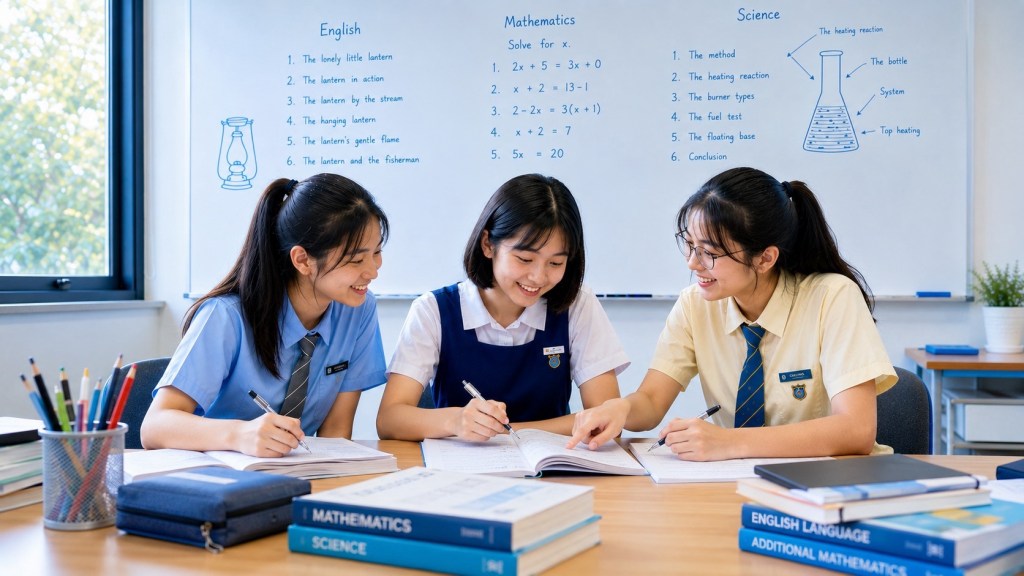
Primary 2 English Tuition in Sengkang: From Supported Learning to Growing Independence
For worked practice in independent reading and connected sentences, open the Primary 2 English guides. To explore another stage or language skill, return to English Hub.
Primary 2 is the bridge between learning the first English routines and beginning to use them without constant help. The child is still young, but the language system should start becoming more reliable: reading should hold meaning for longer, vocabulary should return when needed, grammar should survive outside worksheets and writing should become less dependent on prompts.
At eduKate Sengkang, Primary 2 English tuition is taught in focused groups of up to three students at 83 Punggol Central. We support Sengkang and Punggol families who need to repair an early gap, stabilise current learning or extend a strong child through richer language rather than unnecessary pressure.
Read → understand → retrieve → explain → write → check → use again.
Quick Answer: What Changes in Primary 2 English?
Primary 1 introduces the first routines. Primary 2 asks whether those routines are beginning to hold. A child may be able to read a sentence but lose meaning across a paragraph. A grammar rule may be correct in a dedicated exercise but disappear during writing. A vocabulary word may be recognised but unavailable when the child needs to use it.
The important work is therefore not simply adding more English. It is making existing English more retrievable, connected and independent.
What the Primary English Curriculum Is Building
The MOE Primary English Language syllabus treats listening, reading, speaking, writing, grammar and vocabulary as connected parts of language use. That is a useful way to think about Primary 2. A difficulty in one area can begin somewhere else.
MOE Primary English Language syllabus
What We Build in Primary 2 English
Reading Fluency With Meaning
We want smoother reading, but speed alone is not the target. The child should increasingly hold meaning across sentences, follow sequence, connect details and retell what was read. Fluency is useful because it frees attention for comprehension.
Vocabulary Retrieval
Recognition is easier than retrieval. A child may understand a word when it appears in a list but fail to produce it during writing. We deliberately bring words back after a delay and ask students to use them in new contexts so vocabulary becomes available rather than merely familiar.
Grammar That Survives Real Writing
Knowing a rule during grammar practice is only the first stage. We test whether the same rule survives sentence construction and short writing. The useful progression is learn → recognise → apply → transfer.
Comprehension and Answer Construction
A child can understand a story and still write an incomplete answer. We separate understanding from expression: first establish what the text means, then decide what the question asks for and how to encode the answer clearly.
Writing With More Independence
The child learns to move from an idea to an organised sentence and then to a short connected text. We look for relevant detail, sequence, sentence control, vocabulary choice and the ability to reread and improve.
A Mark Tells Us What Happened. Diagnosis Tells Us Why.
Two Primary 2 students can receive the same result and need completely different support. One may read accurately but have weak vocabulary. One may understand the passage but write incomplete answers. One may know grammar rules but fail to use them during writing. One may perform well with prompts but struggle independently.
Same score does not mean the same learning problem.
A Primary 2 English Diagnostic Map
- Reading is accurate but slow: check fluency, automatic word recognition and confidence.
- Reading is smooth but comprehension is weak: check vocabulary, sentence meaning and attention across the paragraph.
- Knows vocabulary in lists but not in writing: practise retrieval and reuse.
- Grammar exercises are strong but compositions are weak: move grammar into authentic writing.
- Understands orally but writes incomplete answers: work on sentence construction and answer precision.
- Needs repeated prompts to begin: check task understanding, confidence and independence.
- The same mistake returns after correction: test whether the repair was actually retained.
PRIMARY 2 ENGLISH · FIND YOUR WAY
→ Capability / Voyage
See growing independence in Primary 2 →
See where Primary 2 sits in the wider journey →
↓ Next stage
Primary 2 English: When Independence Becomes the Main Learning Problem
Primary 2 is not simply Primary 1 with longer worksheets. The important change is that the child is expected to carry more of the language process without an adult supplying every next step. Reading should preserve meaning for longer. Vocabulary should be easier to retrieve. Grammar should begin surviving outside dedicated exercises. Writing should move from isolated sentences towards connected ideas. The child should increasingly understand what a task asks and begin without waiting for continuous prompting.
This makes independence the central diagnostic question. A child can appear successful when the adult is reading instructions, explaining unfamiliar words, reminding the child what happened in the passage and correcting every sentence. The finished worksheet may look strong while the learner remains dependent. Primary 2 is where that dependence becomes easier to see—and where it is still early enough to repair deliberately.
Primary 2 progress is not only more knowledge. It is more knowledge that the child can recover, organise and use with less help.
The Primary 2 Reading Shift: From Sentence Meaning to Paragraph Meaning
In Primary 1, much attention is spent making individual words and sentences more reliable. In Primary 2, that foundation has to stretch across several sentences. A reader must hold earlier information while processing what comes next. Pronouns refer backwards. Causes may be stated in one sentence and consequences in another. A character’s feeling may only become clear after several clues accumulate.
This is why a child can look like a competent reader at sentence level and still struggle with a paragraph. The issue may not be decoding at all. The learner may be losing the thread across sentences.
Holding meaning across sentences
Consider: Jia Min left her water bottle on the bus. She only noticed it during recess. After school, her father called the bus company. To understand the final sentence, the reader has to preserve the earlier problem. The pronoun it must still refer to the water bottle. The later action makes sense because the earlier loss is remembered.
A useful reading routine is to pause after a short paragraph and ask: Who is this about? What changed? What caused the next event? What does this pronoun refer to? The goal is not to interrupt every line forever. The pauses make the connecting work visible until the child can perform it more automatically.
Main event versus interesting detail
Young readers are often drawn to vivid details. A funny colour, an unusual object or a dramatic sentence can dominate memory even when it is not central to the passage. Primary 2 is a good time to begin distinguishing the main event from supporting detail. Ask the child to summarise the paragraph in one sentence. If the chosen detail disappears, would the basic event still make sense? If yes, it may be supporting rather than central.
This distinction later supports summary, comprehension and writing structure. The learner begins to see that texts are organised around more important and less important information.
Fluency in Primary 2: Enough Ease to Think While Reading
Primary 2 readers benefit from greater automaticity because texts are beginning to carry more information. If common words still require heavy effort, attention is consumed before the child can connect ideas. But fluency remains a means, not the final goal.
We therefore observe three dimensions together: accuracy, ease and meaning. A child who reads quickly but substitutes words may need closer print attention. A child who reads accurately but extremely slowly may need repeated successful practice to build automaticity. A child who reads smoothly but cannot explain the passage may need stronger vocabulary or connected comprehension.
These patterns look different when we listen carefully, which is why reading aloud remains useful as a diagnostic window even as silent reading becomes more important.
Vocabulary Retrieval: The Primary 2 Difference Between Knowing and Owning a Word
Primary 2 exposes a common vocabulary problem: children recognise more words than they can produce. A learner may understand furious in a reading passage but write very angry every time. The word is present in recognition memory but not yet reliably retrievable during expression.
This is not a reason to abandon the simpler phrase. It is a reason to strengthen retrieval. We can ask for the word later without showing it, compare it with related words, use it orally in another scenario and bring it into short writing. The learner begins constructing multiple routes back to the word.
Word depth matters more than decorative difficulty
A useful Primary 2 vocabulary does not consist of rare words placed into compositions to look advanced. It consists of words the child can choose accurately. Whispered, muttered, shouted and replied all describe speech, but they are not interchangeable. A learner who sees the difference is developing precision.
Precision supports both comprehension and writing. If a passage says someone muttered, the manner of speech can become a clue to mood. If the child later chooses muttered appropriately in a story, the word has transferred from reading into writing.
Build word families and contrasts
Words become easier to remember when they live in relationships. Compare glance, stare, peer, gaze. Which is brief? Which suggests difficulty seeing? Which lasts longer? Which might feel impolite? These distinctions deepen the network around each word and make retrieval more flexible.
Grammar Transfer: Why Correct Exercises Can Coexist With Weak Writing
Primary 2 children often demonstrate grammar knowledge in isolated exercises before they can maintain the same control in authentic writing. The reason is cognitive load. In a grammar worksheet, the target is obvious. In writing, the child is also generating ideas, choosing words, spelling, organising sequence and remembering punctuation. The grammar rule has to compete for attention.
We therefore teach transfer explicitly. After focused practice, the child writes three or four original sentences containing the same relationship. The tutor asks the child to check only that target. Later the writing task becomes longer and the target is still monitored. Eventually the check becomes one part of a broader self-editing routine.
Recognise the rule → use the rule deliberately → monitor the rule in real writing → use it without a prompt.
Why correction alone is not enough
If the adult simply changes He walk to school into He walks to school, the page improves immediately. But the learner may not know what to inspect next time. A stronger correction makes the relationship visible: Who is the subject? Is it one person or more than one? What happens to the verb in this sentence? Then the child makes a new sentence using the same relationship.
The new sentence is important because it tests whether the correction became a process rather than a copied answer.
Primary 2 Comprehension: Separate Passage Understanding From Answer Construction
One of the most useful Primary 2 distinctions is between understanding the text and writing the answer. A child may know exactly what happened but still give an incomplete or irrelevant written response. If we treat that as a general comprehension failure, we may reteach the wrong thing.
We therefore inspect the route in stages: What does the passage mean? What does the question ask? Which evidence matters? What answer should be expressed? Can that answer be written clearly and completely?
Question interpretation
Primary 2 students should become increasingly sensitive to the job of the question. Who and where ask for different types of information. Why asks for a reason. How did the character feel? may require a state supported by clues. What happened after…? requires sequence.
Before answering, the child can underline or restate the important demand in simple language. This small habit prevents many answers that are true statements but do not actually respond to the question.
Evidence selection
When several details appear in a passage, Primary 2 students begin learning that not all evidence is equally useful. If asked why a character was frightened, the best clue is the detail that reveals fear or the cause of fear—not merely any sentence containing the character’s name.
We teach the learner to ask: Which part of the text proves my answer? That simple question begins a discipline that becomes more important throughout Primary and Secondary English.
Inference at Primary 2: Combine Clues Without Guessing Freely
Inference should not feel mysterious. The reader combines information stated in the text with ordinary knowledge to reach a conclusion that the text supports.
Suppose a passage says: Hana rubbed her hands together, pulled her jacket tighter and hurried indoors. The text does not say It was cold, but the actions support that conclusion. The child can identify the clues and explain the inference.
The discipline is important: an inference must fit the clues. A child should not be rewarded for imaginative answers that ignore the text. We encourage creativity in composition, but comprehension requires evidence.
Writing in Primary 2: From Sentences to Connected Paragraphs
Primary 2 writing begins to ask for more sustained organisation. The child is no longer only building correct sentences. Those sentences must work together. Sequence, cause, detail and paragraph focus become more visible.
A useful first question is: What is this paragraph doing? It may introduce a setting, describe a problem, show an action or explain a result. Once the child understands the paragraph’s purpose, sentence choices become easier to organise.
Build coherence before adding decoration
A paragraph with simple vocabulary but clear sequence is often stronger than a paragraph filled with impressive phrases that do not connect. We therefore stabilise the event structure first. Who is present? What changes? What does the character do? What happens because of that action?
Once coherence is secure, vocabulary and sentence variety can deepen the writing without disrupting it.
Sentence variety as a meaning tool
Primary 2 students can begin noticing that sentences can be joined or varied for a reason. Two short sentences can create pace. A longer sentence can connect cause and effect. A sentence beginning with a time phrase can move the reader forward. We do not teach variety as a quota. We teach it as control over rhythm and relationships.
Rereading for meaning before proofreading
Children often think checking means looking only for spelling mistakes. A stronger editing routine begins with meaning: Does this sentence say what I intended? Is any important event missing? Does the order make sense? Only then do we inspect grammar, punctuation and spelling.
This ordering matters because a perfectly spelled paragraph can still be confusing. Editing should protect communication first and correctness second, while eventually developing both.
Spelling and Word Patterns: Repair Recurring Systems
By Primary 2, spelling errors become useful diagnostic evidence because recurring patterns are easier to see. One mistake may be a slip. The same pattern appearing repeatedly suggests a system that needs explicit attention.
We group related examples, teach the pattern, practise it in focused work and later look for the same pattern in authentic writing. The important question is whether the repair survives when spelling is no longer the only thing the child is thinking about.
Oral Explanation: Use Speech to Inspect Reasoning
Primary 2 students are capable of explaining more than they can always write. Oral explanation lets us inspect comprehension, sequence, vocabulary and reasoning with less writing load. It also provides rehearsal for better written responses.
If a child gives a complete oral answer but writes only a fragment, the diagnosis becomes more precise. If the oral answer itself is confused, we know the problem lies earlier. This is why asking a child to explain is often more informative than immediately showing the correct written answer.
Worked Example 1: The Child Who Reads Smoothly but Cannot Explain the Paragraph
A student reads a paragraph accurately and with good pace. When asked what happened, the child says, I don’t know. We do not immediately conclude that the child needs harder comprehension practice.
- Ask for the meaning of two or three important words. If those are unknown, vocabulary may be blocking comprehension.
- Ask what happened in the first sentence, then the second. If each is understood separately, connection may be the weak link.
- Ask what a pronoun refers to. If reference is unstable, the paragraph may fragment.
- Ask for the main event in one sentence. If the child gives only a minor detail, information selection may need teaching.
- Reread with brief meaning pauses, then retell again.
The tutor now has a route for intervention instead of the vague label weak comprehension.
Worked Example 2: The Child Who Knows Words but Never Uses Them
A student scores well on vocabulary matching but repeatedly writes nice, bad, good, sad. Recognition is present, but retrieval under writing conditions is weak.
Choose three useful words from recent lessons. Ask the child to recall them without the list. Discuss one situation for each. Use them orally. Then write a short paragraph where at least one word genuinely fits. Return days later with a different context. This changes vocabulary from a recognition task into a retrieval-and-selection task.
Worked Example 3: The Child Who Understands but Writes an Incomplete Answer
The passage states that a boy returned home because he had forgotten his homework. The child explains this correctly aloud but writes: Forgot homework.
The comprehension is substantially present. The repair belongs closer to answer construction. Ask the child to identify who, what action and why. Build the oral sentence: He returned home because he had forgotten his homework. The child writes it, rereads it and compares it with the question. Later, use another passage without supplying the frame.
Worked Example 4: The Child Who Needs an Adult to Start Every Task
This learner may have adequate English knowledge but weak task independence. The parent or tutor reads every instruction, identifies the first question and asks the opening prompt. The child then works reasonably well.
We reduce support systematically. First, the child reads the instruction aloud. Next, the child explains what must be done. Then the child identifies the first step. Only after an independent attempt does the adult intervene. The goal is to transfer the starting routine into the learner.
Independence is not created by suddenly withdrawing all help. It grows through a planned reduction of help while success remains possible.
The Primary 2 Learning Loop: Practise, Retrieve, Transfer
Primary 2 is an ideal year for strengthening the learning loop. A skill that appears once is not yet dependable. We want the child to recover it later and use it when the surface changes.
- Understand: the child knows what the word, rule or strategy means.
- Practise: the process is repeated with enough support for success.
- Retrieve: the answer or model is removed and the child reconstructs it.
- Vary: wording, context or format changes.
- Transfer: the child uses the capability in a different task.
- Check later: we return after time has passed.
This loop prevents a common illusion: work that looks excellent while the model is visible but disappears the following week.
Home Support for Primary 2: Increase Responsibility Gradually
At home, the most useful change from Primary 1 may be to let the child carry slightly more of familiar routines. Ask the child to read the instruction first. Let the child attempt retrieval before supplying the word. Ask what the passage means before pointing to the answer line. Invite the child to reread writing before correcting it.
The adult is still available, but assistance comes later and more precisely. This delay gives the learner room to attempt, notice and recover.
Use conversation to deepen language
Primary 2 children can explain more complex relationships. Ask why a character made a choice, compare two possible actions or retell an event from another person’s point of view. These conversations build vocabulary and reasoning without turning home into another worksheet session.
Read both independently and together
Independent reading builds fluency and confidence when the text is manageable. Shared or adult read-aloud experiences expose the child to richer vocabulary and knowledge. Both matter. A child does not have to decode every challenging book personally to benefit from its language.
What Strong Primary 2 Progress Looks Like
- reading becomes smoother while meaning remains available;
- the child can hold information across a short paragraph;
- pronouns, sequence and simple causal relationships are followed more reliably;
- new vocabulary is retrieved after a delay and appears in fresh contexts;
- grammar rules transfer more often into authentic writing;
- comprehension answers become more relevant and complete;
- paragraphs show clearer sequence and purpose;
- the child rereads for meaning as well as surface errors;
- familiar tasks begin with less adult prompting;
- feedback changes later attempts rather than only the corrected page;
- skills learned in tuition appear increasingly in schoolwork.
The Primary 2 to Primary 3 Handover
Primary 3 raises the academic load. Texts become longer, comprehension requires more interpretation and writing demands stronger organisation. The best preparation is not premature drilling of upper-primary papers. It is a Primary 2 language system strong enough to carry the next level.
Before Primary 3, we want the child increasingly able to read a paragraph without losing its thread, retrieve useful vocabulary, understand common question demands, construct complete answers, connect sentences into a coherent paragraph and begin familiar tasks independently.
These are the capabilities that let Primary 3 become a year of development rather than a year of emergency repair.
Primary 2 English as an Independence System
Primary 2 is the year when many language routines begin to move from something the adult helps the child do towards something the child can initiate and manage. That shift is easy to underestimate because the worksheets may still look simple. Underneath them, however, the learner is being asked to remember instructions, hold meaning across longer text, retrieve vocabulary without a visible list, apply grammar while generating ideas, organise writing and check work with less prompting.
This means independence is not a personality trait and it is not the same as being left alone. It is an instructional outcome. We build it by making successful processes visible, letting the child practise them, gradually reducing support and then checking whether the capability survives when the task changes.
Model → share the process → prompt lightly → independent attempt → changed task → delayed retest.
A child who still needs help at one stage is not failing. The useful question is whether the amount and type of help are changing over time.
The Four Loads a Primary 2 Learner Must Carry
Many P2 difficulties become clearer when we separate four kinds of load that occur inside a task.
1. Print load
The learner has to recognise and decode the words. If this remains effortful, attention is consumed before comprehension begins. We listen for inaccurate substitutions, repeated hesitation, dependence on pictures and difficulty transferring familiar patterns to new words.
2. Meaning load
The words and sentences have to create a coherent situation. Vocabulary, syntax, pronoun reference, sequence and background knowledge all contribute. A child may process the print accurately but still misunderstand the event.
3. Task load
The learner has to understand what the question or instruction requires. A child can understand a passage and still answer the wrong thing because the command was misread or the requested information was not identified.
4. Output load
The answer must be expressed. Spoken language, vocabulary retrieval, grammar, spelling, handwriting and organisation all enter. This is why a child can explain the answer correctly aloud yet produce a weak written response.
When the final answer fails, we ask which load first became unstable. This prevents a broad label such as weak English from hiding a specific teachable problem.
Primary 2 Reading: From a Line of Text to a Structured Passage
Longer reading is not simply more sentences. It requires organisation. The reader has to identify what each sentence contributes and how the parts fit together. At Primary 2, we begin making common text relationships visible so children can hold the passage as a structure rather than as a sequence of unrelated lines.
Sequence
Stories and processes often depend on order. Words such as first, then, later, before, after and finally help, but sequence may also be implied. Ask the child to reconstruct events after reading and explain what would stop making sense if two events were swapped.
Cause and effect
An event may trigger another event across sentence boundaries. The passage might say that a glass fell, then later describe water spreading across the floor. The child has to connect those details even if the word because never appears.
Problem and response
A character encounters a difficulty and reacts. Recognising this structure supports both comprehension and composition. We can ask: What changed? What did the character do about it? Did the response solve the problem?
Description and category
Informational texts often group facts around a topic. A paragraph about an animal may cover appearance, habitat and behaviour. The learner should begin seeing that details belong under larger ideas rather than remembering them as a random list.
These structures later become essential for summary, comprehension, composition and learning across subjects. Primary 2 is an excellent place to make them explicit without overloading the child with terminology.
Reading Stamina: Staying With Meaning for Longer
A child may understand the first few sentences of a passage and then fade. Reading stamina is partly about attention, but it is also about efficiency. If decoding, vocabulary or sentence processing are consuming too much effort, the learner tires quickly because every line is expensive.
We build stamina by choosing text that is challenging enough to teach but manageable enough to preserve success. The length can increase gradually. We pause at meaningful points rather than every sentence. We teach the child to notice when meaning has been lost and reread strategically rather than restarting the entire passage.
Rereading with a purpose
Rereading is not automatically a sign of weak reading. Skilled readers return to text when meaning is uncertain. The goal is purposeful rereading. Which sentence contains the missing information? Which pronoun is unclear? Which word changes the meaning? The child learns to repair locally rather than reread mechanically.
Context Clues: A Tool, Not a Guessing Licence
Primary 2 students can begin using surrounding language to infer an unfamiliar word, but the process needs discipline. Context gives constraints; it does not justify any answer that fits the general topic.
Suppose the sentence says, The puppy cowered behind the chair when the thunder cracked. A child may not know cowered. The surrounding action and thunder suggest fear or shrinking away. We can ask: What is happening? What emotion fits? What kind of action would match hiding behind a chair?
After forming a possible meaning, we check whether it fits the sentence and later confirm the word. The process is clue → possible meaning → fit check → confirmation, not random guessing.
Pronoun Reference and Cohesion: The Small Words Holding a Paragraph Together
As passages lengthen, reference words matter more. He, she, it, they, this, that, these and those allow writers to connect ideas without repeating every noun. But if the child loses the referent, the passage fractures.
We teach a simple check: when a pronoun creates uncertainty, point backwards and identify the noun or idea it replaces. Then reread the sentence with the noun restored. Does the meaning now make sense? This tiny habit supports coherence and later inference.
Primary 2 Comprehension Answers: Build Relevance Before Length
Children sometimes learn that a longer answer is safer. That can produce sentences full of copied material that never address the actual question. We teach the opposite order: first make the answer relevant, then make it complete.
A useful answer routine is:
- Read the question.
- State what type of information is required.
- Find or infer the evidence.
- Say the answer aloud.
- Write the smallest complete answer.
- Check it against the question.
This process teaches precision. The child learns that good answers are not defined by maximum words but by accurate response to the demand.
Answer Construction: From Fragments to Complete Meaning
A Primary 2 child may write Because he was late when the question asks why a character ran. Depending on the question format, that may or may not carry enough information. We help the learner see what the reader needs to understand without having to reconstruct too much missing context.
One useful practice is to hide the question after the child writes the answer. Can another reader still understand who or what the answer refers to? This does not mean every response must repeat the entire question. It teaches the child to judge whether the written answer stands clearly enough on its own.
Vocabulary Systems: Meaning, Collocation, Register and Retrieval
As vocabulary grows, children need more than dictionary meaning. They begin learning how words behave. Some words commonly appear together. Some are more formal. Some carry stronger emotion. Some fit speech but sound awkward in formal writing.
Collocation
English speakers usually say heavy rain rather than strong rain, and make a mistake rather than do a mistake. Children can begin noticing these partnerships through reading and conversation. This makes later writing sound more natural because vocabulary is learned in phrases rather than as isolated items.
Intensity
Words can express different degrees: annoyed, angry, furious. Comparing intensity helps a child choose a word that matches the situation. It also strengthens comprehension when emotional vocabulary appears in text.
Register
Primary 2 students do not need a formal lesson in sociolinguistics, but they can notice that language changes with purpose. A message to a friend, a school notice and a story character may not use exactly the same language. This prepares the child for later awareness of audience and purpose.
Grammar as a Monitoring System
By Primary 2, the aim is not only to answer grammar questions correctly. The child should begin noticing grammar while reading and writing. That requires a monitoring routine.
- Who or what is the sentence about?
- Is the event happening now, usually, or in the past?
- Do the subject and verb fit?
- Do pronouns clearly refer to the right noun?
- Has the sentence ended?
- If ideas are joined, is the relationship clear?
At first, the tutor may choose one target. Later, the child can use a compact editing checklist. The checklist should become shorter as patterns become automatic; otherwise checking itself can become an excessive load.
Editing: The Skill That Turns Feedback Into Independence
Editing is where many Primary 2 capabilities meet. The learner rereads, compares intention with output, notices a mismatch and repairs it. This is fundamentally different from waiting for an adult to circle every error.
We teach editing in layers. First, reread for meaning. Next, check one or two known grammar patterns. Then inspect punctuation and spelling patterns that the child can realistically control. The order matters because a child can spend all available attention fixing surface errors while leaving a confusing sentence untouched.
A simple P2 editing loop
- Read the sentence as a reader.
- Ask whether it says what was intended.
- Check the current grammar target.
- Check the sentence boundary and punctuation.
- Inspect one or two uncertain spellings.
- Read the revised version again.
Over time, the tutor should need to identify fewer errors explicitly. The learner begins finding them first.
Primary 2 Composition: Planning Without Over-Scripting
Planning helps when it reduces cognitive load. It hurts when the plan becomes so detailed that the child merely fills blanks or copies an adult story. We want a compact plan that preserves ownership.
A simple story plan can answer four questions: What is the starting situation? What changes or goes wrong? What does the character do? What is the result? This gives the writing a spine. The child can then choose details and language while drafting.
Paragraph purpose
Even short compositions benefit when each paragraph has a job. One paragraph sets up the situation. Another develops the problem. Another shows the response or outcome. The exact number is less important than the principle that paragraphs organise meaning.
Details that change the reader’s understanding
We ask whether a detail helps the reader see the event, understand the character or follow the cause. If it does none of those things, it may be decoration. This gives children a practical reason for choosing details instead of counting adjectives.
Dialogue in Primary 2 Writing: Use It When Someone Needs to Speak
Dialogue can make a story vivid, but it is not automatically an improvement. We teach children to use speech when it reveals information, emotion, conflict or a decision. A conversation should move the story or deepen the reader’s understanding.
The mechanics—quotation marks, punctuation and new speakers—can be introduced carefully, but the first question remains purpose: Why is this character speaking here?
Non-Fiction Writing and Explanation
Primary 2 English is not only story writing. Children increasingly need to explain, describe and sequence information. A short explanation such as How to care for a plant or Why we need to wash our hands develops organisation, precise verbs and causal language.
These forms also connect English to the wider learning day. The child learns that writing can communicate knowledge, not only imagination.
Listening at Primary 2: Hold, Select and Respond
Listening demands more than hearing accurately. The child has to select important information and retain it long enough to act or answer. As instructions become longer, selection becomes important.
We can ask the learner to repeat the key part of a direction before beginning. For a short oral passage, ask what the main event was rather than requesting every detail. This develops the habit of identifying what matters.
Speaking at Primary 2: Extend, Clarify, Respond
Primary 2 learners can begin sustaining an idea over several sentences. We ask follow-up questions that require extension: Why? What happened next? How is that different? What clue made you think that?
The child also learns to respond to another person’s contribution. In a small group, one student can agree, disagree or add a detail. This creates a richer language environment than a sequence of one-word teacher questions.
Memory and Retrieval: Why Review Should Sometimes Feel Harder
Looking again at a completed worksheet can feel easy because the answers are present. Retrieval practice removes that support. The child has to reconstruct the word, rule, sequence or strategy. This can feel more difficult, but it gives much better evidence of what is available from memory.
We can revisit vocabulary after several days, ask for a grammar pattern in a new sentence, retell a previously read story without the book open or explain a comprehension strategy without the worksheet. Difficulty during retrieval is not automatically a problem; it tells us what needs another successful encounter.
Transfer: Make the Surface Change
A child may learn a skill so tightly attached to one worksheet that it disappears when the presentation changes. Transfer breaks that attachment. If the learner practised cause-and-effect in a story, ask for the same relationship in an informational paragraph. If a vocabulary word was learned in reading, use it in speaking and writing. If grammar was practised in isolated sentences, find it inside a composition.
The underlying capability stays the same while the surface changes. That is why transfer is stronger evidence of learning than repetition alone.
Seven Primary 2 Learner States That Need Different Repairs
1. Accurate reader, low stamina
The child reads correctly but tires quickly and loses the passage thread. Build automaticity and gradually extend text length while checking meaning.
2. Fluent reader, shallow vocabulary
The reading sounds strong, but unfamiliar words repeatedly block understanding. Build vocabulary depth, background knowledge and context-clue routines.
3. Strong oral comprehension, weak written answers
The child understands but cannot encode a complete response. Work on answer construction, sentence control and written retrieval without reteaching the entire passage unnecessarily.
4. Strong grammar recognition, weak transfer
The rule is available only when the exercise announces it. Move the target into original sentences and short writing, then reduce reminders.
5. Rich ideas, poor organisation
The child has plenty to say but the story or paragraph jumps around. Stabilise sequence, paragraph purpose and cause before adding more vocabulary.
6. Correct work only with prompts
The adult is carrying task initiation and checking. Track support explicitly and reduce it in planned steps.
7. Good performance today, weak retention next week
The learner may be succeeding through immediate memory. Add spacing, retrieval and changed examples before assuming the skill is secure.
A Primary 2 Diagnostic Lesson: What We Observe
A diagnostic lesson need not feel like an examination. Normal tasks can reveal the system if the tutor observes carefully.
- During reading: accuracy, phrasing, word-solving strategy, stamina and meaning.
- During vocabulary: recognition, explanation, retrieval and contextual use.
- During comprehension: question interpretation, evidence selection, inference and answer construction.
- During writing: idea generation, sequence, sentence control, vocabulary choice, spelling and rereading.
- During feedback: whether the child can use a cue, explain the correction and apply it again.
- During independent work: how much help is required to start, continue and check.
The objective is to locate the earliest useful intervention, not to produce the longest list of weaknesses.
Primary 2 Progress Tracking: Measure Support as Well as Accuracy
Marks can improve while dependence remains unchanged. That is why we also track the level of support required. A child who moves from needing a full explanation to needing one short prompt has improved even if the score looks similar. A child who produces the same score only because the adult is helping more has not necessarily become more independent.
Useful progress evidence includes:
- fewer recurring errors;
- lighter prompts;
- faster recovery after an error;
- longer successful reading without loss of meaning;
- more vocabulary retrieved spontaneously;
- better transfer into schoolwork;
- more self-correction;
- stronger task initiation;
- successful performance after a delay.
A Parent’s Weekly Primary 2 Check
Parents can observe without turning home into a second classroom. Once or twice a week, notice a few practical signals.
- Can the child read a short paragraph and explain the main event?
- Does the child ask about unfamiliar words rather than skip them blindly?
- Can one or two recent vocabulary words be recalled without the list?
- Can the child follow written instructions before asking for adult translation?
- Does written work begin with less prompting?
- Can the child reread and find at least one improvement independently?
- Do corrections from earlier in the week appear in later work?
The pattern over time matters more than a perfect evening.
When More Tuition Work Can Make the Problem Harder to See
Large amounts of guided work can hide dependence because the child receives many cues. If the real issue is retrieval or task initiation, adding more fully supported worksheets may improve completion without changing independence.
Sometimes the better test is less material with fewer prompts. One paragraph read independently can reveal more than five passages completed with continuous explanation. One original paragraph can reveal more about grammar transfer than a page of multiple-choice items.
Quantity is useful when the practice is correctly targeted. It is not a substitute for diagnosis.
How Primary 2 Prepares for the Academic Load of Primary 3
Primary 3 asks the child to coordinate more language inside each task. A comprehension question may require vocabulary, inference, evidence selection and a complete written answer at once. A composition requires planning, paragraphing, sentence control and sustained editing.
The best P2 preparation is therefore not simply exposure to P3 worksheets. It is stronger coordination and independence at the current level. When reading, vocabulary, sentence control and checking are more automatic, the child has more attention available for the new academic demands.
Primary 2 builds the reliability. Primary 3 spends that reliability on more complex thinking.
Primary 2 English by Capability: A Full-Year Development Map
A useful way to plan Primary 2 is to look beyond the order of workbook chapters and ask which capabilities should become more independent across the year. The child may meet many grammar topics, vocabulary lists and passages, but the deeper development is whether those experiences build a system that can handle unfamiliar work.
The map below is not a rigid calendar. It describes the direction of travel. Different learners may need to spend longer strengthening an earlier capability before the later ones become reliable.
Capability 1: sustain meaning across a paragraph
The child should increasingly read several connected sentences without treating each one as a separate event. Sequence, pronoun reference and simple cause should remain available from the beginning of the paragraph to the end.
Capability 2: identify what matters most
Primary 2 readers begin distinguishing a main event or idea from supporting detail. This matters for retelling, summary, comprehension and later study skills. The learner does not need formal note-making yet, but should be able to say what a paragraph is mainly about.
Capability 3: infer from constrained evidence
The child combines textual clues with ordinary knowledge and can point to the clues that make an inference reasonable. This develops a disciplined form of reading rather than free guessing.
Capability 4: retrieve and choose vocabulary
More words should become available without a visible list. The learner begins choosing among related words according to meaning rather than inserting difficult vocabulary for decoration.
Capability 5: transfer grammar into real language
Rules learned in focused exercises increasingly appear in original sentences and compositions. The child begins monitoring a few familiar patterns without waiting for the tutor to identify every error.
Capability 6: construct relevant comprehension answers
The learner understands the question demand, selects relevant evidence and expresses a complete answer. Passage understanding and written answer construction become more clearly connected.
Capability 7: organise connected writing
Sentences work together around a sequence, event or paragraph purpose. The child can plan briefly, draft and preserve the basic logic of the piece without needing an adult to supply each transition.
Capability 8: edit and recover
The child rereads, notices some mismatches and improves them. Feedback increasingly changes later attempts. When stuck, the learner has strategies other than waiting for the answer.
Capability 9: begin familiar tasks independently
Task initiation is a major part of P2 independence. The child reads the instruction, identifies the first step and attempts the task before seeking help. This does not mean never asking questions; it means the questions become more precise.
Primary 2 Reading for Knowledge: Why Background Knowledge Starts to Matter More
As texts become more varied, comprehension depends increasingly on what the child already knows about the world. A passage cannot explain every ordinary relationship. If the learner knows something about rain, transport, animals, food, school routines or simple machines, new text has more places to attach.
This is why a broad reading diet helps. Stories develop narrative knowledge and social understanding. Informational texts build concepts and technical vocabulary. Conversation, outings and hobbies also add background knowledge that later supports reading.
A child who knows how a seed becomes a plant will usually find a simple passage on germination easier to understand than a child who is learning both the concept and the language at the same time. English learning and world knowledge can reinforce one another.
Main Ideas and Supporting Details at Primary 2
One of the most powerful P2 reading habits is asking what a paragraph is mainly doing. A paragraph about a lost pet might contain colour, location, time and character details, but the central event is the pet’s disappearance. Supporting details matter because they explain or develop that event.
We can teach this through subtraction. Remove one detail mentally. Does the main event remain? If yes, the detail may be supporting. Remove the central event. Does the paragraph lose its point? This concrete test helps young learners understand hierarchy in text.
The same principle strengthens writing. A paragraph should have a centre. Details should support it rather than compete for attention.
Primary 2 Question Words and Command Language
Question reading becomes more important as tasks diversify. Children should know that the wording of a question tells them what kind of response is required.
- Who? Identify a person or character.
- Where? Identify place.
- When? Identify time or sequence.
- What happened? Identify an event.
- Why? Supply a reason or cause.
- How did X feel? Infer or identify an emotional state and often support it.
- How do you know? Point to evidence.
- What happened next? Follow sequence precisely.
We want the child to internalise the question-reading habit rather than memorise a formula for every possible wording.
Evidence in Primary 2: Teach the Child to Prove an Answer
Evidence does not need to sound formal. It simply means the answer can be connected back to something in the text. If the child says a character was nervous, ask which action, word or event supports that view. This develops a powerful discipline: answers should be recoverable from the passage, not invented because they sound plausible.
Over time, the child learns that several clues can combine. A character may avoid eye contact, speak softly and grip a bag tightly. None of these says nervous, but together they support the inference. This prepares the learner for the more demanding inference work of Primary 3 and beyond.
Primary 2 Writing From Pictures: Observe, Select, Sequence, Develop
Picture prompts can be used badly if the child merely lists visible objects. Their stronger purpose is to support observation and story reasoning. Which details suggest the central event? What may have happened before the picture? What is likely to happen next? Which character action matters most?
We teach four moves:
- Observe: identify concrete details without inventing yet.
- Select: choose details relevant to the likely event.
- Sequence: decide what happens before, during and after.
- Develop: add thought, dialogue, action or description where it helps the reader understand.
This is more transferable than memorising one model composition because the child learns a process for constructing a story from new evidence.
The Primary 2 Sentence Workshop
Sentence practice becomes more useful when children can manipulate meaning rather than complete isolated blanks. Start with a controlled sentence and change one relationship at a time.
The girl opened the door. Add time: After lunch, the girl opened the door. Add reason: The girl opened the door because she heard a knock. Add a second action: The girl opened the door and looked into the corridor.
The child sees how language expands. We also show when not to expand. Sometimes a short sentence is clearer. Control means choosing an appropriate structure, not making every sentence longer.
Punctuation and Sentence Boundaries: Protect the Reader
By Primary 2, punctuation should increasingly be connected to sentence meaning and reading flow. A full stop marks a completed unit. A question mark signals a question. Commas can separate information and help the reader see structure. Quotation marks help identify speech when dialogue is introduced.
Rather than teaching punctuation only through correction, let the child compare versions. What happens when two sentences are run together? Where does the reader need a boundary? What changes when a question mark becomes a full stop? The conventions gain a communicative purpose.
Primary 2 Spelling: From Individual Words to Transferable Patterns
Spelling lists can be useful, but the deeper objective is a set of patterns the child can use beyond the list. If a learner studies a particular vowel pattern, we later include unfamiliar words with the same pattern. If an ending is taught, we look for it in authentic writing.
We also distinguish spelling knowledge from spelling monitoring. A child may know the correct form when asked directly but fail to notice an error while composing. Editing practice helps move knowledge into monitoring.
Primary 2 Oral Language and the Move Towards Explanation
Primary 2 students can begin moving beyond naming and description towards fuller explanation. A strong oral answer often follows a simple architecture: statement, reason, example or evidence.
For example: I think the boy felt embarrassed because everyone was looking at him. The picture shows him covering his face. This spoken structure can later support comprehension answers and composition planning.
We do not require every answer to sound formal. The purpose is to give thought enough structure that another person can follow it.
Primary 2 and Bilingual Homes: Distinguish Concept From English Expression
In multilingual families, a child may understand an idea clearly but lack the English word or sentence needed to express it. This distinction is useful. If the concept exists, instruction can focus on English vocabulary and expression rather than reteaching the underlying idea from zero.
Rich family conversation in another language does not have to be treated as an obstacle. Knowledge, reasoning and narrative skill can develop across languages. English still needs adequate exposure and practice, especially because it is the language of many school tasks, but development need not be framed as a competition between languages.
A Primary 2 Error Taxonomy: What Kind of Mistake Is This?
Before correcting, we classify the error roughly. This makes feedback more efficient.
- Knowledge gap: the child does not know the word, rule or relationship.
- Retrieval gap: the child knows it when shown but cannot produce it independently.
- Transfer gap: the child can do it in focused practice but not in authentic tasks.
- Monitoring gap: the child can correct the error when pointed out but does not notice it alone.
- Load problem: the child loses control when too many processes must operate together.
- Task-reading error: the language skill may be present, but the instruction or question was misunderstood.
- Slip: an isolated mistake in an otherwise secure pattern.
The same visible error can arise from different categories. That is why diagnosis should precede repetition.
Worked Case 5: Main Idea Hidden by Interesting Details
Aria reads a paragraph about a class trip to the zoo. When asked what the paragraph is mainly about, she says the flamingo was pink because that detail caught her attention. The problem is not memory; she remembers the text well. The issue is information hierarchy.
The tutor asks what would remain if the flamingo sentence were removed. The class still went to the zoo. Then the tutor removes the trip itself mentally; the other details no longer have a centre. Aria begins seeing that one idea organises the rest. Later she practises the same distinction in another passage and then uses it to organise a paragraph of her own.
Worked Case 6: Correct Answers but No Independence
Daniel’s homework is almost always correct. During a lesson, however, the tutor notices that Daniel waits after every question. At home, a parent has been reading instructions, explaining vocabulary and checking each answer before he moves on.
The marks were real, but they measured a supported state. The intervention is not more difficult work. It is a gradual reduction of assistance. Daniel begins by reading each instruction himself, explaining the task and attempting one question before receiving help. Over several weeks the adult delays intervention further. Accuracy initially becomes slightly less tidy, but genuine independence grows.
Worked Case 7: Vocabulary That Disappears After the Test
Sofia scores highly on Friday vocabulary tests but cannot remember the words two weeks later. The issue is not effort; she studies carefully. Her practice is concentrated immediately before the test and mostly involves looking at the list.
We change the learning schedule. Words are retrieved across several days, mixed with older words and used in speech and writing. Some are tested again after a longer delay. The immediate test may feel slightly harder, but retention improves because the child repeatedly reconstructs the words instead of only re-reading them.
Worked Case 8: Composition With Good Sentences but No Story
Ethan writes grammatically sound sentences and knows many strong words, yet his composition feels disconnected. Events appear because they are interesting rather than because one leads to another.
The tutor temporarily reduces the vocabulary focus and asks Ethan to plan only the event chain: starting situation, problem, response, consequence. He then writes a short version using ordinary language. Once the story logic is stable, richer vocabulary and description are added where they help. The improvement comes from structure, not more decoration.
How a Three-Student Primary 2 Group Can Be Used Well
Small-group teaching is most useful when the group produces more language and more diagnostic information, not merely when three students complete the same worksheet quietly.
One student can explain an inference and another identify the supporting clue. Students can compare two answers and decide which is more relevant. They can hear different vocabulary choices for the same picture. Each child can read a short section aloud while the tutor listens for a different process.
The tutor still needs individual evidence. A group answer does not prove that every child can perform alone. After discussion, each student should have opportunities to retrieve, write and check independently.
A Sample Primary 2 Lesson Architecture
The exact balance changes with the learner, but a coherent lesson may move through the following sequence.
- Retrieval: bring back previous vocabulary or a grammar relationship without showing the answer.
- Reading: read a short text with a clear comprehension job.
- Meaning discussion: identify main event, sequence, cause or inference.
- Answer construction: turn one idea into a complete written response.
- Language focus: examine vocabulary or grammar arising naturally from the text.
- Writing transfer: use the language in original sentences or a short paragraph.
- Edit: reread for meaning and the selected language target.
- Exit check: ask the child to explain what strategy or relationship should be remembered.
The lesson is not valuable because it contains eight parts. It is valuable if the parts connect and produce a more independent learner.
Primary 2 Home Reading: Balance Ease, Challenge and Choice
If every home book is too difficult, reading becomes exhausting. If every book is extremely easy, language growth may slow. Families can keep a mix: comfortable independent reading, richer shared reading and child-selected material that protects motivation.
Choice matters because children read more willingly when topics interest them. Comics, factual books, stories and magazines can all contribute if the language is genuinely being engaged. The goal is a widening reading life, not one approved format.
Primary 2 Writing at Home: Give Language a Real Job
Short authentic writing can be more motivating than another generic worksheet. A child can write a message, instruction card, simple review, caption, list with explanations or short recount. Real purpose changes the question from How many sentences must I write? to What does my reader need to understand?
Parents can respond first to meaning, then select one or two teachable corrections. This keeps writing communicative while still improving accuracy.
When to Investigate Rather Than Immediately Intensify Tuition
Not every weak week requires a larger intervention. Fatigue, illness, adjustment, an unfamiliar topic or one unusually difficult worksheet can produce temporary difficulty. We become more interested when the same pattern appears repeatedly across contexts.
If a child suddenly struggles in ways that extend well beyond ordinary academic variation, parents may also need to consider whether the issue sits outside tuition. Educational observation can identify a pattern but should not pretend to diagnose medical, sensory, developmental or emotional conditions.
When Primary 2 Tuition Is Doing Its Job
The strongest sign is not that the child can complete increasingly large amounts of tuition work. It is that the child begins needing less tuition-like support during ordinary learning.
- instructions are understood with fewer repetitions;
- reading repairs happen without immediate adult intervention;
- new vocabulary reappears spontaneously;
- comprehension answers become more relevant;
- grammar corrections survive into later writing;
- paragraphs are planned with clearer purpose;
- editing identifies some errors before the tutor does;
- the child begins unfamiliar work with a strategy rather than panic;
- schoolwork increasingly reflects the capabilities practised in tuition.
Primary 2 to Primary 3 Readiness Checklist
This checklist is a handover tool, not a pass/fail examination. It helps identify what is secure, what is emerging and what should receive attention before Primary 3 academic load increases.
- Can the child read a short passage without losing the main thread?
- Can a paragraph’s main event or idea be distinguished from supporting detail?
- Can pronouns and basic sequence relationships be followed reliably?
- Can simple inferences be supported with textual clues?
- Can useful vocabulary be retrieved after a delay?
- Can related words be distinguished by meaning and intensity?
- Do familiar grammar patterns appear in original writing, not only exercises?
- Can common question demands be identified before answering?
- Can the child choose evidence relevant to the question?
- Can a complete written answer be produced from understood meaning?
- Can several sentences be organised into a coherent paragraph?
- Can writing be reread for meaning before surface errors?
- Can some mistakes be found and repaired independently?
- Can familiar work begin without an adult supplying the first step?
- Do learned skills survive after a delay and in changed tasks?
A learner who is still developing several areas can continue building them in Primary 3. The value is knowing where the bridge needs reinforcement.
Extended Primary 2 English FAQ
Should Primary 2 children already write long compositions?
Length should grow from control. A shorter piece with coherent sequence and independent sentences can be more valuable than a long piece sustained by heavy prompting. We extend once the learner can carry the structure.
Why does my child forget vocabulary after tests?
Immediate review can create strong familiarity without durable retrieval. Bring words back after a delay, hide the list and use them in different contexts. Spacing and retrieval make memory work harder but usually reveal learning more accurately.
Should my child read harder books to improve faster?
Not necessarily. The right difficulty depends on the learning job. Independent reading should usually remain manageable enough for meaning. Richer books can be shared or read aloud so vocabulary and knowledge grow without overwhelming decoding.
What if my child understands but writes very short answers?
Check whether the difficulty is answer construction, vocabulary retrieval, sentence control or writing fluency. Ask for the oral answer first. If that is complete, use it as the bridge into writing.
Should we memorise model compositions?
Models can show useful structure and language, but the child still needs to generate and organise ideas for unfamiliar prompts. Memorised passages become limiting when performance depends on the new task resembling the old one.
Why does grammar disappear during composition?
Writing creates more cognitive load than a grammar exercise. Transfer needs deliberate practice. Target one familiar rule inside short writing, ask the child to monitor it, then gradually increase the complexity of the task.
How much help should I give with homework?
Enough help to make productive learning possible, but not so much that the adult carries the process. Let the child read, attempt and explain first. Then intervene at the earliest useful weak link. Over time, delay and reduce the help where the child is becoming secure.
What if my child refuses to check work?
Checking can feel like an invitation to find failure. Keep the routine short and purposeful. Ask for one meaning check and one familiar language target rather than a vague instruction to ‘check everything’. As success grows, the routine can expand.
Where Primary 2 Connects in the eduKate Sengkang English Estate
For the stage-change explanation, continue to Primary 2 English | Why Independent Reading Changes Everything. For small-group learning, see Sengkang Small Groups Primary 2 English Tuition. For the wider P1–P6 route, return to Primary English Tuition Sengkang | P1–P6 Language Capability Map.
When the child is ready for the next academic load, continue to Primary 3 English Tuition Sengkang | Comprehension, Grammar & Composition. Primary 3 should not feel like a new language system. It should feel like a stronger system being asked to do more.
How We Teach Primary 2 English
We do not assume the solution is always more worksheets. If vocabulary is the weak link, we improve retrieval. If the child can answer orally but not in writing, we use speaking to bridge into sentence construction. If grammar disappears during composition, we shorten the writing task and deliberately transfer the rule before expanding again.
Observe → diagnose → repair → practise → retrieve → transfer → reduce support.
The child should gradually need less help to start, continue and check. Independence is not a separate subject; it is one of the outputs of good teaching.
Why Three Students?
Primary 2 errors can be subtle. A small group lets the tutor notice where a child hesitates, whether an answer came from understanding or guessing, whether vocabulary is retrieved independently and whether the student still waits for someone else to supply the first sentence.
At the same time, students hear other children explain ideas and learn that language can be expressed in more than one clear way. The group remains small enough for individual correction to stay close.
Catch Up, Keep Up or Move Ahead
- Catch Up: repair weak reading, vocabulary, sentence control, comprehension or confidence before the gap spreads.
- Keep Up: strengthen retention, accuracy and independent use so current schoolwork becomes more stable.
- Move Ahead: extend through richer reading, more precise vocabulary, deeper questions, better storytelling and greater independence.
Primary 2 Still Has Time
Small language gaps are often easier to repair before they become dependencies. A vocabulary gap can later affect reading, comprehension and writing. Weak sentence control can later affect composition and comprehension answers. The purpose is not to create fear. It is to use the early years well.
MOE removed weighted assessments and examinations for Primary 1 and Primary 2 from 2019. We use that space for foundations, feedback and independent language use rather than premature examination drilling.
What Progress Should Look Like
- reading becomes smoother without losing meaning;
- new vocabulary is remembered and used later;
- grammar errors reduce during real writing;
- comprehension answers become more complete;
- the child explains ideas with less prompting;
- writing gains clearer sequence and detail;
- corrections survive into later lessons;
- schoolwork begins reflecting what was learned in tuition.
Preparing for Primary 3
Primary 3 brings more formal academic demand. Texts lengthen, vocabulary carries more load, comprehension questions become more demanding and writing requires more organisation. The child should ideally enter P3 with enough reading and sentence control to spend more attention on meaning and development.
Next: Primary 3 English Tuition Sengkang.
Primary 2 English Tuition for Sengkang Families
eduKate Sengkang teaches Primary 2 English in groups of up to three students at 83 Punggol Central, Singapore 828761. Lessons are 1.5 hours. We begin from the child’s current position rather than assume that every student needs the same amount or type of work.
If English has become uncertain, send us what you are seeing at school or at home. A recent worksheet, writing sample or reading concern can help, but you do not need to arrive with the diagnosis. We can work that out from the evidence.
Frequently Asked Questions
Is Primary 2 too early for English tuition?
Not automatically, and tuition is not automatically necessary either. The useful question is whether there is a real gap to repair or a worthwhile capability to extend.
Why does my child know a word but never use it?
Recognition is easier than retrieval. The child needs practice bringing the word back without seeing it first and using it in a meaningful context.
Why can my child answer orally but not in writing?
The child may understand the idea but still need sentence construction, vocabulary retrieval, organisation or writing fluency to encode it clearly.
More useful Primary 2 English guides
- Stage change: Why independent reading changes everything
- Small-group view: Primary 2 English in a small-group setting
- Reading tip: How students learn to read unfamiliar texts independently
- Vocabulary tip: How context clues build vocabulary independence
- Comprehension tip: Why comprehension answers need evidence
- Writing tip: How writing grows from sentence to paragraph to essay
- Check independence: How editing builds independent English
- Before Primary 3: What growing English independence looks like at Primary 2
Atlas return routes | Primary 2 English
- Learning Atlas V2.0 — route this English problem by learner state, stage and next action.
- English Hub — return to the wider English system and sibling routes.
- Parents’ Guide — when English becomes a family decision about support, load or tuition fit.
- Learning Runtime — when the issue is stability, transfer, retrieval or independence.
- The Tutor System — when a defined English weak link needs targeted human support.
