
Author: eduKate Asia
-

Algebraic Expressions for Sengkang Families: Terms, Brackets and Substitution Made Clear
Understand algebraic expressions with clear family examples, like terms, brackets, substitution, diagnostic checks and original practice with answers.
-
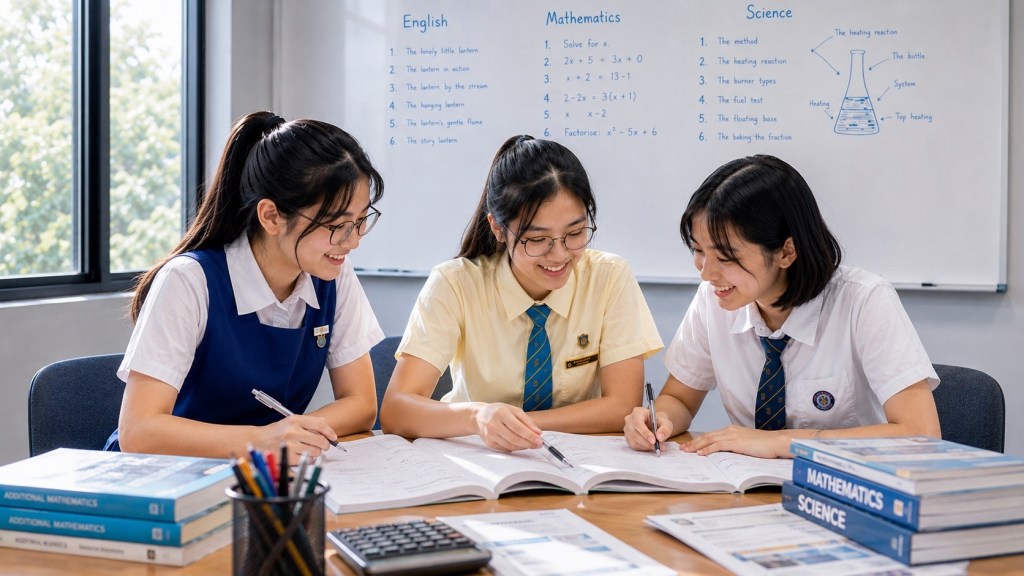
A, An and The for Sengkang Children: English Articles Made Clear for Families
English articles help a listener understand which person or thing a speaker means. Use a or an for one non-specific example of a singular countable noun; use the when the listener can identify the intended person, thing or group in context. Sometimes no article is appropriate. For Sengkang families helping with English, these tiny words…
-
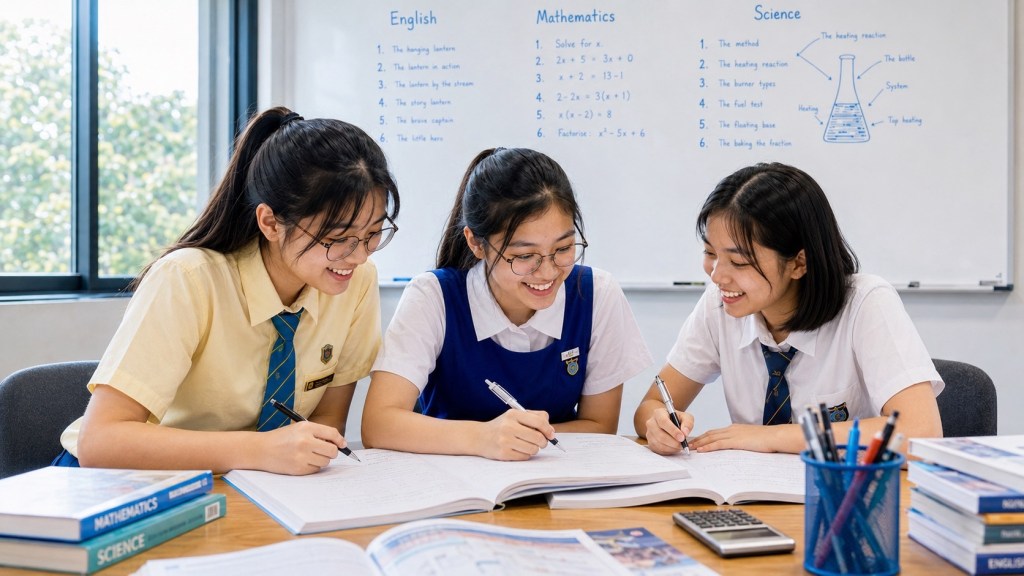
Present Simple and Present Continuous for Sengkang Children: Habits, Now and Clear English
The present simple often describes routines, general facts and states. The present continuous often describes actions happening now or temporary situations around now. For Sengkang families practising English together, the useful question is not simply which word appears in the sentence. It is what the speaker wants the listener to understand.
-
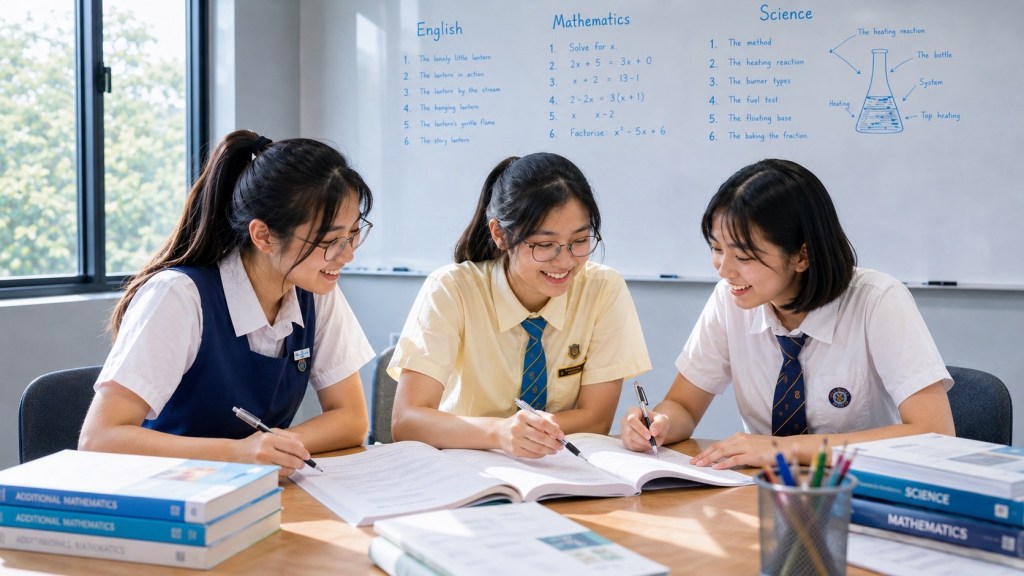
Line Graphs for Sengkang Families: Read Scales, Compare Changes and Explain Data
A line graph shows how one quantity varies across an ordered variable, often time. For a Sengkang family helping a child read data, the best first question is not “Is the line going up?” It is “What does each axis measure?” A rising line can mean a longer distance, a higher temperature or a larger…
-

Inequalities for Sengkang Families: Compare Values, Read Limits and Solve Clearly
An inequality compares values rather than saying that they are equal. For Sengkang families helping with maths at home, the useful starting point is not a page of algebra. It is a sentence such as “we need at least six cards” or “the total must stay below twenty”. The mathematical sign records exactly which values…
-
Master Science Tutorials Quickly | SEC G1/G2/G3 Science Lab Reports: From Results Tables to Evidence-Based Conclusions
Learn how SEC G1/G2/G3 Science students turn practical results tables into sound conclusions through worked Physics, Biology and Chemistry datasets.
