
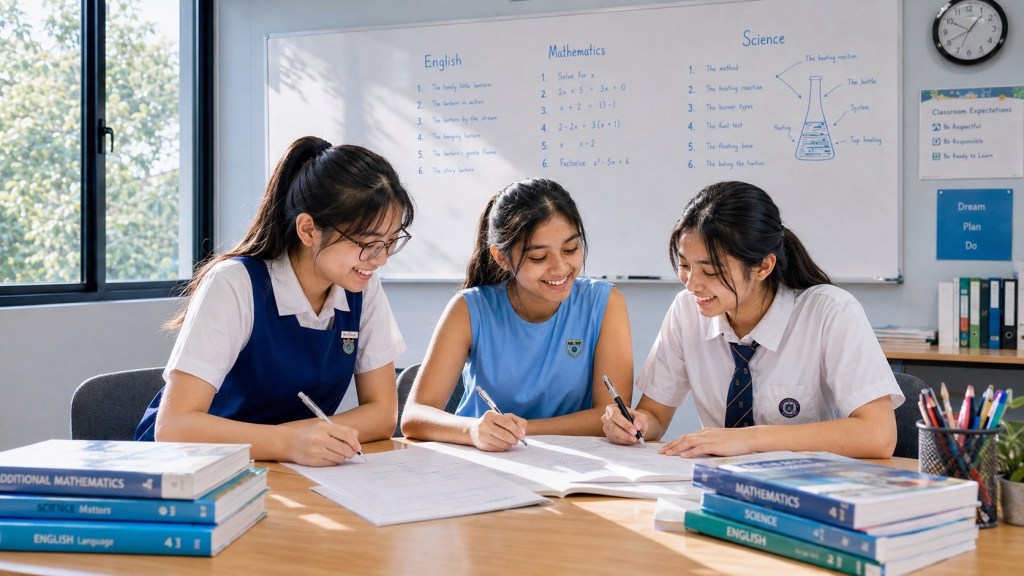
Parents sometimes want to sit in a Mathematics tuition lesson because they want to understand the teaching, see how their child behaves, confirm whether a small group is genuinely small, or observe whether the tutor notices the mistakes the family sees at home. Parents searching for Secondary Mathematics tuition in Sengkang, whether parents should sit in during tuition, whether they can observe a Math class, or whether parental presence helps or distracts are asking a legitimate question about visibility and learner independence.
Parent observation can help when it is brief, purposeful and tied to a specific decision. It can also distort the lesson. A child may become more cautious, seek parent approval, hide mistakes, perform unusually well, or wait for the parent to rescue them. A tutor may also teach differently because another adult is in the room. The goal is therefore not maximum parent access or total parent exclusion. The goal is enough transparency for parents to make informed decisions while preserving an authentic learning environment.
At eduKate Sengkang, this Advanced Mathematics Tutorials article owns the parent-observation job: when sitting in helps, when it changes the evidence, how a trial observation differs from regular attendance, what parents should look for, and how observation should fade as trust and learner independence grow.
Quick answer: should parents sit in a Mathematics tuition lesson?
Sometimes, for a defined reason and usually for a limited period. Parent observation is most useful during a trial, a transition, a serious concern or a placement review. It becomes less useful when the parent becomes part of the student’s support system or changes normal class behaviour.
- Useful: observing a trial lesson or first-session fit.
- Useful: understanding group size, pace and tutor attention.
- Useful: seeing how the tutor handles mistakes or a known concern.
- Useful: short observation after a major tutor or group change.
- Risky: parent confirms every answer.
- Risky: student performs for the parent instead of learning normally.
- Risky: tutor teaches to the observing adult.
- Risky: parent remains because neither adult knows when to fade observation.
Observation should answer a question
A parent should know what they are trying to learn. “I want to see how the tutor handles my child’s refusal to start unfamiliar questions” is useful. “I want to sit in because I am anxious” is understandable, but the observation should still be converted into a concrete question so the experience can end.
Good parent-observation questions
- Does my child attempt before receiving help?
- Does the tutor inspect actual working?
- Does the tutor notice the error pattern I see at home?
- Can my child work while the tutor helps another student?
- Is the group pace sustainable?
- Does the tutor adapt difficulty?
- Does my child become more independent during the lesson?
- Is homework likely to fit the school week?
Parent observation is not quality control by staring at every line
Parents do not need to verify every equation or compare the tutor’s wording with how they would teach the topic. The useful signals are architectural: how the student thinks, how the tutor observes, what support is given, whether feedback changes the next attempt, and whether the child can carry work independently.
Parent observation during a trial lesson
This is often the clearest use case. A parent can see the room, class size, pace, tutor attention and how the student responds to the format. The trial itself should still contain enough authentic learner work that parental presence does not turn it into a demonstration lesson.
Parent observation during the first regular lesson
This can help when the learner is very young, anxious about a new environment, or changing tutors. Keep the role quiet and bounded. The tutor should know in advance whether the parent is staying for ten minutes, thirty minutes or the whole lesson.
Parent observation after a tutor switch
A short observation can help the family see whether the new tutor addresses the reason for switching. The parent should still use the tutor-switch progress review after several weeks rather than deciding from one observed session alone.
Parent observation after regrouping
A group change can justify brief observation if the concern is pace, class fit or tutor attention. The three-student grouping owner remains the main placement framework; observation is only one evidence source.
Parent observation after a mark drop
Parents may want to watch because school results fell. Before sitting in, ask whether paper analysis and fresh diagnostic work can answer the question more accurately. An observed lesson can change the child’s behaviour and may not reveal the real assessment issue.
Parent observation when a child refuses tuition
This can help if the refusal appears related to tutor interaction, group pressure or difficulty fit. But parental presence can also make the child temporarily compliant and hide the normal problem. Use observation as one part of diagnosis, not the solution itself.
Parent observation for a quiet student
Parents may worry that the child will not ask questions. The better evidence is whether the tutor can see the learner’s working and uncertainty. Parent presence should not become a permanent substitute for tutor observation.
Parent observation for a dependent student
This is especially risky. A learner who already looks to the parent for help may become even more externally controlled. If observation is necessary, the parent should avoid eye contact, hints and confirmation during work.
The parent’s physical presence can change the student
Students can become more cautious, more performative, less willing to make mistakes or more dependent on approval when a parent watches. This is sometimes called reactivity: behaviour changes because it is being observed. Parents should interpret what they see with this limitation in mind.
The parent’s physical presence can change the tutor too
A tutor may explain more, check more often or choose safer questions because an adult is present. A serious programme should still teach normally, but no observation is perfectly neutral.
The group can change when a parent is present
Other students may speak less, feel watched or become self-conscious. In a three-student class, this effect matters because the observer represents a large change to the room. Parent access should respect the learning environment of the other students and their privacy.
Privacy matters in small-group tuition
An observing parent should not receive other students’ marks, diagnoses, family information or private feedback. The tutor can demonstrate group teaching without exposing peer details.
The parent should not photograph or record other students without appropriate permission
Observation should preserve privacy. The educational value comes from seeing the system, not collecting recordings of other learners.
The tutor should set observation boundaries in advance
- How long the parent will stay.
- Where the parent will sit.
- Whether questions should wait until after class.
- No live hints or corrections from the parent.
- No discussion of other students’ private information.
- What the parent is observing for.
The silent-observer rule
During ordinary work, the parent should behave like an observer rather than a co-tutor. If the child asks the parent for help, redirect to the tutor or the learner’s own self-check routine.
The after-class question rule
Most parent questions should wait until the lesson ends. Interrupting teaching to discuss methods, homework or business details changes the class and consumes student time.
The no-rescue rule
Do not whisper formulas, point at errors, correct signs or tell the child what the tutor “means”. Even small cues make it harder to know what the learner can do independently.
The no-comparison rule
Do not compare your child with the other students in real time. Different learners may be on repair, standard and extension tasks within the same shared concept.
The no-performance-demand rule
Avoid telling the child beforehand to “show the tutor what you can do” or “ask lots of questions”. This can turn the observed lesson into a performance rather than a representative sample.
What parents should watch: first moves
Does the student begin questions independently? This is more important than whether the tutor gives a polished explanation.
What parents should watch: tutor waiting time
Does the tutor allow thinking before helping? Constant rescue can make a lesson look smooth while hiding weak independence.
What parents should watch: error handling
Does a wrong answer produce diagnosis, correction and a fresh retest, or only the correct solution?
What parents should watch: group rotation
In a small group, does each learner remain productive while the tutor helps someone else?
What parents should watch: differentiation
Are tasks adjusted based on learner state, or does everyone receive identical work regardless of evidence?
What parents should watch: challenge
Does the tutor raise or lower difficulty for a reason? Productive challenge should create thinking without chronic overload.
What parents should watch: student agency
Does the learner ask precise questions, mark uncertainty, check work and continue after feedback?
What parents should watch: lesson closing
Does the student leave knowing what became more secure, what remains fragile and what continuation work is for?
What parents should not overinterpret: tutor talk time
Some concepts need explicit explanation; others need independent work. Less tutor talk is not automatically better, and more talk is not automatically expertise.
What parents should not overinterpret: silence
A quiet room can contain deep work or disengagement. Look at the Mathematics on the page.
What parents should not overinterpret: difficulty appearance
Hard-looking questions are not automatically rigorous. Simple diagnostic questions can reveal more useful information.
What parents should not overinterpret: child enjoyment
Enjoyment matters for sustainability, but one fun lesson does not prove learning and one demanding lesson does not prove poor fit. Compare evidence across several weeks.
What parents should not overinterpret: one unusually good lesson
Students may perform differently under observation. Use the lesson as context, then compare with homework, school papers and later progress reviews.
Secondary 1 parent observation
Brief observation can be useful during transition, especially for class fit and independent homework expectations. Fade quickly if the child begins looking to the parent for confirmation.
Secondary 2 parent observation
Parents can focus on mixed method selection and whether the tutor is building upper-secondary readiness rather than merely covering chapters.
Secondary 3 parent observation
Observe whether E-Math and A-Math workload is coordinated and whether the student can work independently between tutor turns.
Secondary 4 parent observation
Direct observation becomes less necessary for many students. Paper evidence, progress reviews and student-led revision should increasingly replace parent presence.
Where this parent-observation guide sits in the Mathematics estate
Use the trial-lesson owner for first-session evaluation, the progress-review owner for ongoing parent information, the grouping owner for class placement, and this page when the question is whether a parent should physically sit in or observe the Mathematics lesson itself.
Parent observation changes the evidence
The most important limitation is that observation is not neutral. A student can become more careful, more anxious, more dependent or more eager to impress when a parent is present. A tutor may also become more explanatory and less willing to let the learner struggle visibly. Parents should therefore treat the observed lesson as one sample, not as a perfect window into every ordinary class.
The observation-effect checklist
- Did my child look at me before answering?
- Did my child ask me for confirmation?
- Did the tutor explain more than usual because I was there?
- Did other students speak less?
- Did the lesson contain enough independent work to remain representative?
- Was the child unusually cautious or unusually performative?
If several of these occurred, use the observation mainly for understanding the teaching architecture rather than judging normal student performance.
The observer’s job is to notice the system
Parents can focus on the lesson structure: how the tutor opens the topic, how they check prerequisite knowledge, how they read errors, how long students work independently, how support differs across learners, and whether the final questions show transfer. These are more reliable than trying to judge the child’s exact capability under observation.
The observer should not become an assistant teacher
It can be difficult to watch a child make an error that seems obvious. But pointing, whispering or correcting changes the learning evidence. The tutor needs to see the error as it naturally occurs so the intervention can target the real mechanism.
The observer should not become an examiner
Parents sometimes watch every response and mentally score the lesson. This can create pressure and distort how the child approaches risk. Tuition should remain a learning environment where mistakes are allowed to surface.
The observer should not become a customer-service interviewer during class
Questions about fees, timetable, homework volume or programme structure are important, but they should usually happen before or after the teaching block. Live class time belongs primarily to the students.
The observer should not become a peer-comparison machine
The other students may be older, younger, faster, slower, in different schools or on different branch tasks. A three-student class can be well designed even when learners are not producing identical pages at identical speed.
The observer should not diagnose from personality
A quiet child is not necessarily lost; a talkative child is not necessarily engaged; a cheerful child is not necessarily learning well. Read the mathematical behaviour.
The observer should not diagnose from one hard question
One difficult problem can make any learner look weak. Watch whether the tutor locates the first weak step and whether performance improves after feedback.
The observer should not diagnose from one easy question
One effortless question does not prove the class is under-challenging. Look for changed, mixed or transfer questions later in the session.
Observation is most useful when the parent has a pre-defined hypothesis
Examples: “I think my child waits for help too quickly,” “I think the class moves too fast,” or “I think homework is easy but tests are weak.” The observation can test that hypothesis. If the evidence contradicts it, update the concern rather than searching for confirmation.
Observation is less useful when the parent is trying to answer every possible question
Class size, tutor competence, pace, methods, homework, motivation, marks, confidence and group dynamics cannot all be judged reliably in one sitting. Choose the few decisions that matter now.
The 10-minute observation
Useful for checking environment, group size, tutor-student interaction and whether the student settles into work. Too short for strong conclusions about teaching effectiveness.
The 30-minute observation
Useful for seeing explanation, independent work and tutor rotation. Often long enough to understand the class architecture without spending the entire lesson in the room.
The full-lesson observation
Useful during a trial or serious placement review, but more likely to affect the whole group. Parents should use full-session observation selectively and respect programme/privacy boundaries.
The first-half-only observation
Can show entry, retrieval and teaching. It misses later independent evidence and stamina, so do not conclude that the child learned the topic merely because early explanation went smoothly.
The second-half-only observation
Can show independent work, correction, transfer and stamina. It may be highly useful when the concern is whether the learner fades after the first half-hour.
Observation after a poor school result
Bring the paper. Watching a generic lesson without connecting it to the actual mark loss may add little. The tutor should first show whether the paper errors are concept, selection, execution, time or checking.
Observation after a strong school result
The parent may want to know whether tuition is still necessary or challenging enough. Watch whether routine work has been reduced, transfer has increased and the student operates with less support.
Observation during catch-up
The parent can see whether the tutor repairs the live prerequisite and reconnects it to school, rather than leaving the child on permanently easier work.
Observation during enrichment
Watch whether challenge comes from depth—representation, modelling, method comparison—or simply from future chapters and harder-looking questions.
Observation during exam preparation
Watch whether tuition becomes more authentic: timed sections, error analysis, checking, paper triage and independent recovery. A parent should not expect the same teaching style as during first learning.
Observation during support fading
This is where parents may become anxious because the tutor appears to “do less.” The learner may be working longer without help on purpose. Observe whether independence increases and fresh work remains accurate.
Observation when the learner uses AI
Parents can watch whether the tutor requires an attempt before using tools and whether AI-supported questions are followed by fresh closed-tool work.
Observation when school and tuition methods differ
The tutor should be able to explain how the methods relate and which route is primary. The parent should avoid asking the child to switch methods live simply because one adult’s route looks more familiar.
Observation when there are two tutors
Watching one lesson can help parents understand the role boundary. The question is not which tutor is “better,” but whether this tutor is performing the distinct job assigned to them.
Observation when the regular tutor is replaced temporarily
Parents can use the relief/substitute framework: does the temporary tutor preserve methods, workload and current goals? Observation should not become a popularity comparison.
The parent-observation note
- Purpose of observation.
- One strength observed.
- One question or concern.
- What looked different because I was present.
- What I need the tutor to clarify after class.
- What should be reviewed after several ordinary lessons.
A short note is more useful than a long running commentary.
The tutor’s pre-observation note
The tutor can tell the parent what the lesson is meant to do and what kind of evidence to watch for. This makes observation more educational and reduces misinterpretation of silence, easy questions or deliberately faded support.
The tutor’s post-observation note
A brief debrief can separate what was representative from what changed under observation. The tutor can also explain why one learner received a different task or why the class spent time on a simple diagnostic.
The student’s post-observation voice
Ask the child whether the lesson felt different because the parent was present. This helps interpret the evidence and can reveal whether parental observation changes independence.
The privacy boundary in parent observation
A parent can observe their child’s learning environment without receiving private diagnoses, marks or family information about other students. Tutors should keep feedback about peers general and instructional.
The fairness boundary in parent observation
If one parent is present, the tutor should still distribute attention according to learner need rather than performing disproportionately for the observed child.
The group-safety boundary in parent observation
Other students should be able to make mistakes without feeling evaluated by another student’s parent. The observer’s posture, comments and recording behaviour matter.
The tutor-authority boundary
During class, the tutor should remain the instructional authority. Parent disagreements about method or workload can be discussed afterwards so the learner is not placed between adults.
The learner-agency boundary
The child’s voice matters. Older students may reasonably prefer not to have a parent sitting through ordinary tuition. Parents can still obtain progress evidence through reports, school papers and planned tutor conversations.
Secondary 1: parental presence can be a scaffold
A short presence during initial transition may help a child settle. The parent should fade as soon as the learner can enter the environment independently.
Secondary 2: observation should become more selective
Parents can use occasional observation for a specific concern, but the learner should increasingly manage ordinary tuition without family presence.
Secondary 3: independence should dominate
The student is balancing heavier workload and perhaps A-Math. Parent observation should rarely be routine. Better evidence comes from school papers, homework independence and progress reviews.
Secondary 4: parent presence should usually be exceptional
By final-year preparation, the learner should be operating increasingly independently. Parents can remain informed without sitting inside ordinary lessons unless a specific issue justifies it.
A parent can observe indirectly
Ask to see a sample progress summary, current error categories, homework expectations or one marked paper. Physical presence is only one transparency tool.
A parent can observe through a trial
A trial lesson offers a natural window into class architecture without making parent presence a permanent feature of regular teaching.
A parent can observe through outcomes
Independent homework, fresh questions, school assessments and reduced support are stronger longitudinal evidence than one observed class.
A parent can observe through student explanation
Ask the learner what the current tuition job is, what they can now do without help and what still needs work. A student who can answer accurately is developing ownership.
The observation-fading ladder
- Parent present for full trial.
- Parent present for part of early lesson.
- Parent waits outside but debriefs after.
- Parent receives periodic progress update.
- Parent reviews school evidence and learner plan only.
- Student communicates ordinary progress directly.
The exact path varies, but the direction should generally move toward less physical parent presence as the learner matures.
When observation should continue temporarily
- New environment is causing significant adjustment.
- There is a specific unresolved group-fit question.
- A serious communication concern needs direct context.
- The learner cannot yet separate parent support from tutor support.
- A planned short-term transition is being reviewed.
When observation should stop
- The learner repeatedly looks to the parent for answers.
- Other students’ privacy or comfort is affected.
- The parent becomes a second tutor during class.
- The learner performs very differently with the parent present.
- Longitudinal evidence is already sufficient.
- The student is ready to manage the relationship directly.
The parent should know what success looks like
Successful observation does not mean the parent wants to keep watching. It means the parent has enough evidence to understand the teaching system and enough trust in the learner/tutor feedback loop to step back.
Worked observation profile 1: parent worries the child waits for help too quickly
The parent observes a three-student lesson and sees the child pause whenever the tutor turns away. The tutor has already noticed the same pattern and uses a first-move routine: define the unknown, identify a representation and attempt one line before asking. The parent leaves with a clearer diagnosis—support dependence—rather than a vague impression that the child “lacks confidence”.
The next step is not more parent presence. The parent should step back while the tutor continues the help-seeking and support-fading routine.
Worked observation profile 2: parent worries the class is too easy
The child finishes direct questions quickly. During observation, the tutor moves the learner into changed representation and mixed method selection, where the student slows and makes informative errors. The parent now sees that challenge is being created through transfer rather than future-year content.
Worked observation profile 3: parent worries the class is too hard
The learner struggles during the first twenty minutes, but the tutor identifies one algebraic prerequisite, reduces irrelevant complexity and reconnects the student to the shared concept. The parent sees productive recalibration rather than a permanently mismatched class.
Worked observation profile 4: parent worries the tutor ignores a quiet student
The child speaks very little. The tutor nevertheless checks the working, returns at predictable intervals and uses one fresh independent question. The parent sees that mathematical visibility can exist without high verbal participation.
Worked observation profile 5: parent worries the tutor gives too much help
The parent sees several prompts and initially assumes the tutor is overhelping. The tutor later explains that the topic is in first-learning mode and demonstrates support fading on a fresh question. Observation becomes useful because the parent learns to distinguish teaching support from permanent dependence.
Worked observation profile 6: parent worries the tutor gives too little help
The child spends several minutes on a difficult problem without intervention. The tutor is observing and waiting for an authentic attempt. When the student reaches a clear block, the tutor gives one targeted cue. The parent sees productive struggle rather than neglect.
Worked observation profile 7: parent sees the child behave unusually well
The child is quiet, neat and highly cautious throughout the observed session. At home, the learner is usually restless and asks for constant reassurance. The parent should not conclude that tuition has solved the issue from one observation. The presence itself may have changed behaviour.
Worked observation profile 8: parent presence makes the child dependent
The student repeatedly looks back for confirmation. The tutor notices and asks the parent to wait outside for the final half of the lesson. Working becomes slower at first but more independent. This is strong evidence that observation itself was altering the support system.
Worked observation profile 9: parent sees peer comparison becoming uncomfortable
One student is faster, one slower and one more verbal. The observing parent begins interpreting speed as ability. The tutor explains the branch tasks and learning jobs. The lesson remains useful only when the observer stops treating peer differences as rankings.
Worked observation profile 10: parent sees a substitute tutor
The parent observes because the regular tutor is away. The relief tutor uses the same primary methods, continues the current objective and leaves a concise handback. The parent learns that continuity can be preserved even when the adult changes.
Worked observation profile 11: parent observes exam preparation
The tutor speaks less than expected because the student is sitting a timed section. The parent initially interprets this as low teaching intensity. Afterward, the tutor analyses the first-failure pattern and checking routine. The observation shows that exam preparation may be intentionally student-led for long periods.
Worked observation profile 12: parent observes enrichment
The strong learner spends fifteen minutes on one problem. The parent worries that tuition is inefficient. The student then explains two methods and generalises the relationship. The value lies in depth, not question count.
Observation should include what happens when the student is wrong
A class can look excellent while answers are correct. Error moments reveal more: does the tutor diagnose, shame, rescue, overexplain, or help the learner locate the first unreliable step? Parents should pay attention to these moments because they show the teaching system under stress.
Observation should include what happens when the student is right
Correct answers should also change teaching. The tutor can reduce support, vary the question or move to transfer. If correct work only produces more identical work, the programme may underuse success evidence.
Observation should include what happens when the tutor helps another student
This is one of the strongest small-group signals. Can the observed child continue productively, or does the lesson stop whenever direct attention moves away?
Observation should include what happens after a hint
A useful hint should restart the learner’s thinking. If every hint turns into a full explanation, the tutor may be carrying too much of the route.
Observation should include what happens after correction
Does the student solve a fresh question, or does the lesson move on immediately? Fresh retesting shows whether correction became learning.
Observation should include what happens near the end
Late-session work shows attention and stamina. The final third can reveal whether the student maintains working quality, needs more support or becomes under-challenged once routine practice is complete.
Observation should include the lesson transition
How does the tutor move from retrieval to new learning, from explanation to independent work, from practice to correction? Smooth transitions often indicate a deliberate learning architecture rather than a loose tutoring conversation.
Observation should include the workload conversation
Parents can listen for whether homework is assigned automatically or tied to evidence. A serious tutor should be able to explain why extra work is necessary and what would allow it to reduce.
Observation should include release logic
If the child improves, what changes? Does the tutor increase challenge, reduce hints, lighten homework or reconsider frequency? A programme that defines success only as continued attendance should raise questions.
Observation and the child’s right to private academic struggle
Older students may reasonably want space to make mistakes without a parent watching. This is not secrecy. Independent learning requires some room for the student-tutor relationship to function directly.
Observation and the parent’s right to transparency
Parents still deserve enough information to understand the programme, especially when they are paying and making logistical decisions. Transparency can come through trial access, progress reports, tutor conversations and school evidence rather than permanent physical presence.
The transparency-without-surveillance model
- Parent sees or attends a trial.
- Tutor explains current job and class architecture.
- Regular progress evidence is shared.
- School papers and homework remain visible.
- Parent asks specific questions when needed.
- Student increasingly communicates ordinary matters directly.
This model supports informed parenting while protecting learner independence.
The surveillance risk
If parents observe repeatedly, inspect every error and question the tutor after each lesson, the student can become more externally monitored and less self-regulating. The learning system begins to optimise for adult reassurance rather than student capability.
The secrecy risk
The opposite extreme is poor transparency: parents receive no useful information and cannot tell what tuition is doing. Good programmes avoid both surveillance and opacity.
The observation-to-progress-review handoff
After the parent understands the class, ongoing information should move toward evidence summaries: current job, independent progress, active bottleneck, support level and next action. The progress-review owner provides this structure.
The observation-to-student-voice handoff
As the learner matures, parents should increasingly hear the tuition plan from the student: what is stable, what remains difficult and what the next practice job is. Accurate student explanation is evidence of metacognitive growth.
The observation-to-school-evidence handoff
School tests and homework provide unsupported evidence. Parents can use these alongside tutor reports instead of relying on in-room observation to judge effectiveness.
The observation-to-tutor-trust handoff
Trust should not be blind. It should be earned through accurate diagnosis, coherent planning, visible progress and willingness to change course. Once that evidence is present, the parent can step back from physical observation.
When parents should request another observation
- A major group change produced a new fit concern.
- A substitute or new tutor has taken over for an extended period.
- The child’s behaviour or learning state changed sharply.
- Progress reports and school evidence contradict one another materially.
- A specific concern cannot be resolved through ordinary discussion.
When another observation is probably unnecessary
- The tutor can explain the issue with clear evidence.
- School papers confirm the diagnosis.
- The learner is independently stable.
- The parent mainly seeks reassurance rather than new information.
- Observation itself changes the child’s behaviour significantly.
The parent-observation review after one month
If a parent observed early in the programme, compare the observed concerns with one month of real data. Was the group pace actually sustainable? Did homework fit? Did help-seeking improve? Did marks or independent evidence move? A month of ordinary lessons is more informative than the observed session alone.
The parent-observation review after one term
By the end of a term, physical observation should usually matter much less than progress evidence. Ask whether the child has become more independent, whether support has changed and whether the programme still serves a distinct job.
The observation-release threshold
- Tutor and parent share a clear learner map.
- The student can work independently in class.
- Progress evidence is available without parent presence.
- The child no longer needs parent support to settle.
- The tutor can surface hidden issues through ordinary teaching.
- The parent can ask targeted questions outside class.
Parent observation should not be permanent by default
Routine parent presence can become another support dependency. The learner should eventually be able to attend, work, make mistakes, seek help and review progress without a parent physically monitoring the session.
The final parent role during ordinary tuition
Protect the timetable, communicate major context, review important progress and support independent study at home. The tutor handles live instruction; the student increasingly carries the learning.
The final tutor role with parents
Provide enough evidence for informed decisions, set observation boundaries clearly, and be willing to explain the teaching architecture without turning class time into a performance for adults.
The final learner role
Use tuition directly. Attempt, ask, correct, reflect and communicate. The more the learner can do this independently, the less parent observation is needed.
Observation during a trial should be different from observation during a regular lesson
A trial is already a special environment, so parent presence is easier to justify. The tutor is diagnosing fit, the learner is meeting the format for the first time and the family has not yet built a reliable evidence loop. Once regular tuition begins, the educational value of continued observation usually declines.
The trial-observation checklist
- Did the learner do enough independent Mathematics?
- Did the tutor learn something specific?
- Did the tutor adapt from evidence?
- Was the group size what was promised?
- Did the learner receive enough direct observation?
- Did the tutor distinguish diagnosis from sales claims?
- Was a first-month review point defined?
The regular-lesson observation checklist
- Is there a specific unresolved concern?
- Would a progress report answer it without physical presence?
- Could observation distort the child’s behaviour?
- Could the parent’s presence affect the other students?
- Is the learner old enough to manage the tutor relationship directly?
- What decision will the observation change?
Observation during a first month can be useful once, not weekly
Parents can learn a great deal from one structured observation and one progress review. Repeating observation every week often produces less new information while increasing reactivity and dependence.
Observation during a placement concern
If the parent suspects the student is misplaced, watch the shared core, independent branch work, tutor rotation and difficulty fit. Do not judge placement by peer marks or speed alone.
Observation during a workload concern
If homework is consuming too much time, the parent can observe whether the lesson already contains substantial practice, whether continuation work is targeted, and whether the tutor knows the school’s current load.
Observation during a dependence concern
Watch for who performs the decisions. Does the learner identify the method, check the work and correct errors? Or does the tutor supply every next move? Parental presence itself should not become another cue source.
Observation during a method-conflict concern
The parent can watch whether the tutor respects the school’s primary method and explains alternatives as optional. Method difference is not automatically a reason for intervention.
Observation during a pace concern
Watch whether the learner gets enough time to think before the class moves on and whether the tutor can branch tasks. A well-fitted student can be slower than peers while remaining productive.
Observation during a boredom concern
Use fresh transfer evidence. If the child remains independently strong on changed questions, the tutor should increase depth. If changed questions expose weakness, boredom may reflect repetition or disengagement rather than full mastery.
Observation during an overload concern
Look for blank starts, scattered errors, constant rescue and homework that becomes impossible alone. These are stronger signals than the child saying “hard”.
Observation during a motivation concern
Physical presence may temporarily increase compliance. Parents should compare the observed lesson with ordinary homework and subsequent attendance. Motivation cannot be diagnosed from one watched session.
Observation during a quiet-student concern
The tutor should make the learner’s mathematics visible without demanding constant speech. Watch working, marked uncertainty, private check-ins and fresh retests.
Observation during a strong-student concern
Parents can see whether extension is genuine or merely extra volume. Strong students should receive richer reasoning, not endless pages of routine work.
Observation during a struggling-student concern
The tutor should reduce irrelevant difficulty, find the first weak dependency and reconnect the learner to current work. Chronic simplification with no bridge back is a concern.
Observation during one-to-one tuition
The parent should watch whether the tutor creates independent stretches. Constant interaction can make the student look stronger than they are and can build dependence.
Observation during online tuition
Parents can observe screen-sharing, tool use and whether the learner actually writes and attempts. Digital convenience can hide passive watching or solution-tool dependence if the tutor does not insist on visible work.
Observation during face-to-face tuition
Parents can see micro-cues—pointing, nodding, correcting immediately—that may not be obvious in a report. These cues can be useful scaffolds but should fade as the learner stabilises.
Observation during relief or substitute tutoring
The parent can check continuity: same live objective, familiar methods, appropriate homework and a clear handback. The purpose is not to compare personalities.
Observation during dual tutoring
If two tutors are active, a parent may observe one to understand its unique role. The question is whether the programme adds a distinct function without duplicating the other tutor.
The parent’s note after class should be evidence, not evaluation language
“My child waited for help on three mixed questions” is more useful than “the tutor is not strict enough”. “The tutor gave one hint and the child continued” is more useful than “the lesson was easy”. Concrete observations can be discussed productively.
The parent’s post-class conversation should be short
Choose one or two points. A long debrief immediately after every lesson can make the learner feel permanently evaluated and can overwhelm the tutor with low-value micro-feedback.
The tutor can ask the parent what changed because they were present
Parents may notice their child was more cautious, more cooperative or more dependent than usual. Naming the observation effect helps both sides interpret the session accurately.
The tutor can ask the student what changed because the parent was present
Older learners often know whether they behaved differently. Their report helps distinguish authentic class dynamics from observation reactivity.
The parent should not remain because the child prefers the extra reassurance
Comfort can be real, but if parent presence prevents independent help-seeking or tutor-student communication, the support should fade. The learning goal is an autonomous student-tutor relationship.
The parent should not remain because the tutor is new
A short transition may be justified. Ongoing presence should depend on learning need, not simply the fact that the tutor relationship is recent.
The parent should not remain because tuition is expensive
Paying for a service justifies transparency, not constant surveillance. Progress evidence, communication and trial access can provide accountability without changing every regular lesson.
The parent should not remain because school marks are high
High marks do not require live verification that tuition is challenging. Use transfer tasks, progress review and workload data. Strong students often benefit from more independence, not more adult observation.
The parent should not remain because school marks are low
Low marks require diagnosis. Parent presence can contribute context, but the more useful evidence usually comes from the paper, fresh questions and support conditions.
The observation review after four weeks
- What concern did observation test?
- What did the parent actually see?
- What may have changed because of observation?
- What ordinary evidence since then confirms or contradicts it?
- Does the parent need another observation?
- Can progress reporting replace physical presence now?
The observation review after one term
By one term, the family should have enough school and tuition evidence that physical observation is rarely necessary. If parents still feel unable to judge whether the programme works without sitting in, the progress-reporting system may need improvement.
The observation-to-independence transition
The learner should increasingly attend, work, ask, correct and review without parent presence. Parents remain informed but move outside the immediate learning loop.
The tutor-parent trust model
- Tutor explains the learning job.
- Parent sees enough evidence to understand it.
- Student produces independent work.
- School results provide authentic outcomes.
- Support changes when evidence changes.
- Parent steps back physically as confidence in the system grows.
The learner-parent trust model
Parents can trust more when the student can explain the current tuition job and show what they can now do independently. Student voice becomes part of transparency.
The tutor-student trust model
Students should be able to make errors, ask precise questions and receive feedback without feeling that every moment is being reported to a parent. This direct relationship becomes increasingly important in Secondary school.
The parent role when observation ends
- Protect attendance and timetable.
- Communicate major school or family context.
- Review important progress evidence.
- Support home independence.
- Ask focused questions when the evidence changes.
- Avoid becoming a second tutor.
The tutor role when observation ends
- Maintain clear progress evidence.
- Surface hidden issues early.
- Communicate material changes.
- Respect learner privacy and dignity.
- Invite parent input when it changes the teaching plan.
The student role when observation ends
- Attend prepared.
- Attempt independently.
- Ask when genuinely blocked.
- Mark uncertainty.
- Complete agreed continuation work.
- Explain progress to parents accurately where appropriate.
The final observation decision tree
- Trial or new placement question → brief observation can help.
- Specific unresolved instructional concern → observe with a defined hypothesis.
- General anxiety only → use progress evidence first.
- Observation changes learner behaviour strongly → shorten or stop.
- Tutor/parent evidence loop is strong → step out.
- Student is increasingly independent → physical observation should become exceptional.
Final synthesis: parent visibility should grow while parent presence shrinks
A mature tuition system gives parents more clarity over time without requiring them to sit in the room. Better diagnostics, progress reviews, school-paper evidence and learner self-report increase transparency while the student’s direct learning relationship becomes more independent.
The strongest observation outcome is therefore not a parent who wants to keep watching. It is a parent who understands the teaching well enough to step back, a tutor who can surface progress without performing for an audience, and a student who can learn, struggle and recover without parental presence.
The final privacy test
Before observing, parents should ask whether their presence changes what other students can safely share. Small-group tuition often includes school papers, mistakes, marks and personal learning difficulties. These belong to the other learners, not to the observer. A strong programme can make its teaching visible without exposing peer information.
The final fairness test
The observing parent’s child should not receive disproportionate tutor attention simply because an adult is watching. Nor should the tutor ignore the child to avoid appearing biased. Attention should continue to follow the Mathematics.
The final authenticity test
Parents should compare the observed lesson with later ordinary evidence. Did the same support pattern appear in homework? Did the group pace remain appropriate? Did the child still ask questions and work independently once the parent was absent? Authenticity is established longitudinally, not in the observation itself.
The final independence test
Ask whether parental presence is helping the learner become more autonomous or merely making the adult feel more informed. If the child looks to the parent for reassurance, waits for parent approval or behaves as though two tutors are present, the observation is now interfering with the learning goal.
The final transparency test
If parents step out, can the tutor still provide enough useful information? A programme should be able to explain the current learning job, evidence, support level and next action without requiring the parent to sit in.
The final communication test
Can the learner explain what tuition is working on? Can the tutor answer focused parent questions? Can school papers confirm whether learning transfers? If yes, direct observation can become exceptional rather than routine.
The final trust test
Trust should rest on evidence, not personality. The tutor should not ask parents to trust blindly; parents should not require constant surveillance. Accurate diagnosis, coherent progress reports and visible independent work create a stronger middle ground.
Parent observation when the learner is very anxious about a new environment
A parent can remain briefly during entry, then move out once the learner starts working. The goal is to scaffold transition, not to become part of the permanent class arrangement.
Parent observation when the learner has had a poor prior tuition experience
Brief observation may help the family assess whether the new class handles mistakes, pace and support differently. Use this only long enough to answer the specific concern that came from the previous experience.
Parent observation when the learner has changed school
A school change can create uncertainty about pace and methods. Parents can observe one lesson if needed, but current school papers and homework remain the more authentic alignment evidence.
Parent observation when the learner has changed subject level
The concern should be whether the class now matches the official target and the student’s current readiness. Observation can help with pace and difficulty fit, but the tutor should still use fresh diagnostic work and school evidence.
Parent observation when the learner is receiving two tutors
A parent may want to verify that the roles remain distinct. Observe whether this tutor stays inside the agreed job and whether homework or methods duplicate the second programme. The dual-tutor owner provides the full coordination system.
Parent observation when tuition frequency has increased
If the family added lessons temporarily, observation can test whether the extra contact is being used for a specific repair or merely increasing volume. The support should still have an exit condition.
Parent observation when tuition frequency has reduced
Parents may worry that the learner is receiving too little attention. Watch whether the student is more independent and whether the reduced contact still produces accurate diagnosis. Less tutor time can be appropriate when capability has transferred.
Parent observation when the student is preparing independently for exams
A parent may see long silent blocks and think the tutor is doing little. In final-stage tuition, independent timed work plus post-attempt analysis can be exactly the right design. Observation should be interpreted through the lesson objective.
Parent observation when the tutor uses few worksheets
Worksheet volume is not a reliable value measure. A tutor may use the student’s school paper, whiteboard examples, oral retrieval and one fresh transfer question. Parents should ask whether the work changed capability, not how many pages were produced.
Parent observation when the tutor uses many worksheets
High volume can be appropriate during fluency or exam integration, but the tutor should still be able to explain why each block exists and how errors are reviewed. Page count should not replace diagnosis.
Parent observation when the lesson seems slow
Slow can mean careful first learning, deep reasoning, hidden confusion or poor pacing. Look at whether the student is generating useful Mathematics and whether feedback changes the next attempt.
Parent observation when the lesson seems fast
Fast can mean efficient fluency or superficial movement. Fresh questions and student explanation reveal whether the pace is producing durable learning.
Parent observation when the child makes many mistakes
Mistakes can be productive if they are concentrated, interpretable and followed by successful repair. Scattered unrelated errors may indicate overload.
Parent observation when the child makes no mistakes
Perfect accuracy can indicate mastery or insufficient challenge. Ask whether the tutor uses changed, mixed or transfer questions after routine work.
Parent observation when the tutor is very encouraging
Warmth can support learning, but parents should also look for accurate standards and honest correction. Encouragement is strongest when it is linked to real learner-owned progress.
Parent observation when the tutor is very direct
Direct correction can be effective if it remains respectful, specific and followed by learner thinking. Tone should not be judged separately from whether the student remains willing to attempt and learn.
Parent observation when the student seems tired
Time of day, school load and lesson stamina matter. The parent can help the tutor by sharing chronic scheduling patterns rather than interpreting one tired session as a curriculum problem.
Parent observation when the child wants the parent to stay
Ask why. The learner may be anxious, dependent on reassurance or simply comforted by familiarity. Use a fading plan: full presence, partial presence, waiting outside, then ordinary independence.
Parent observation when the child wants the parent to leave
For older students, this can be a healthy request for academic autonomy. Parents can remain informed through debriefs and progress evidence.
The gradual parent-fade plan
- Session 1: parent observes planned portion.
- Session 2: parent stays only for entry.
- Session 3: parent waits outside.
- Following weeks: parent receives brief progress summary.
- Later: student handles ordinary tutor communication directly.
Not every family needs every stage. The principle is that observation should reduce once the learner can operate independently.
The parent should know when to re-enter briefly
A new serious issue can justify another short observation: repeated refusal, unexplained group mismatch, major tutor change or material contradiction between school and tuition evidence. Re-entry should again have a defined question and endpoint.
The tutor should know when to invite observation
A tutor may invite a parent briefly to make group architecture or support fading visible, especially if misunderstandings about small-group teaching are affecting trust. The invitation should remain bounded and protect peer privacy.
The tutor should know when to decline observation
If other students’ privacy, class functioning or learner independence would be materially compromised, the tutor can offer alternative transparency: a trial, debrief, progress summary or individual consultation.
The programme should have a consistent observation policy
Consistency helps families know what is possible while protecting all learners. Policies can distinguish trial observation, regular-class observation and special review situations without promising unrestricted access.
The programme should separate policy from pedagogy
A programme may allow or restrict observation for operational reasons, but the educational question remains whether parent presence adds useful evidence. Policies should be explained clearly while the teaching system still provides transparency.
The parent should leave with fewer questions, not more
Successful observation clarifies the learning architecture. If the parent leaves confused about methods, workload or group fit, a short debrief should resolve the ambiguity rather than another week of silent watching.
The tutor should leave with useful parent context
Parents may notice homework behaviour, sleep or support dependence the tutor cannot see. Observation can create a two-way exchange: the tutor sees the student in class, the parent shares the home pattern. The final plan should integrate both without making either perspective absolute.
The learner should leave with dignity intact
Observation should not become a public review of the child’s weaknesses. Feedback belongs in a private, respectful conversation focused on the current learning job and next action.
The one-term observation review
- Did parent presence answer the original question?
- Did the learner become more independent afterwards?
- Did ordinary progress evidence confirm the observation?
- Did the parent step back successfully?
- Does the programme now provide enough transparency without live observation?
The final parent-observation decision matrix
- Need to understand first-session fit → observe briefly.
- Need to see a specific class-dynamic concern → observe with a hypothesis.
- Need reassurance only → use progress evidence first.
- Observation changes child behaviour strongly → reduce or stop.
- Peer privacy would be compromised → use indirect transparency.
- Learner is older and independent → physical observation should be exceptional.
- Major new issue emerges → temporary re-entry can be justified.
The final parent question
“What decision will sitting in help me make that I cannot make from progress evidence, school work and a tutor conversation?” If there is no clear answer, physical observation may no longer be necessary.
The final tutor question
“Can I make the learner’s Mathematics visible to the parent without making the parent part of the lesson?” Strong programmes should increasingly be able to answer yes.
The final student question
“Can I attend, work, ask and correct without needing my parent in the room?” Growing ability to answer yes is part of Secondary-school independence.
Closing principle: transparency should outlast observation
Parents deserve to understand the education they are choosing. Students deserve enough independence to learn without constant adult surveillance. A good tuition system satisfies both by using purposeful observation early or when needed, then replacing physical presence with stronger evidence, clearer communication and more learner ownership.
The best parent observation is therefore temporary. It helps the family understand the system well enough to step out while the Mathematics continues to become more visible through the student’s own work.
The final observation-aftercare
After sitting in, parents should avoid immediately turning the car ride home into an interrogation. Give the learner space, then ask one or two useful questions later: what became clearer, what was difficult, and whether anything felt different because the parent was present. This preserves dignity and produces better information.
The final observation handoff to the tutor
If the parent noticed a material pattern—such as repeated reassurance-seeking or late-lesson fatigue—share it briefly and factually. The tutor can compare it with ordinary sessions. Avoid giving a long list of moment-by-moment criticisms from one observed class.
The final observation handoff to the learner
Tell the child what the observation changed in the parent’s understanding. For example: “I can see why the tutor lets you work alone before helping.” This reduces the risk that observation feels like hidden judgement.
The final observation handoff to ordinary evidence
Once the lesson has been observed, return to the evidence system: school papers, homework independence, progress review, support level and delayed fresh questions. Physical observation should not remain the primary measurement channel.
The final observation test after a strong term
If the student is independently managing school Mathematics, progress reports are clear and the tutor can explain current priorities, another observation is usually unnecessary. Strong terms should reduce parent surveillance rather than increase it.
The final observation test after a weak term
A weak term can justify renewed questions, but start with paper analysis and tutor review. Observe again only if the unresolved issue is genuinely about class interaction, pace, group fit or instructional behaviour that cannot be understood otherwise.
The final observation test after a tutor change
A short new-tutor observation may be reasonable. Once the learner settles and the first-month evidence is available, return to normal indirect transparency.
The final observation test after a group change
Observe only if the concern is truly about placement, pace or attention. Do not sit in repeatedly simply because the classmates are new.
The final observation test after marks improve then fall
Use the regression framework first. If the decline appears to come from retrieval, transfer or paper control, sitting in a lesson adds little. If the decline may come from group overload or tutor support patterns, targeted observation can help.
The final observation test after the student refuses tuition
Observation can help when refusal may be linked to class dynamics, embarrassment, overload or tutor interaction. But because parent presence can make the child unusually compliant, combine it with private student voice and ordinary evidence.
The final observation test after the child says tuition is useless
Ask what “useless” means: too easy, duplicated schoolwork, too much waiting, unclear explanations, no transfer to tests, or simply dislike of extra work. Observation should test the specific claim, not serve as a generic truth detector.
The final observation test after the parent loses trust
A short observation can restore context, but trust should ultimately be rebuilt through accurate communication and evidence. Repeated monitoring is not a stable substitute for a functioning tutor-parent relationship.
The parent-observation red flags
- Parent gives hints during work.
- Student repeatedly looks to parent for approval.
- Tutor changes the whole lesson to perform for the parent.
- Peer privacy is compromised.
- Parent compares children publicly.
- Observation has no defined purpose.
- Observation continues after enough evidence is already available.
- Child’s independence decreases when parent attends.
The parent-observation green flags
- Purpose is clear.
- Tutor sets boundaries.
- Parent remains silent during student work.
- Student still produces authentic attempts.
- Group attention remains balanced.
- Parent sees how errors are handled.
- A short debrief resolves remaining questions.
- Physical observation fades after clarity is achieved.
The final progression from visibility to trust
- See the environment.
- Understand the teaching architecture.
- Review independent evidence.
- Understand progress reporting.
- See support fading.
- Trust ordinary tutor-student interaction.
- Step back while remaining informed.
Why stepping back is part of successful parenting
Parents remain responsible for major educational decisions, but older students also need room to practise independence, make mistakes and build direct relationships with teachers and tutors. Stepping back from physical observation can be an active decision based on stronger evidence, not disengagement.
Why stepping back is part of successful tutoring
A tutor should not need a parent in the room to teach accurately or demonstrate value. The programme should generate enough reliable evidence that parent confidence grows even when the parent is absent.
Why stepping back is part of successful learning
The learner eventually carries the class themselves: arriving prepared, attempting, asking, correcting, reflecting and communicating important issues. This is a stronger long-term outcome than performing well only while two adults are watching.
A final observation script for parents
“I am here to understand the teaching system, not to help during the lesson. I will watch how my child starts, how feedback is given and whether the class fit looks sustainable. I will discuss questions after class.”
A final observation script for tutors
“I will teach normally. Please let your child attempt and ask me directly. We can debrief after class about the learning objective, group fit and anything important you noticed.”
A final observation script for students
“You do not need to perform for your parent. Work as normally as you can, make mistakes if they happen, and use the tutor directly.”
The last word on parent observation
A parent in the room can provide useful context, but the educational goal is not to make observation permanent. The stronger the tuition system becomes, the less it should depend on physical parent presence to prove that learning is happening.
Transparency should increase as observation decreases: clearer progress evidence, stronger learner voice, more accurate tutor communication and more independent school performance.
That is the mature endpoint. Parents know enough to make decisions, tutors can teach without an audience, and students can learn directly—while the evidence remains visible to everyone who needs it.
The final evidence standard after observation
Once a parent has observed the class, the most important next step is to see whether the same learning pattern remains visible when the parent is absent. The student should still begin questions independently, receive appropriately calibrated feedback, complete fresh work and show the same support needs. If the observed lesson looked excellent but ordinary evidence deteriorates immediately afterwards, the observation was not representative enough to carry much weight.
This is why observation should connect directly to a later progress review. The parent can compare what they saw with what happened across several ordinary lessons: did the child keep asking better questions, did homework independence improve, did group fit remain sensible, and did the tutor’s stated intervention produce the expected change? Observation becomes useful when it improves the interpretation of later evidence rather than replacing it.
The final release standard
Parent observation has done its job when three conditions are true. First, the parent understands how the tuition system works well enough to judge it from evidence rather than impressions. Second, the tutor can surface meaningful progress and concerns without the parent physically present. Third, the learner can work, ask, correct and recover directly with the tutor.
At that point, continued parent presence adds little educational value and may begin to reduce independence. The parent can remain fully informed while moving outside the live lesson. That is not disengagement. It is the transfer of appropriate responsibility from parent to learner as Secondary Mathematics becomes increasingly student-owned.
The final standard is therefore simple: observe long enough to understand, then step back far enough for the student to become independent.
A useful final check is whether the parent can now describe the class without relying on impressions such as “strict,” “nice,” “fast,” or “advanced.” A stronger description sounds like this: the tutor lets the learner attempt first, adjusts difficulty from evidence, keeps group attention balanced, retests after correction, and reduces support when work becomes stable. That language shows the parent understands the educational system rather than only the atmosphere.
When the parent can see the system this clearly, physical observation becomes less necessary. Future decisions can be made from the learner’s work, the tutor’s progress review, school assessments and the student’s growing ability to explain their own learning. The room no longer needs another adult inside it for the education to remain visible.
The final parent role is therefore informed oversight rather than live supervision. Parents should know what the tuition is for, what evidence shows it is helping, what support is still active and what would make the programme change. Once those questions can be answered clearly without sitting in the room, observation has served its purpose and the student can carry more of the learning relationship directly.
That is the mature balance: parents remain informed enough to make good decisions, tutors remain accountable through evidence, and students gain the privacy and responsibility needed to become independent Secondary Mathematics learners.
Observation succeeds when it becomes unnecessary: the learning remains visible, the evidence remains trustworthy, and the student can continue confidently without a parent inside the lesson.
Independently.
Continue learning: Mathematics Hub · Complete Mathematics Index.
