
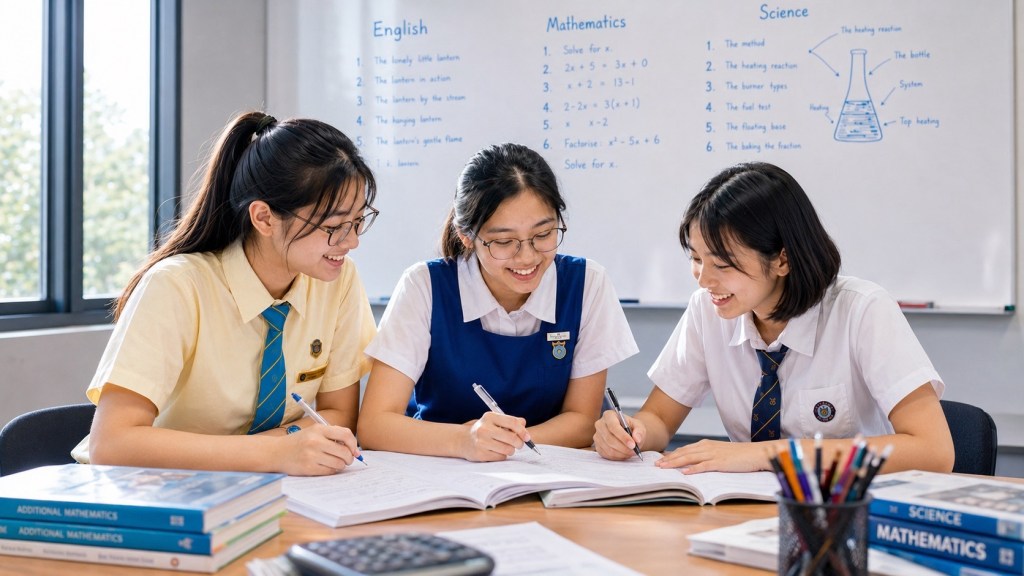
Parents often want to know what really happens inside Mathematics tuition. They may ask whether they should sit in, observe from the back, join the first lesson, watch online, or stay out completely. The question matters because parent presence can improve transparency—but it can also change student behaviour, tutor behaviour and the very evidence the lesson is supposed to reveal.
A child who is normally independent may become performance-conscious with a parent nearby. Another may rely on the parent for eye contact and reassurance. A tutor may explain more than usual because an adult is watching. A parent may see one polished lesson and assume the programme is always the same. Observation can therefore be useful, but only if the family understands what it can and cannot show.
At eduKate Sengkang, this Advanced Mathematics Tutorials article owns the parent-observation job: when a parent sitting in helps, when it distorts learning, what to observe, what not to interrupt, and how to move from first-lesson visibility toward learner independence.
Quick answer: should parents sit in on Mathematics tuition?
Sometimes briefly, especially during a trial, transition, safeguarding/logistics check or major programme concern. Long-term routine observation is usually unnecessary once the tutor, learner and parent have a reliable progress-review system and the student can work independently.
- Useful: first lesson, trial, transition, major support change, serious concern.
- Useful: short observation focused on teaching process rather than every answer.
- Risky: parent corrects, prompts or signals approval during the lesson.
- Risky: student performs for the parent instead of working naturally.
- Risky: tutor over-explains because the lesson feels like a demonstration.
- Better long-term: progress reviews, visible work, fresh evidence and bounded parent communication.
Parent presence changes the lesson
The simplest rule is that observation is not neutral. Once a parent enters the room, the learner may behave differently. The tutor may behave differently. Parents should therefore avoid treating one observed lesson as a perfect sample of the ordinary learning environment.
The observer effect in Mathematics tuition
A learner may ask fewer questions because they do not want to look weak, ask more questions because they want to look engaged, check every line because the parent is watching, or become unusually fast. Observation can reveal useful information, but it can also create the behaviour it appears to measure.
When parent observation is most useful
- Trial lesson or first consultation.
- New tutor or new centre.
- Major class-format change.
- A child reports repeated confusion that the tutor does not recognise.
- A parent needs to understand homework or support boundaries.
- A younger Secondary learner is transitioning into a new routine.
- There is a specific concern about teaching pace, group fit or attention distribution.
When routine parent observation adds little value
Once the programme is stable, the tutor sees the learner’s work, progress is reported clearly and the student can communicate ordinary concerns, routine sitting-in often provides less value than it costs in independence and natural classroom behaviour.
What parents should observe instead of “Did the tutor teach well?”
- Did the student attempt before being shown the method?
- Did the tutor inspect working, not only answers?
- Did the tutor change the next question based on evidence?
- Was feedback specific?
- Did the student get independent work time?
- Did the tutor overhelp?
- Did the class difficulty look calibrated?
- Did the lesson end with a clear next step?
Observe the student’s working, not the tutor’s performance
Parents can be impressed by fluent explanation and difficult questions. The more important evidence is whether the student is doing Mathematics: representing, selecting methods, writing, correcting, checking and solving fresh questions.
Observe support dose
How much of the route does the tutor provide? A student who completes hard questions after the method is named may still be fragile. Parents should notice whether prompts fade and whether fresh independent work follows.
Observe error handling
Does the tutor immediately give the correct answer, or help the student identify the first wrong step? Error handling is one of the strongest windows into teaching quality.
Observe waiting time in a small group
In a three-student class, what happens when the tutor helps someone else? Productive learners continue, check or mark questions. Long passive waiting suggests weak group design or poor placement.
Observe who gets attention
The loudest learner should not receive all the tutor’s attention. Quiet students should still have their work inspected and receive feedback.
Observe challenge calibration
Too-easy work can look smooth; too-hard work can look rigorous. Parents should ask whether the student is making useful independent progress and whether errors are interpretable.
Observe homework philosophy
If homework is assigned, can the tutor explain why? Extra work should add retrieval, repair, transfer or exam control—not simply more pages.
Observe the closing loop
A strong lesson should make the next action clear: what became stable, what remains fragile, and what the student should do independently before the next class.
The first-lesson observation
Parents can reasonably observe part of the first lesson to understand tone, structure and fit. But the student should still have enough private mathematical time that the tutor can see what they do without parental influence.
The trial-lesson observation
Observation is particularly useful during a trial because the family is deciding fit. The parent should remain quiet and watch for diagnosis, adaptation and fresh evidence rather than trying to help the child succeed.
The online-observation question
Online lessons make silent observation easier, but the same observer effect exists. Parents should avoid hovering off-camera or giving signals that the tutor cannot see.
The face-to-face observation question
A parent sitting close to the learner can alter behaviour strongly. Where possible, observe from a position that does not invite eye contact or live help.
Parents should not answer for the child
If the tutor asks the learner a question, let the learner respond. Parent assistance contaminates the diagnostic evidence and teaches the student that uncertainty can be outsourced immediately.
Parents should not correct methods during the lesson
If the parent knows another valid method, note it for later. Competing instructions in real time can confuse the student and undermine the tutor’s ability to see what the learner actually understands.
Parents should not signal approval after every line
Nods, facial reactions and whispered reassurance can become hidden support. A student who constantly checks the parent’s face is not yet showing independent confidence.
Parents should not use the lesson to interrogate the tutor continuously
Save broader questions for before or after the session. Repeated adult discussion consumes the student’s tuition time and changes the lesson into a consultation about the programme rather than Mathematics learning.
Parents should not compare siblings or peers during observation
“Your brother did this faster” or “the other student is ahead” adds social pressure without improving diagnosis. Each learner’s current capability is the relevant evidence.
Secondary 1 and parent observation
Short-term observation can help parents understand the new Secondary Mathematics routine, but independence should grow quickly. By the end of the transition, ordinary lessons should not require a parent in the room.
Secondary 2 and parent observation
Parents usually gain more from progress reviews and assessment evidence than from regular sitting-in. The learner should increasingly manage questions and homework directly with the tutor.
Secondary 3 and parent observation
E-Math/A-Math workload and independence matter more. Parents can review workload and outcomes without occupying lesson space unless a specific concern requires observation.
Secondary 4 and parent observation
Final-year students should be highly learner-owned. Routine parental observation can undermine the transition toward independent exam preparation and tutor consultation.
Where this observation guide sits in the Mathematics estate
Use the trial-lesson owner for choosing a programme, the progress-review owner for ongoing parent information, and this page when the specific question is whether a parent should physically or digitally sit in on Mathematics tuition.
Observation should have a question before it has a chair
Parents should know what they are trying to learn by observing. “I want to see whether the tutor notices my child’s hidden algebra errors” is useful. “I just want to see everything” is too broad and can turn observation into surveillance.
A specific observation question also makes the visit shorter. Once the parent has enough evidence, they can step back.
Useful observation question 1: does the tutor diagnose before explaining?
Watch whether the tutor lets the learner attempt before supplying the method. This reveals whether teaching is responsive to evidence or driven mostly by a prepared script.
Useful observation question 2: does the tutor inspect the first wrong step?
A tutor who reads working can distinguish concept, method-selection and execution errors. This matters more than how quickly the tutor can show a correct solution.
Useful observation question 3: does the tutor reduce support after teaching?
After explanation, look for a fresh question with less help. Without that step, parents cannot tell whether the learner now owns the method.
Useful observation question 4: does the group allow productive independence?
In a three-student class, each learner should have something useful to do while the tutor rotates. Idle time, copying or repeated waiting are important observations.
Useful observation question 5: is challenge calibrated?
The student should be able to begin, think and make meaningful errors. Constant success can mean under-challenge; constant rescue can mean overload or poor placement.
Useful observation question 6: does the tutor make the student explain sometimes?
Short explanations about method choice or error reasoning reveal understanding without turning the class into performance theatre.
Useful observation question 7: are quiet students visible?
A parent can notice whether tutor attention follows the loudest voice or whether all working is inspected deliberately.
Useful observation question 8: is homework connected to evidence?
If the tutor assigns continuation work, ask whether it targets the learner’s current job or is simply the programme’s standard packet.
Observation can distort student confidence
Some students become unusually cautious when parents watch. They may ask for confirmation, erase correct work or avoid attempting difficult questions. Parents should therefore distinguish the learner’s observed behaviour from their ordinary pattern.
Observation can distort student independence
A learner may glance at the parent whenever unsure. Even silent parent presence can become a support cue. If this happens, the parent should sit farther away or leave for part of the session.
Observation can distort tutor behaviour
Tutors may explain more, use harder showcase questions or speak to the parent more often. A strong programme should be willing to let parents observe ordinary teaching rather than perform a special lesson.
Observation can distort group dynamics
Other students may become quieter or more self-conscious when another adult is present. This is especially important in a three-student class where one parent is highly visible relative to the group size.
Observation can distort peer privacy
Parents should not receive details about other students’ marks, gaps or personal circumstances. Observation should focus on their own child and the general class process.
The privacy boundary in a three-student class
A parent may hear another learner ask a question. That does not create permission to discuss that learner later. The tutor should also avoid explaining another child’s performance to demonstrate differentiation.
The one-lesson observation limit
For many families, one partial lesson is enough to understand the teaching architecture. Continued routine observation should require a new reason rather than becoming the default.
The partial-lesson observation model
- Observe the first 20–30 minutes.
- See one independent attempt.
- See one feedback loop.
- See how the tutor moves to another learner.
- Leave before the child becomes dependent on parental presence.
The beginning-only observation model
Useful during a new class transition. The parent sees entry routine, tutor tone and initial group fit, then leaves so the student can settle independently.
The end-only observation model
Useful when parents want to understand how the tutor closes the lesson, reviews progress and sets continuation work without sitting through the whole class.
The online silent-observer model
The parent may listen for part of a remote lesson but should not prompt off-camera. The tutor should know when observation is occurring so behaviour can be interpreted properly.
The recorded-lesson question
If a programme provides recordings, parents should use them selectively and respect privacy arrangements. A recording can show structure but may not capture every interaction or independent reasoning process.
The camera-over-shoulder problem
Constant camera or physical supervision can turn the learner into a performer. Parents need enough transparency to trust the programme without making observation part of every lesson.
Parent presence during a trial lesson
During a trial, short observation is valuable because the family is evaluating fit. The parent should not rescue the child. A weak-looking first attempt can be exactly the evidence the tutor needs.
Parent presence during the first month
Parents may want more visibility during the transition. Use progress reviews and perhaps one additional observation only if a specific concern appears. The default direction should be toward less parent presence.
Parent presence during a tutor switch
A short observation can help families compare continuity and communication. Avoid using the session to judge which tutor is more entertaining or stricter. Focus on learner evidence and fit.
Parent presence during regrouping
If a student moves to a different class, observation can help verify pace, attention distribution and shared-core fit. Again, one bounded observation is usually enough.
Parent presence during catch-up
Parents can observe a recovery plan briefly to understand why work may look easier or narrower. This can prevent misinterpreting targeted repair as low expectations.
Parent presence during enrichment
Strong students may receive unfamiliar tasks that look messy. Parents should watch reasoning and transfer, not expect perfect accuracy on enrichment work.
Parent presence during exam control
Parents can see whether the tutor runs realistic timed work and post-attempt analysis. They should not signal answers or time reminders during a simulation.
Parent presence during Secondary 4
Routine observation should be rare. The learner should increasingly own papers, questions and tutor communication. Parents can stay informed through concise progress reviews.
The parent-as-coach risk
Parents with strong Mathematics backgrounds can unintentionally become co-teachers. Their expertise can be valuable at home, but live lesson overlap often creates method conflict and reduces the tutor’s ability to observe independence.
The parent-as-checker risk
Some learners look to the parent after every answer. This can build external validation. During observation, parents should keep a neutral expression and avoid checking work live.
The parent-as-advocate role
Advocacy is appropriate when the learner cannot communicate a serious concern: chronic overload, repeated confusion, unsustainable workload or access needs. Advocacy should bring the issue to the tutor, not take over the lesson.
The parent-as-logistics role
Parents can coordinate timing, materials and major school dates. These are useful supports that do not require sitting in on routine teaching.
The parent-as-progress-review partner
The strongest ongoing role is often periodic review: compare school results, independent homework, tutor evidence, workload and next action. This provides visibility with less observer distortion.
The parent-as-homework-boundary partner
Parents can protect a reasonable study time and encourage attempt-before-help. They do not need to reproduce the tuition lesson at home.
The observation notes should be short
- One thing the student did independently.
- One thing the tutor noticed.
- One support the tutor used.
- One point of fit or concern.
- One question to ask after the lesson.
Parents do not need a transcript of the session.
What parents should ask after observing
- What was the main learning job today?
- What did my child do independently?
- What support did they still need?
- Is the class difficulty appropriate?
- What should improve over the next few weeks?
- When should we review again?
What parents should not ask immediately after observing
- Why didn’t you call on my child more?
- Why was another student faster?
- Why didn’t you finish the worksheet?
- Can you give more homework because the class looked easy?
- Can you teach my method instead?
These questions may arise, but they should first be translated into the underlying educational concern.
The observation-to-progress-review handoff
After the observation, move ongoing communication into the progress-review system. The parent no longer needs to watch the mechanism every week if the evidence is reported clearly.
The observation-to-independence handoff
Tell the student explicitly that the parent will step back because the learner is expected to manage ordinary questions and tutor communication directly. This turns reduced observation into a sign of trust and development.
The observation-to-help-seeking handoff
If the parent observed that the learner hides confusion, teach mark-and-ask routines. The answer is better student help-seeking, not indefinite parental presence.
The observation-to-group-fit handoff
If the parent saw chronic waiting or pace mismatch, the tutor should review placement from several lessons’ evidence. One observed session can raise a question but should not automatically trigger movement.
The observation-to-difficulty-fit handoff
If work looked too easy or too hard, verify with fresh, delayed and support-adjusted evidence before changing challenge.
The observation-to-support-fading handoff
If the learner constantly relied on tutor or parent cues, build a support-fading plan. Observation has served its purpose once it identifies the pattern.
The observation-to-homework handoff
If parents saw how the tutor selects practice, they can stop judging homework by page count and focus on function: retrieval, repair, transfer or exam control.
The observation-to-stop-tuition handoff
If the learner is highly independent and tuition adds little distinct value, observation may contribute to a later reduction or stop decision. The parent should use broader evidence, not one lesson alone.
Worked observation profile 1: parent watches a trial lesson
The child struggles with the first algebra question. The parent resists helping. The tutor identifies a sign error, teaches briefly, then gives a fresh question that the child solves independently. The observation is useful because it shows diagnosis and transfer, not because the child looked strong from the start.
Worked observation profile 2: parent watches a three-student class
The tutor spends time with another student. The child continues solving and marks one uncertain line. When the tutor returns, the question is precise. The parent sees productive independence and does not need weekly observation.
Worked observation profile 3: parent sees the child waiting silently
The student stops whenever the tutor moves away. This is important evidence. The intervention is help-seeking and independent-work training, not necessarily a different tutor.
Worked observation profile 4: parent sees the tutor overhelp
Every method is named before the learner attempts. The parent raises the concern after class. The tutor agrees to delay prompts and use fresh independent questions. Observation creates a useful programme adjustment.
Worked observation profile 5: parent thinks the class is too easy
The learner finishes routine work quickly. Fresh changed questions are also strong. The tutor explains that direct practice will now reduce and enrichment will increase. Observation supports a difficulty-fit review rather than an immediate class move.
Worked observation profile 6: parent thinks the class is too hard
The learner is blocked throughout a mixed set. The tutor shows that a specific algebra prerequisite is unstable and plans a temporary repair. Easier work becomes a bridge, not lower expectations.
Worked observation profile 7: parent wants to sit in every lesson
The student begins checking the parent’s face after each answer. The tutor recommends stepping out for most of the next session and moving to monthly progress reviews. Independence improves.
Worked observation profile 8: Secondary 4 parent wants exam reassurance
Rather than attending full lessons, the parent reviews the tutor’s paper-control update and school results. The learner keeps exam preparation adult-light and student-owned.
Parent observation and privacy in a small group
A three-student class gives parents much more visibility into other learners than a large classroom. That makes boundaries especially important. A parent may observe teaching style, pacing and attention distribution, but should not expect access to another student’s marks, homework, family situation or tutor comments.
The privacy-safe observation rule
- Watch your own child’s learning process.
- Observe general class structure.
- Do not photograph or record other students without explicit permission.
- Do not discuss peers’ mistakes after class.
- Do not ask the tutor to rank your child against named classmates.
- Keep group-fit questions general and instructional.
Observation should not become performance surveillance
If a learner knows every ordinary lesson may be watched, they can become more cautious and less willing to reveal mistakes. Tuition should be a place where confusion is usable evidence, not a staged performance for adults.
Observation should not become tutor surveillance either
Parents need enough transparency to evaluate teaching, but constant monitoring can make tutors teach to the observer. The better long-term system is professional trust supported by evidence: student work, school results, progress reviews and occasional targeted observation.
The first-month observation plan
- Week 1: brief parent visibility if useful.
- Week 2: student attends independently; parent receives a short update.
- Week 3: learner communicates one question or concern directly.
- Week 4: parent uses progress review rather than sitting in.
This is not a rigid timetable. It illustrates the direction: from parent presence toward student ownership.
The transition from observation to trust
Parents do not need blind trust. They need a system that generates enough independent evidence that watching the lesson is no longer the main way to know what is happening.
Evidence source 1: school assessment
A school paper gives unsupported performance under authentic conditions. It does not explain every lesson, but it provides important outcome evidence.
Evidence source 2: fresh tuition questions
Fresh independent questions show what the student owns after teaching. Parents can ask tutors to report this rather than watch every attempt personally.
Evidence source 3: delayed retrieval
A method that survives several days is stronger evidence than a polished answer during an observed lesson.
Evidence source 4: homework independence
Parents can see whether ordinary school Mathematics starts more easily, takes less time or requires less help. These home changes often matter more than classroom performance aesthetics.
Evidence source 5: progress reviews
A concise review can report current job, support used, stable strengths, recurring errors and next action. This gives parents transparency without observer distortion.
Evidence source 6: the student’s own account
Ask what became easier, what still breaks and what support the tutor is fading. A learner who can explain their own Mathematics is developing valuable metacognition.
When a parent should observe again after stepping back
- The child reports persistent confusion that does not match tutor updates.
- Homework burden suddenly becomes unsustainable.
- The group changes substantially.
- A new tutor or substitute becomes regular.
- The learner becomes unusually dependent or disengaged.
- There is a specific concern about pace, attention or challenge.
When another observation is probably unnecessary
A single disappointing test, one difficult lesson or one child complaint does not automatically require sitting in again. First use school work, fresh questions and the progress-review system to understand the issue.
The “my child behaves differently when I am there” problem
This is common and important. If observation itself changes the learner, move to partial observation, remote listening where appropriate, or post-lesson evidence. The goal is transparency without contaminating the behaviour being observed.
The “my child behaves better when I am there” problem
The lesson may appear more productive under parental presence. Ask whether the improved attention transfers when the parent leaves. If not, the programme should build self-regulation rather than preserve the parent as an external control.
The “my child behaves worse when I am there” problem
The learner may feel evaluated, embarrassed or distracted. In that case, observation is reducing the quality of evidence and should be shortened or stopped.
The “tutor teaches better when I am there” concern
Parents may notice more explanation or more careful attention during observed sessions. Instead of increasing observation frequency, ask for progress-report evidence and occasional spot observation to see whether ordinary teaching remains consistent.
The “tutor talks to me too much during the lesson” problem
Set a boundary before class: observe quietly, save questions for the end. The tuition time belongs primarily to the learner.
The “I want to understand the method too” problem
Parents may want to learn the school method so they can help at home. A brief post-lesson explanation or written note is often better than learning alongside the child during the live session.
The “I want to know whether the class is too easy” problem
Observe one fresh changed question, not only the routine worksheet. The Difficulty Fit owner provides the full framework.
The “I want to know whether the class is too hard” problem
Look for independent first moves, error quality and support dose. A hard-looking question is not necessarily poor fit if the learner can engage productively.
The “I want to know if the tutor notices my quiet child” problem
Observe whether written work is inspected even when the learner does not speak. The quiet-student owner explains how mathematical visibility should work without forced participation.
The “I want to know if my child is overhelped” problem
Count the function of prompts rather than the number. Does the tutor name methods, supply first steps and confirm every line? Or do prompts become smaller as the learner progresses?
The “I want to know if my child is ignored” problem
In a three-student class, track whether each learner receives meaningful observation and feedback. Equal clock time is not required, but chronic invisibility is a problem.
The “I want to see exam preparation” problem
Observe a timed section or post-paper correction only if it helps the family understand the system. Parents should not interfere with simulation conditions.
The “I want to verify homework quality” problem
Parents can inspect the assigned task and ask the tutor what function it serves. Sitting in on the lesson is not necessary to judge whether continuation work is targeted.
The “I want to know why the tutor is using easier work” problem
Easier work can be diagnostic or repair-focused. The tutor should explain the bridge back to current-level Mathematics. Observation can reassure parents that standards remain high even while complexity temporarily falls.
The “I want to know why the tutor is not teaching ahead” problem
The learner may need repair, transfer or exam control more than acceleration. Parents should ask which current capability has the highest value rather than using chapter position as the main progress measure.
The “I want to know why the tutor is teaching ahead” problem
Selective pre-teaching can be useful if it improves school access. The syllabus-vs-own-curriculum owner explains when going ahead adds value and when it creates dependence.
Parent observation during support fading
Watching the tutor delay help can feel uncomfortable. The parent may want to rescue the student. If the learner is still making meaningful attempts, let the productive struggle continue. Support fading is often deliberately less smooth than guided work.
Parent observation during confidence calibration
A learner may say “I think this is wrong” while the answer is correct. The tutor may withhold reassurance until the student checks. Parents should avoid stepping in with encouragement that replaces the calibration process.
Parent observation during error correction
Correction can look slower than teaching. The tutor may spend several minutes finding the first wrong line and asking the learner to reconstruct the method. This is often higher value than showing the solution immediately.
Parent observation during independent work
Quiet independent time is not wasted tuition. If the tutor is using that time to observe and the learner is generating real evidence, silence can be one of the most valuable parts of the lesson.
Parent observation during tutor rotation
In a small group, the tutor must sometimes look away from your child. The question is whether your child can continue productively and whether the tutor returns before uncertainty becomes unproductive.
Parent observation during peer discussion
Peer methods can deepen learning, but the tutor should protect private attempts first. Parents should not judge a class by how much students talk to each other; judge whether discussion improves mathematical understanding.
Parent observation during enrichment
Strong students may produce more wrong answers in enrichment because unfamiliarity is intentional. Lower accuracy does not automatically mean the tutor is over-challenging.
Parent observation during catch-up
A student may work on simpler questions than peers. This can be the correct temporary bridge if the tutor is repairing a prerequisite and has a clear reconnection plan.
Parent observation during a substitute-tutor lesson
Short-term observation can be useful if continuity is a concern, but the parent should focus on whether the learner’s methods and current job remain coherent rather than whether the substitute resembles the regular tutor.
Parent observation in a dual-tutor system
Observation can help identify duplicated methods or homework, but the broader solution is coordination. Parents should not become permanent referees between tutors.
Parent observation after a missed lesson
If the learner is re-entering the group, a short observation can show whether the recovery bridge worked. Once ordinary participation returns, step back again.
The observer’s discipline: write questions down instead of interrupting
A simple note-taking rule protects lesson flow. If something looks concerning, write it down. Many concerns resolve as the lesson continues; those that remain can be discussed afterwards.
The observer’s discipline: distinguish style from mechanism
You may prefer more explanation, a different tone or another method. Ask whether the current mechanism is producing understanding and independence before treating stylistic difference as a problem.
The observer’s discipline: distinguish one lesson from a pattern
A tutor may spend unusual time on one learner because of a current gap. A student may have an unusually tired day. Use repeated evidence before making large decisions.
The observer’s discipline: distinguish comfort from learning
A comfortable lesson can be under-challenging. An effortful lesson can be productive. Watch whether the student improves, not whether every minute looks smooth.
The observer’s discipline: distinguish complexity from quality
A wall of notes, many worksheets or advanced-looking questions can create an impression of rigour. Quality appears in diagnosis, transfer, error handling and independence.
The observer’s discipline: distinguish speed from mastery
Fast students can be fragile; slow students can be accurate and independent. The relevant question is whether the learner owns the method and can apply it under changing conditions.
The observer’s discipline: distinguish talking from teaching
The tutor does not need to speak continuously. Productive student work is part of tuition, not a pause in tuition.
The observation debrief should be brief
- One strength.
- One concern.
- One tutor explanation.
- One agreed next check.
- No live redesign unless urgent.
The observation debrief should include the learner where appropriate
Older students can hear the key conclusion: “You are working independently; we are stepping back,” or “We noticed you wait when the tutor moves away; we are practising mark-and-ask.” This supports agency.
The observation debrief should not become a critique of personality
Avoid “too quiet”, “too careless” or “not focused enough” without task evidence. Translate concerns into observable mathematical behaviours.
The observation debrief should not become a commercial negotiation
Keep educational review separate from fees, packages or scheduling where possible. The learner’s needs should remain the centre of the discussion.
The observation release ladder
- Parent observes full or partial trial.
- Parent observes brief transition segment if needed.
- Parent receives progress updates.
- Student communicates ordinary questions directly.
- Parent steps in only for material concerns or strategic reviews.
The goal is not to exclude parents. It is to move their role from live lesson management toward higher-level support.
Parent observation in Secondary 1 should be transitional
Secondary 1 parents may reasonably want more visibility because the learner is adjusting to new school expectations, longer homework and symbolic Mathematics. One or two bounded observations can help the family understand the teaching system. The direction should still be toward independence as the first term stabilises.
Parent observation in Secondary 2 should be diagnostic, not routine
By Secondary 2, students should increasingly communicate with tutors directly. Parent observation is most useful when a specific concern appears: mixed-selection difficulty, workload problems, hidden confusion or group mismatch.
Parent observation in Secondary 3 should respect subject complexity
E-Math and A-Math can create a more complicated weekly system. Parents can use progress reviews to understand workload and subject ownership. Sitting in should be reserved for a specific question, not general oversight.
Parent observation in Secondary 4 should be strategic
Final-year learners need independence in paper analysis, revision planning and tutor consultation. Parent presence is most useful for programme-level decisions such as overload, tutor switching or a major mismatch—not ordinary lesson monitoring.
Observation in G1/G2/G3 should focus on route fit
Parents should check whether the tutor is teaching the learner’s actual route and maintaining suitable challenge. Comparing the child with students on another level is not a valid observation standard.
Observation in one-to-one tuition
Private lessons make parent presence especially powerful because there is no group buffer. The learner may become highly aware of being watched. Shorter observation and clear no-interruption rules are usually better than full routine attendance.
Observation in three-student tuition
The parent can see the group architecture: shared explanation, branch work, tutor rotation, peer comparison and fresh individual evidence. This is useful during trial or regrouping. Routine observation should still fade once fit is clear.
Observation in large-group tuition
Parents may have less access to individual working and more focus on lecture quality. If the programme cannot make individual progress visible through other means, sitting in may not solve the underlying accountability issue.
Observation in online tuition
Online platforms make it easy for parents to listen without entering the teaching space physically. This can be useful, but invisible off-camera prompting is still a distortion. Transparency should not become covert coaching.
Observation in hybrid tuition
If some lessons are online and some in-person, parents can compare how well the student carries methods across formats. Format consistency matters less than whether the learner remains independently visible and engaged.
When observation reveals a real tutor-fit problem
- The tutor repeatedly talks over the student’s attempts.
- The tutor cannot explain the learner’s current bottleneck.
- The class difficulty remains mismatched despite feedback.
- Quiet learners receive little observation.
- Homework is assigned without clear purpose.
- The tutor relies on fixed worksheets despite changing evidence.
- Methods repeatedly conflict with school without explanation.
These observations justify a substantive review and, if unresolved, possibly regrouping or switching.
When observation reveals a learner-support problem instead
- The student waits for the parent to signal correctness.
- The learner stops working whenever the tutor rotates.
- The child hides mistakes when watched.
- The student depends on notes for ordinary questions.
- The learner is under-challenged but says nothing.
- The student cannot ask a precise question when blocked.
These patterns may require help-seeking, support fading or difficulty calibration rather than a new tutor.
When observation reveals a parent-boundary problem
A parent may realise they are answering too quickly, checking every homework line or asking the tutor to over-support. Observation can therefore change the home system as much as the tuition system.
The parent should be willing to learn from observation too
If the tutor deliberately waits, assigns less homework or uses easier diagnostic questions, parents may discover that their own assumptions about “good tuition” were based on visible activity rather than learning evidence.
Observation can improve parent-tutor trust
Seeing one real lesson can make later progress reviews easier to interpret. Parents understand what the tutor means by “mixed practice”, “prompt fading” or “branch task” because they have seen the mechanism once.
Observation can damage trust if used adversarially
If parents enter expecting to catch mistakes, tutors can become defensive and students can feel caught between adults. Observation should serve educational clarity, not surveillance conflict.
The pre-observation agreement
- How long will the parent observe?
- Where will they sit or listen?
- Will questions wait until the end?
- What specific concern is being observed?
- What privacy boundaries apply?
- What evidence will determine the next step?
A simple agreement keeps the session productive for everyone.
The post-observation review should separate facts from interpretation
Fact: “My child waited for the tutor three times.” Interpretation: “The group may not fit.” The tutor may explain that one question was intentionally left for independent struggle. Separating facts from conclusions improves discussion.
The post-observation review should include counterevidence
If a parent saw one weak moment, check whether the pattern is typical. The tutor can show fresh or delayed work from other lessons without revealing peer information.
The post-observation review should choose one action
Avoid changing homework, group, tutor, difficulty and method all at once. Choose the highest-value intervention and review it after several weeks.
The post-observation review should have an end point
Observation is not successful if it creates permanent uncertainty and more monitoring. The family should leave knowing what will change and when ordinary trust can resume.
The parent’s one-month step-back plan
- Week 1: observe only the agreed segment.
- Week 2: no observation; ask the student one reflective question.
- Week 3: rely on tutor progress evidence.
- Week 4: review whether the original concern improved.
The tutor’s one-month response plan
- Week 1: document the concern with fresh evidence.
- Week 2: implement one change.
- Week 3: use delayed or school evidence.
- Week 4: report whether the intervention worked.
The student’s one-month ownership plan
- Attempt before parent or tutor help.
- Mark uncertainty.
- Ask the tutor directly.
- Complete one fresh question independently.
- Tell the parent what changed without needing them in the lesson.
Observation and missed lessons
If a learner returns after absence, parents may want to watch re-entry. One short observation can be useful, but the missed-lesson recovery plan should be evidence-based and temporary. Once continuity returns, observation should end.
Observation and relief tutors
A parent may reasonably want reassurance when an unfamiliar substitute teaches. The better long-term solution is a strong programme handover and handback system so parental presence is not required every time staffing changes.
Observation and two-tutor systems
Watching both tutors can reveal duplicated methods or workload. But the final solution should be coordination, not the parent attending both programmes indefinitely to integrate them.
Observation and syllabus alignment
Parents may notice tuition is ahead of school or following a different sequence. Ask what job the departure serves and where the programme reconnects. Difference is not automatically misalignment.
Observation and the day before an exam
The day before an exam, parents generally add little by sitting in. The student should be moving toward full independence. If a parent is present, keep the final session calm and avoid reassurance cues.
Observation and child refusal to attend
If a child resists tuition, one observation may help identify whether the problem is pace, group fit, teaching style, workload or something outside the lesson. Observation should diagnose, not pressure the child to perform approval in front of the parent.
The parent-sitting-in red flags
- Child keeps looking to parent for approval.
- Parent answers or explains live.
- Tutor directs teaching to parent instead of student.
- Other students become noticeably inhibited.
- Parent keeps attending without a specific reason.
- Observation generates more anxiety than clarity.
- Student cannot function normally unless parent is present.
The parent-sitting-in green flags
- Parent remains quiet.
- Student works independently.
- Tutor teaches naturally.
- Privacy is respected.
- Observation has a specific purpose.
- A debrief converts evidence into one action.
- Parent presence reduces over time.
The observer-release test
Ask: if the parent stopped watching tomorrow, would the learner still know how to ask questions, complete homework and communicate with the tutor? If yes, regular observation is probably no longer needed.
The learner-release test
Can the student describe what tuition is working on, what support they still need and what became more independent? If yes, the learner has enough ownership to reduce parent involvement.
The tutor-accountability test without observation
Can the tutor describe current capability, support conditions, recurring errors and next action? Can the evidence be seen in schoolwork, fresh questions or progress reviews? If yes, transparency does not require physical presence.
The parent-confidence test
Can the parent tolerate not knowing every detail because the learning evidence is clear? Trust is not the absence of information. It is confidence in a system that produces the right information at the right intervals.
The student’s confidence test
Does the learner feel more able to deal directly with the tutor when the parent steps back? This is a valuable sign that observation has served its transitional purpose.
When to stop sitting in immediately
Stop if the learner becomes unable to attempt naturally, other students’ privacy is compromised, parent-tutor discussion consumes lesson time, or observation is clearly worsening the educational environment.
When to continue one more observation
Continue briefly if a specific unresolved concern remains and one additional session can provide comparable evidence after an intervention. Avoid open-ended monitoring.
When to use a parent-tutor meeting instead
If the concern is programme philosophy, workload, future planning or progress reporting, a separate conversation is better than using the child’s lesson as the meeting venue.
When to use student work instead
If the concern is accuracy, transfer or homework dependence, inspect representative work and fresh retests. Direct evidence may answer the question more reliably than watching one lesson.
When to use school evidence instead
If the concern is whether tuition transfers, school tests and ordinary homework are strong external evidence. They show what the student can do without the tuition room around them.
When to use student voice instead
Older learners should increasingly explain what they need. Parent observation should not crowd out the student’s ability to evaluate and communicate their own learning.
The final parent role in a mature tuition system
Parents protect logistics, workload, wellbeing, major decisions and communication when something material changes. They do not need to be present for ordinary mathematical thinking to occur.
The final tutor role in a mature tuition system
Tutors make learning visible enough that parents can step back confidently: clear evidence, precise progress updates, appropriate privacy and direct student communication.
The final student role in a mature tuition system
Students own ordinary questions, attempts, errors and consultation. They can bring parents into strategic decisions without needing them inside every lesson.
Final synthesis: transparency should create independence, not permanent observation
Parents deserve to understand what tuition is doing. But the strongest transparency system does not require a parent in the room every week. It uses occasional observation, student work, fresh evidence and clear progress reviews to make learning legible while preserving natural student behaviour.
Sit in when there is a specific reason. Observe quietly. Ask the right questions afterwards. Then step back when the learner, tutor and evidence show that the system can function independently.
The final observation question: what would the parent know if they were not present?
A mature programme should still make the learner’s state visible through work, progress reviews and school evidence. If parent attendance is the only way to know whether the child is learning, the accountability system is too weak. Observation should supplement transparency, not substitute for it.
The parent should be able to leave without losing the thread
After stepping back, parents should still know the current learning job, what support remains, what the next assessment is and what would trigger a programme change. That information belongs in normal communication, not only in observed sessions.
The student should be able to function without parental cues
The learner should start, ask, correct and continue without checking whether a parent agrees. If this is not yet true, the intervention is support fading and help-seeking—not more observation.
The tutor should be able to teach without performing for the parent
Once observation ends, the tutor should continue the same evidence-led architecture. If teaching quality appears to change substantially when parents are absent, the programme needs a professional review.
The parent should not confuse access with control
Transparency means being able to understand and question the programme. It does not mean controlling each method choice, worksheet or interaction. Tutors need room to exercise professional judgement within clear accountability.
The tutor should not confuse autonomy with opacity
Professional autonomy does not justify vague answers. Tutors should still explain why the learner is on repair, transfer, enrichment or exam control and what evidence will show improvement.
The student should not become the battleground between parent and tutor
If adults disagree, resolve the programme question outside the lesson where possible. The learner should not have to choose whose method, expectations or interpretation they support.
Observation after poor marks
A disappointing assessment can tempt parents to sit in immediately. First read the paper and ask the tutor for a progress review. Observation becomes useful only if the evidence suggests a lesson-process problem—such as overhelping, poor fit or hidden confusion.
Observation after strong marks
Strong results do not automatically prove every lesson is optimal, but they reduce the need for surveillance. Parents can focus on whether workload, independence and transfer remain healthy.
Observation after marks improve then fall
Use the regression framework before entering the classroom. If the issue is faded retrieval or harder paper demand, sitting in may add little. If the concern is that tuition itself became too easy or too guided, a targeted observation can help.
Observation after a child refuses tuition
If the learner resists attending, parents can observe one session to understand whether the cause is difficulty, boredom, group dynamics, tutor interaction or something outside tuition. The parent should not use presence to force compliance during the lesson.
Observation after a tutor absence
If a relief tutor covered, a parent may want reassurance. Strong handover and handback should usually make observation unnecessary. Use it only if continuity or student comfort remains unclear.
Observation after two tutors become active
A parent may observe both settings once to understand role overlap. The long-term answer should be a coordination map, not permanent dual observation.
Observation when school and tuition methods differ
Watch whether the tutor explains equivalence and preserves a clear primary route. Parents should avoid intervening mid-solution with a third method.
Observation when the class is very small
In a three-student class, parent presence changes the social environment substantially. Keep observation shorter and more discreet than it might be in a large classroom.
Observation when the child is highly independent
Routine sitting-in can become counterproductive because it signals that adult monitoring remains necessary. Use strategic reviews instead.
Observation when the child is highly dependent
Parent presence can reinforce the dependency. A better plan may be to observe briefly, identify the pattern, then deliberately leave so the tutor can train independent work.
Observation when the parent has strong Mathematics knowledge
Expertise is not the problem; role overlap is. Parents can use their knowledge in separate home support when appropriate, but should let the live tutor own the lesson unless a serious mathematical error requires later clarification.
Observation when the parent does not understand the Mathematics
Parents can still judge process. They do not need to evaluate every formula to see whether the child attempts, receives feedback, gets independent time and leaves with a clear next step.
Observation when the parent worries about “value for money”
Do not measure value by how much the tutor speaks, how many pages are completed or how advanced the questions look. Value appears in diagnosis, learner visibility, progression, workload control and increasing independence.
Observation when the parent wants more homework
Watch whether the student already receives enough school practice and whether tuition homework has a distinct purpose. More pages are not automatically more value.
Observation when the parent wants harder work
Use transfer evidence before escalating difficulty. A learner who completes easy-looking direct work may still be fragile on changed questions.
Observation when the parent wants faster pace
Fast pace can reduce consolidation. Watch whether the learner can reproduce the method independently rather than judging how many topics the tutor covers.
Observation when the parent wants slower pace
Slower is not automatically safer. If the learner is already stable, excessive repetition can cause under-challenge. Pace should follow evidence.
The observation review after one term
- Did the original concern improve?
- Did the learner become more independent?
- Did the tutor’s progress reports become clearer?
- Did parent presence reduce?
- Is the class still a good fit?
- Are there any reasons to observe again?
The observation release condition
Observation has completed its job when the parent understands the teaching system, the learner can function independently, the tutor provides credible evidence and no specific unresolved concern requires live inspection.
The observation restart condition
Parents can observe again if a new material concern appears that cannot be resolved through work samples, assessment evidence or conversation. Restarting observation should be purposeful and temporary.
The student-owned communication transition
Secondary students should increasingly ask tutors directly about homework, methods and errors. Parents can stay informed without being the messenger for ordinary learning questions.
The tutor-owned accountability transition
Tutors should proactively surface material issues so parents do not feel they must watch classes to discover them. Good accountability reduces the perceived need for surveillance.
The parent-owned strategic transition
Parents shift toward decisions that genuinely require adult judgement: schedule, workload, tutor fit, class changes, fees, transportation and whether support still adds distinct value.
The one-page parent observation scorecard
- Student attempts independently.
- Tutor reads working.
- Feedback changes the next attempt.
- Support fades.
- Group attention is balanced.
- Challenge is appropriate.
- Homework has a purpose.
- Student can surface uncertainty.
- Lesson closes with a clear next step.
- Parent can step back afterwards.
A scorecard should not become a tutor ranking system
The checklist is for one family’s fit decision, not for producing league tables. Teaching quality is contextual, and one observed session has limits.
The parent should allow some imperfect moments
Good learning includes errors, pauses, uncertainty and occasional inefficient attempts. A perfectly smooth observed lesson can be less educationally informative than one where the tutor uses mistakes well.
The tutor should allow the parent to see real learning
Do not hide difficulty or rescue the child to create a good impression. If the learner struggles, show how the teaching system diagnoses and responds.
The student should not feel they have to impress the parent
Parents can explicitly say, “I am watching the class, not grading you.” This reduces the performance pressure of observation.
The strongest parent observation can end with less parent involvement
If the observation shows the student is safe, visible, appropriately challenged and increasingly independent, the correct result is often to step back more confidently.
The strongest observation after a problem can also end quickly
If the session reveals one concrete issue and a clear intervention, there is no need to keep watching every week. Review the intervention through evidence instead.
The final parent question before observing
“What do I need to know that I cannot learn from the student’s work, progress report or a short conversation?” If there is no clear answer, observation may not be necessary.
The final parent question after observing
“What did I learn that should change the programme?” If the answer is nothing material, the best next step may be simply to trust the ordinary system and step back.
The final tutor question after being observed
“Did the observation reveal a useful issue about learner fit or communication, or did it only change the behaviour in the room?” Use the answer to improve future transparency.
The final student question after being observed
“Can I do the next lesson normally without my parent there?” That is the most important release test.
Closing standard: parents need visibility, students need ownership
A strong Mathematics tuition system can provide both. Parents can understand what is being taught, why it is being taught and whether it is working—without becoming part of every live lesson.
Observe when there is a defined reason. Stay quiet enough to preserve authentic evidence. Debrief around Mathematics, not personality. Then step back when the learner and tutor no longer need parental presence to make learning visible.
A final observation scenario: parent sees a very quiet lesson
The tutor speaks little, students work for long stretches and the room looks calm. The parent may worry that there is not enough teaching. The correct question is what happens inside the quiet: are students generating independent work, are errors being noticed, does the tutor intervene precisely, and do fresh questions improve? If yes, the quiet lesson can be highly productive.
A final observation scenario: parent sees a very talkative lesson
The tutor explains constantly and students respond frequently. This can be engaging, but parents should still look for independent evidence. A lesson can sound active while the tutor carries most of the mathematical decisions.
A final observation scenario: child performs unusually well while parent is present
Do not assume the class suddenly became more effective. The parent may be acting as a motivation or reassurance cue. Compare ordinary homework and later fresh questions after the observation ends.
A final observation scenario: child performs unusually poorly while parent is present
Again, do not overinterpret. The learner may feel self-conscious. Use the session mainly to observe tutor response and class structure, then rely on ordinary evidence for capability.
A final observation scenario: tutor notices the parent influencing the learner
The tutor can politely request more distance or a shorter observation. Protecting authentic learner evidence is part of professional teaching, not a refusal of transparency.
A final observation scenario: parent spots a real mathematical error by the tutor
Note it and raise it calmly after the lesson unless the error is materially affecting the learner in the moment. Tutors can make mistakes; the important response is whether the issue is corrected transparently and the student’s understanding is repaired.
A final observation scenario: parent disagrees with the tutor’s method but both are valid
Preserve the student’s primary route and discuss the alternative after class. The goal is coherence, not winning the method comparison in front of the child.
A final observation scenario: parent sees the child helping peers
Peer explanation can be useful, but strong students should not become unpaid assistant tutors at the expense of their own extension. Ask whether the learner still receives challenge and feedback.
A final observation scenario: parent sees the child receive easier work than peers
Ask whether the task is targeted repair and what evidence will reconnect the learner to the shared work. Easier work can be the correct temporary teaching decision.
A final observation scenario: parent sees the child receive harder work than peers
Ask whether the extension is genuinely aligned to readiness and whether the learner remains independent. Harder work should not be a status reward that creates overload.
A final observation scenario: parent sees very little homework assigned
Ask what school already provides and what tuition needs to add. Low volume can be deliberate when the learner needs retrieval, correction or one transfer task rather than another full worksheet.
A final observation scenario: parent sees a lot of homework assigned
Ask what each part is for and how it fits the week. Volume is justified only when the functions are distinct and the workload remains sustainable.
The parent-observation decision tree
- Specific concern exists → consider brief targeted observation.
- No specific concern + clear progress evidence → no routine observation needed.
- Observation changes student behaviour strongly → shorten or stop.
- Observation reveals one concrete issue → intervene and review later.
- Observation reveals no material issue → step back.
- Parent presence becomes necessary for child to function → support-dependence plan needed.
The final release protocol
Once the parent steps back, do not replace observation with constant post-lesson interrogation. Let the student carry ordinary communication. Use scheduled progress reviews and intervene only when material evidence changes.
The final parent role after release
- Protect logistics and timetable.
- Monitor overall workload.
- Review school assessments.
- Attend strategic progress conversations.
- Support major class or tutor decisions.
- Avoid live mathematical rescue unless needed.
The final learner role after release
- Attend independently.
- Attempt before asking.
- Communicate ordinary uncertainties directly.
- Complete continuation work.
- Bring relevant school papers.
- Report major concerns to parent when necessary.
The final tutor role after release
- Keep learner evidence visible.
- Communicate material changes.
- Preserve privacy.
- Report progress precisely.
- Invite parent involvement for strategic issues, not routine solving.
The strongest sign that observation worked
The parent feels more comfortable stepping away because they understand the system. The student feels more responsible for their own learning. The tutor has a clearer communication channel. Observation has therefore reduced the need for future observation.
The strongest sign that observation failed
The parent wants to watch more because the session created more uncertainty, the student became more dependent, or the tutor’s process remained opaque. In that case, the programme needs a deeper accountability conversation rather than indefinite sitting-in.
The final educational principle
Parent involvement is valuable when it helps create the conditions for learning. It becomes less useful when it enters the learner’s moment-to-moment mathematical decision-making. Secondary Mathematics tuition should gradually shift those decisions to the student.
Transparency is therefore not measured by how many lessons a parent can watch. It is measured by whether the family can understand the learner’s current capability, trust the teaching process, question it when necessary and still allow the student to own the work.
The right endpoint is simple: parents remain informed, tutors remain accountable, and students no longer need an adult observer beside them in order to learn well.
The final observation standard: enough visibility to step back confidently
The best outcome of parent observation is not a permanent seat in the tuition room. It is enough evidence to understand how the tutor teaches, how the learner responds, and whether the programme is aligned to the child’s current mathematical needs. Once that evidence is clear, the parent can move back into a strategic role.
That strategic role is still important. Parents decide whether the timetable remains sustainable, whether tuition is still adding distinct value, whether a class or tutor change is justified, and whether the child’s overall school workload is healthy. None of those decisions require live observation of every ordinary lesson.
A final boundary for tutors
Tutors should welcome reasonable transparency without allowing the learning environment to become parent-directed. The learner needs room to make mistakes, hesitate, ask questions and develop independence. Good accountability makes that room possible because parents can understand the system without constantly entering it.
A final boundary for parents
Parents can support more effectively by asking better questions than by watching more minutes. “What can my child now do independently?” “What support is still needed?” “What will you change next?” and “When should we review again?” are often more useful than another hour of observation.
A final boundary for students
Secondary students should know that stepping back does not mean parents no longer care. It means the learner is expected to carry more of the ordinary academic relationship directly with the tutor. That is a developmental gain, not a withdrawal of support.
When parent visibility, tutor accountability and student ownership are balanced well, observation becomes occasional and purposeful rather than routine. The family stays informed, the tutor keeps teaching naturally, and the learner gains the privacy and responsibility needed to become genuinely independent in Mathematics.
Final conclusion: observation should make itself less necessary
A parent who has seen how the tutor diagnoses, how support fades, how group attention is managed and how progress is reviewed should need less direct observation over time, not more. The programme earns trust by making the learner’s capability visible in multiple ways, and the student earns independence by learning to manage ordinary questions, mistakes and tutor communication directly.
The strongest observation system therefore has a built-in exit. Parents watch when there is a reason, stay quiet enough to preserve authentic evidence, discuss the important findings afterwards, and then step back once the concern is resolved. This keeps tuition transparent without turning every lesson into a performance for adults.
For Secondary Mathematics, that balance matters. The learner needs expert teaching and accountable support, but they also need enough space to become the person who eventually carries the subject alone.
The final measure is whether parents can stay informed without becoming part of the student’s minute-to-minute Mathematics. When tutor evidence is clear, learner independence is growing and communication remains open, observation has achieved its purpose. The parent can step back, the tutor can teach naturally, and the student can practise the exact academic ownership that Secondary school increasingly requires.
That is the mature parent role: informed enough to make good strategic decisions, restrained enough to protect authentic learning, and confident enough to let the student own ordinary mathematical thinking, questions and corrections without needing an adult observer beside them.
Good observation ultimately creates enough trust and evidence for the parent to leave.
Confidently.
Continue learning: Mathematics Hub · Complete Mathematics Index.
