
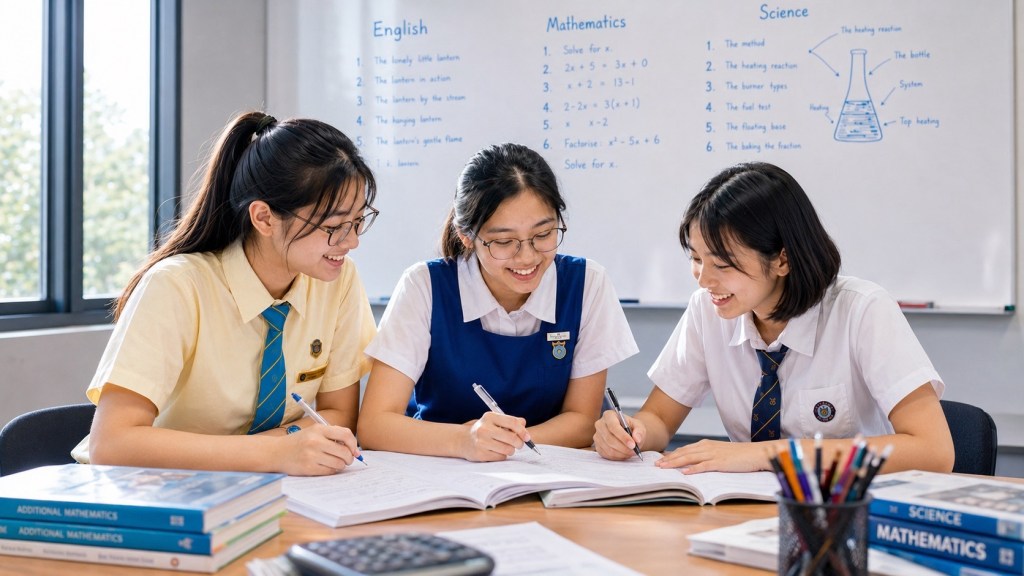
How to Read Academic Papers as a Student | Question, Structure, Evidence and Notes is a guide to academic reading for students who have moved beyond textbooks into journal articles, reports, research papers and evidence-heavy readings. It answers a practical study question: how do you read a difficult paper efficiently without turning “efficient” into superficial, and how do you take notes that preserve the research question, method, evidence, uncertainty and later usefulness?
The central mistake is to treat an academic paper as a chapter that must be read word by word from top to bottom. Papers are structured arguments. The learner should know what question is being asked, how the evidence was produced, what the results actually show, what the authors infer from them, and where the claim stops. The reading process therefore moves between map and detail, source and note, evidence and interpretation.
This article is not a guide to writing a literature review or publishing research. It owns the learner-side reading job: entering a paper, extracting its structure, judging evidence at an appropriate student level, building usable notes and returning to the source when later writing or projects require it.
Academic reading becomes easier when the student stops asking “How do I get through this paper?” and starts asking “What claim is this paper entitled to make, and what do I need from it?”
1. Academic reading begins with a question
A paper is easier to read when the learner knows why it was opened. Are you trying to understand a concept, find evidence for a claim, compare methods, locate a definition, evaluate a result or build background for a project?
The purpose changes how deeply each section needs to be read. A paper used for orientation may need a structural pass; a paper central to an argument needs closer examination of method, evidence and limitations.
Reading becomes more efficient when the task is defined before the first paragraph.
2. Do not begin by reading every word in order
Academic papers are structured documents. Use that structure. Read title, abstract, headings, figures and conclusion to build an initial map before moving linearly through the dense sections.
This first pass does not replace close reading. It creates orientation so details have somewhere to attach.
A paper is easier to understand when the learner first knows what problem it is trying to solve and how the sections contribute.
3. Read the title as a compressed claim about scope
A title often signals topic, population, method, relationship or intervention. Ask what the title promises and what it does not promise.
If the title is broad, check whether the actual study scope is narrower. Do not let a general-sounding title encourage a universal interpretation of limited evidence.
The first act of critical reading is often scope control.
4. Use the abstract as a map, not a substitute
The abstract can reveal the research question, method, sample, central result and conclusion. It is useful for deciding whether the paper deserves deeper reading.
Do not cite or interpret the abstract as if it contains all methodological detail or limitations. Important qualifications may appear later.
The abstract tells you where the paper is going; the body tells you how it got there.
5. Identify the research question before collecting details
Write the question the paper is trying to answer in your own words. If you cannot, reread the opening and abstract until the purpose is clearer.
A precise question helps the learner judge whether later evidence is relevant and whether the conclusion stays within scope.
Without the question, notes tend to become disconnected facts.
6. Separate background from the paper’s own contribution
Introductions often review prior knowledge before stating the gap. Mark the boundary between what the field already knew and what this study is trying to add.
Ask why the new study was needed. Was evidence inconsistent, a population understudied, a mechanism uncertain or a method limited?
The contribution makes more sense when the gap is explicit.
7. Read definitions carefully
Academic fields may use familiar words in technical ways. Capture definitions that materially affect interpretation and keep the source context.
Compare competing definitions if the literature does not use the term consistently.
A paper can appear to disagree with another simply because the same word is being used differently.
8. Read the literature review for argument, not bibliography volume
A literature review is not merely a list of previous papers. Ask how the authors organise prior evidence and what conclusion they draw from it.
Notice which studies support the argument, which complicate it and which gap justifies the current work.
The learner should be able to explain the conversation, not recite the citations.
9. Read methods to understand what the evidence can mean
The method section tells you how the study created its evidence. You do not need expert-level methodological knowledge to ask useful questions: who or what was studied, how variables were measured, what comparison existed, and what procedures were used?
The method limits the claim. An observational design does not establish the same causal conclusion as a well-designed experiment.
Critical reading depends on connecting method to inference.
10. Identify the population and sample
Ask who the participants or cases were, how many there were, and how they were selected. A result from one population may not generalise automatically to another.
Notice exclusions, attrition and missing data when they matter.
Scope should travel with the result into your notes.
11. Identify the variables or constructs
What exactly was measured or manipulated? A label such as “engagement”, “ability” or “wellbeing” may hide a specific questionnaire, proxy or operational definition.
Write the measure beside the construct. This prevents later notes from treating an imperfect measurement as the thing itself.
Measurement is part of meaning.
12. Distinguish correlation from causation
A relationship between two variables does not automatically show that one caused the other. Ask what the design can legitimately support.
Look for randomisation, comparison groups, temporal sequence, confounder control or other causal evidence where relevant.
Keep the wording calibrated: associated with, predicts, corresponds to, causes, increases, reduces. These verbs are not interchangeable.
13. Read figures before reading every result paragraph
Figures and tables often reveal the structure of the result more quickly than prose. Inspect axes, units, groups, uncertainty and labels before reading the interpretation.
Describe what the figure shows before asking why it happens.
This separates observation from explanation and reduces the chance of merely repeating the author’s language.
14. Check the scale and baseline
A visually large difference may be small in absolute terms; a small graphical gap may be meaningful depending on scale. Identify baseline values, units and reference groups.
Where percentages or relative changes are reported, ask what the absolute numbers are when that matters.
Good reading resists being persuaded by visual size alone.
15. Read statistical significance and practical importance separately
A statistically detectable result is not automatically large, important or useful. Where the paper reports effect sizes or confidence intervals, include them in the interpretation.
Conversely, an imprecise estimate does not prove there is no effect; it may reflect limited evidence.
Students should avoid reducing results to “significant” versus “not significant” without context.
16. Read uncertainty as part of the result
Confidence intervals, error bars, sensitivity analyses and limitations all communicate uncertainty. Do not strip them away when summarising.
A result can be useful and still uncertain. Academic reading improves when confidence is proportional to the evidence.
The learner should be able to say both what the paper suggests and how strongly.
17. Separate result from interpretation
The results section reports what was observed or estimated. The discussion interprets why it may have happened and what it means.
Keep these layers separate in notes. An author’s explanation may be plausible without being uniquely established by the data.
This distinction becomes valuable when comparing papers that observe similar results but explain them differently.
18. Look for alternative explanations
Ask what else could produce the observed pattern. Were there confounding variables, measurement artefacts, selection effects or contextual factors?
You do not need to invent objections for sport. Focus on alternatives that are plausible given the design.
Critical reading is strongest when it improves calibration rather than merely sounding sceptical.
19. Read limitations for claim boundaries
A limitations section should change how the result is used. Note which limitation affects generalisation, causal inference, measurement, statistical precision or practical implementation.
Do not copy a list of limitations without linking each to a consequence.
The purpose is not to discredit the paper. It is to understand where confidence should stop.
20. Read the conclusion against the evidence
Compare the conclusion with the research question, method and results. Does the language become broader or more causal than the evidence supports?
Strong papers usually maintain scope, but students should still perform the check rather than assuming the final paragraph is automatically the safest summary.
The conclusion is an interpretation to evaluate, not a shortcut around the paper.
21. Read references as a map of the conversation
The reference list shows which sources the paper depends on. You do not need to follow every citation. Look for foundational works, recent reviews, competing results or sources repeatedly used for central claims.
A cited paper becomes worth opening when it answers a question your current paper cannot resolve or when you need to verify how a claim was represented.
References are routes, not a compulsory reading list.
22. Use citation chasing selectively
Backward citation chasing follows references into earlier work. Forward citation chasing finds later papers that cite the current one. Both can help trace how an idea developed.
Use them when the paper is central to your topic, when a claim is contested, or when you need more recent evidence.
The goal is to extend the evidence chain deliberately rather than disappear into an endless literature maze.
23. Check publication date when the field moves quickly
Some disciplines change slowly; others move quickly. A ten-year-old theoretical paper may remain central while a ten-year-old software benchmark or clinical guideline may be outdated.
Ask whether recency materially affects the claim you are using. When current rules, technologies or evidence are involved, verify newer sources.
Date is part of context, not a universal quality score.
24. Do not treat prestige as a substitute for reading
Journal reputation, author affiliation and citation count can help with orientation, but they do not tell you whether a specific claim is justified.
Read the actual method, evidence and scope. High-status sources can contain limitations; lesser-known studies can still provide useful evidence.
Authority helps prioritise attention. It does not remove the learner’s responsibility to interpret.
25. Distinguish primary studies from reviews
A primary study reports new data or analysis. A review synthesises a body of work. They answer different learning needs.
Use reviews for orientation, terminology, debates and source discovery. Use primary studies when you need the actual design, data or result behind a specific claim.
A strong reading system knows which layer of evidence it is using.
26. Systematic reviews require their own reading questions
A systematic review should be read for its search strategy, inclusion criteria, quality assessment, synthesis method and the heterogeneity of included studies.
The conclusion depends on what was found and what was eligible to enter the synthesis. A review can be rigorous and still be limited by weak underlying studies.
Do not treat “systematic review” as a magic label that ends evaluation.
27. Meta-analysis needs effect-size interpretation
When results are statistically combined, look at the effect estimate, uncertainty and variability across studies. Ask whether the studies are sufficiently comparable for the combined estimate to be meaningful.
Forest plots can show more than the headline result. Inspect direction, size, intervals and heterogeneity.
A pooled number is a synthesis, not a guarantee that every context behaves the same way.
28. Qualitative papers require different reading habits
Qualitative research often investigates meaning, experience, process or context. Read for research question, sampling, data collection, analytic approach, reflexivity where relevant and the relationship between quotations or observations and themes.
Do not criticise a qualitative study merely because it lacks a large statistical sample; judge it against the kind of claim it is designed to support.
Method should be evaluated relative to purpose.
29. Case studies trade breadth for depth
A case study can reveal process, complexity and context in detail. Its strength may be explanatory depth rather than population-level generalisation.
Ask why the case was chosen, what evidence was collected and how the authors move from observations to broader lessons.
Use case evidence at the scope it can support.
30. Experimental papers need treatment, control and outcome clarity
Identify what changed between groups, how assignment occurred, what outcome was measured and when. Check whether participants, assessors or analysts were blinded where relevant and feasible.
Ask whether attrition or non-compliance could affect interpretation.
Experimental language should follow the actual design rather than the paper’s general topic.
31. Observational papers need confounder awareness
When researchers observe existing differences, other variables may explain part of the association. Look at how important confounders were measured or adjusted for.
Adjustment reduces some concerns but does not automatically eliminate all bias.
Write conclusions with the design’s limits attached.
32. Cross-sectional studies capture a slice in time
Cross-sectional evidence can describe prevalence or association at one point, but temporal order may be unclear.
Be cautious about language suggesting development, progression or cause unless other evidence supports it.
The timing of measurement is part of what the study can know.
33. Longitudinal studies add time but still need careful inference
Repeated measurement can reveal change and temporal patterns, but attrition, confounding and measurement consistency still matter.
Ask who remained in the study and whether the same constructs were measured comparably over time.
More time points strengthen some questions without solving every causal problem.
34. Surveys require question-quality awareness
A survey result depends on who answered, how questions were worded, response options, timing and non-response.
A percentage can look precise while the underlying question is ambiguous or the sample unrepresentative.
Read the instrument or method details when the survey result is central to your argument.
35. Self-report measures have specific limits
Self-report can be the right tool for beliefs, feelings or experiences, but it can also be affected by memory, interpretation and social desirability.
Do not dismiss self-report automatically. Ask whether it matches the construct the study wants to measure and whether other evidence supports it.
Measurement quality is contextual.
36. Proxy measures need explicit naming
Sometimes a study cannot measure the underlying construct directly and uses a proxy. Record the proxy rather than silently upgrading it to the full concept.
For example, clicks may be used as a proxy for engagement, or test scores as one measure of learning. The relationship can be useful without being identical.
Good notes preserve the difference between construct and indicator.
37. Read tables as compressed evidence
A table can contain sample characteristics, estimates, uncertainty and model variants that the prose only summarises.
Read column headings and footnotes carefully. Many interpretation errors come from missing what the comparison group or adjusted model actually is.
Tables reward slow, structured attention more than rapid scanning.
38. Read figure captions
Captions often contain conditions, abbreviations, sample sizes or statistical details necessary to understand a figure.
Do not interpret the visual independently of the caption and methods.
A graph without its caption can become evidence detached from context.
39. Ask what the unit of analysis is
Is the analysis about individuals, schools, countries, firms, trials, cells, images or repeated observations? The unit affects what can be inferred.
An association observed at group level should not automatically be assigned to individuals.
Keeping the unit visible prevents ecological and aggregation mistakes.
40. Ask what was excluded
Exclusion criteria can improve study focus but narrow applicability. Record important groups, data or conditions that were left out.
A conclusion may be strong for the included population and uncertain elsewhere.
What is absent can be as important as what is measured.
41. Ask what was missing
Missing data can affect results if absence is systematic. Read how the authors handled incomplete observations and whether sensitivity analyses were used.
Students do not need advanced statistics to notice that missingness may matter.
A paper’s evidence includes its gaps.
42. Replication matters more than one dramatic result
A striking single study can be interesting, but confidence grows when findings survive independent replication, different methods or related contexts.
If a result is important to your assignment, search for later evidence or reviews rather than treating the first paper as final.
Academic knowledge is cumulative and revisable.
43. Novelty is not the same as truth
Papers often emphasise what is new because novelty matters in publication. The learner should still ask how well the evidence supports the new claim.
A less novel result that replicates prior work can be highly valuable.
Do not let the rhetoric of “first”, “new” or “breakthrough” substitute for methodological reading.
44. Null results deserve careful reading
A study that does not detect a difference may provide useful evidence, but interpretation depends on sample size, uncertainty, measurement and design.
“No statistically significant difference” is not always equivalent to “the groups are the same”.
Read intervals and study power where appropriate before turning absence of evidence into evidence of absence.
45. Preprints need status awareness
A preprint can provide timely access to research that has not yet completed formal peer review. That can be useful, especially in fast-moving fields.
Mark the status clearly and check whether a later reviewed version exists before using it for important claims.
Publication status is part of provenance.
46. Peer review does not remove the need for judgement
Peer review is a quality-control process, not a guarantee that every claim is correct. Errors, weak assumptions and contested interpretations can survive.
Students should respect the publication process while still reading method, evidence and limitations.
Critical reading is compatible with trust in expertise because it asks what the expertise actually establishes.
47. Retractions and corrections matter
When a paper is central to your work, especially an older or controversial one, check whether it has been corrected, retracted or substantially challenged.
Do not cite a retracted result as ordinary evidence simply because the PDF remains online.
The scholarly record can change after publication.
48. Read supplementary material when the question requires it
Key details may appear in appendices or supplements: instruments, additional analyses, robustness checks, full methods or data descriptions.
You do not need to read supplements automatically. Open them when the main paper leaves an important methodological or evidential question unanswered.
Depth should be driven by purpose.
49. Learn the paper’s vocabulary without becoming trapped by it
Technical terms are necessary, but a student should also be able to explain the paper in plain language. If the idea cannot be expressed without copied terminology, understanding may still be fragile.
Keep key terms, then paraphrase the relationship accurately.
Translation between technical and plain language is a strong test of comprehension.
50. Build a one-sentence paper claim
After reading, write one sentence stating the main claim with scope: who or what, under which conditions, what relationship or effect, and with what level of certainty.
If the sentence becomes too long, identify which qualifiers are essential and which belong in supporting notes.
A calibrated one-sentence claim is one of the most useful outputs of academic reading.
51. Build a structured paper note
A useful paper note can be compact: citation, research question, design, population, measures, main result, uncertainty, limitation, one-sentence claim and why the paper matters to your current task.
This template prevents the note from becoming a paraphrased abstract while preserving enough structure to judge later use.
Adapt the fields to the discipline; qualitative papers and theoretical papers may need different emphasis.
52. Keep interpretation separate from source summary
Write what the paper says, then separately write what you think it means for your question. This prevents your later interpretation from being mistaken for the authors’ claim.
Use labels such as “paper claim”, “my interpretation”, “question” and “connection” when the distinction matters.
Separation makes later writing more honest and easier to verify.
53. Preserve quotations sparingly
Keep exact quotations only when the wording itself matters or when you may need to cite the phrase. Record page or section information according to your citation workflow.
Most academic notes should be in your own words after understanding, with the source still traceable.
A note full of copied sentences often hides whether the learner has processed the argument.
54. Paraphrase after comprehension
A good paraphrase changes wording while preserving scope, relationship and uncertainty. It does not strengthen the claim or remove conditions.
Compare your paraphrase with the source and ask whether a cautious verb became a causal verb, a sample became a population or an association became a universal rule.
Paraphrasing is a reasoning task, not a thesaurus task.
55. Build a claim-evidence pair
For every paper you expect to use in writing, record the specific claim you may support and the evidence the paper provides.
If the evidence does not actually support the planned claim, narrow the claim or find another source.
This small discipline prevents citation from becoming decoration.
56. Record a “not evidence for” line
A useful note can include what the paper does not establish. “Does not establish causality.” “Does not include Primary students.” “Does not compare long-term outcomes.”
This boundary protects future writing from overreach.
Knowing what a source cannot support is part of knowing the source.
57. Record one methodological strength
Critical reading should not become a catalogue of flaws. Note a feature that strengthens confidence: transparent sampling, appropriate control, validated measure, preregistered analysis, replication, robust sensitivity check or rich triangulated qualitative evidence.
The strength should relate to the claim you care about.
Balanced reading improves judgement because it asks why evidence deserves weight as well as why caution is needed.
58. Record one key limitation
Choose the limitation that most affects your planned use, not the longest list available. A narrow sample may matter for generalisation; weak measurement may matter for construct validity; lack of control may matter for causality.
Then state the consequence for interpretation.
Limitations become useful when they change the claim.
59. Keep confidence calibrated
Use working labels such as strong support, moderate support, suggestive, uncertain or contested only if you can explain the basis.
Do not turn these into permanent objective scores. They are learner judgements tied to the current question and evidence base.
Calibration is more important than sounding decisive.
60. Connect papers by relationship
Two papers may replicate, contradict, extend, use different methods, study different populations or define the construct differently. Link them using the relationship that matters.
A literature network becomes useful when the edges carry meaning.
This prepares the learner for synthesis because the notes already describe how sources interact.
61. Build contrast notes for conflicting papers
When studies disagree, do not immediately choose a winner. Compare question, sample, measurement, method, context, analysis and uncertainty.
The disagreement may disappear when scope is aligned, or it may reveal a genuine unresolved debate.
A contrast note turns contradiction into a research question.
62. Build a consensus note when many sources converge
When several independent sources support a similar conclusion, compress the pattern rather than keeping only isolated paper notes.
Record the scope of convergence and any important exceptions.
Consensus notes help later writing distinguish a field-level pattern from one memorable paper.
63. Use review papers to find the field’s structure
A good review can reveal major theories, recurring methods, established findings, open questions and landmark studies.
Use it to map the territory, then open primary papers where your task requires direct evidence or detail.
The review is a navigation tool and synthesis source, not a reason to avoid primary research entirely.
64. Do not cite a paper you have not understood
A source can appear relevant from the title or abstract and still fail to support your claim. Read enough of the paper to understand what evidence lies behind the statement you plan to cite.
If the source is inaccessible or too technical to evaluate, use it cautiously and seek a more interpretable supporting source.
Citation should follow understanding, not keyword matching.
65. Read around a key quotation
A sentence taken out of context may have qualifiers in the surrounding paragraph or refer to another source rather than the current authors’ finding.
Read before and after the quotation and identify whether it is result, interpretation, background or speculation.
Context protects against accidental misrepresentation.
66. Track secondary citations
If Paper A says Paper B found something, but you have not read Paper B, do not write as if you personally verified the original result unless your citation style explicitly permits secondary citation and you label it appropriately.
Where the original evidence matters, retrieve Paper B.
This preserves the chain of evidence and avoids citation laundering.
67. Keep DOI or stable links where useful
A stable identifier helps you return to the source later, especially when local file names are poor.
Use the citation manager, DOI, library permalink or official repository as appropriate.
Retrievability is part of a usable research note.
68. Use a citation manager as infrastructure, not memory
Citation software can store metadata and generate bibliographies, but it does not know why the paper matters to your argument.
Keep learner notes about claim, evidence, scope and relationship alongside the bibliographic record.
The tool manages references; the student manages meaning.
69. Name PDFs consistently
A folder of files called download(17).pdf creates unnecessary search friction. Use author-year-short-title or another stable convention.
File names should help recognition without becoming excessively long.
Simple information hygiene saves time during writing and revision.
70. Use folders lightly
A paper may belong to several themes. Deep folder hierarchies can force artificial choices. Use a shallow project or course structure and rely on tags, search or linked notes where appropriate.
The purpose is finding sources quickly, not producing the perfect taxonomy.
If filing becomes a recurring obstacle, simplify.
71. Build a reading queue with reasons
A reading list should state why each paper is waiting: orientation, method comparison, evidence for claim, recent update, conflicting result, foundational theory.
This helps prioritise when time is limited.
A queue without purpose becomes an anxiety list.
72. Triage reading by decision value
Read first the papers most likely to change your model or writing: reviews for orientation, central primary evidence, contested findings and sources directly tied to the assignment question.
Peripheral examples can wait.
Reading strategy improves when importance and purpose guide depth.
73. Stop reading when the question is answered enough
Academic reading can become endless because every paper cites five more. Define a stopping condition for the current task: enough evidence to understand the concept, compare methods, support the claim or identify the debate.
You can reopen the literature later if the writing exposes a gap.
Stopping is part of research judgement.
74. Do not optimise only for reading speed
Faster reading is useful when the material is straightforward or only structural orientation is needed. Dense methods, theory or unfamiliar concepts may require slow rereading.
Judge efficiency by what can later be explained or used, not pages per hour.
Reading speed is subordinate to comprehension and purpose.
75. Use multiple passes
First pass: map. Second pass: understand the central argument and evidence. Third pass: inspect the parts relevant to your task. Additional passes only where needed.
This is often more efficient than one slow attempt to understand every sentence equally.
Depth becomes selective rather than uniformly maximal.
76. Annotate questions, not only statements
Margin questions keep the reading active: What does this measure? Why this sample? Does this result support causation? What alternative explanation remains?
Questions can later become tutorial discussion, consultation prompts or writing checks.
Annotation becomes a dialogue with the evidence.
77. Predict before reading the discussion
After the results, pause and write what you think the findings mean and what limitations matter. Then read the authors’ discussion.
Compare your interpretation with theirs. Where do they add domain knowledge? Where are they more cautious or more speculative?
Prediction turns the discussion into a comparison rather than passive acceptance.
78. Predict expected results before opening them
After reading the question and method, ask what pattern each hypothesis would predict. This clarifies the inferential logic.
Then compare the actual result with the prediction.
The paper becomes an argument you can follow rather than a sequence of facts.
79. Ask what result would have changed the conclusion
Counterfactual thinking reveals how sensitive the claim is. What data pattern would have counted against the hypothesis?
If no possible result seems able to change the story, the interpretation may be too flexible.
This question encourages falsifiable reasoning at an accessible student level.
80. Ask what evidence is missing
A paper can be good and still leave the central question partly open. What additional population, method, measurement or time scale would strengthen the inference?
Record one missing piece rather than designing an entire new study unless your assignment requires it.
Recognising missing evidence is a form of understanding.
81. Build a literature matrix only when comparison matters
A matrix can place papers in rows and fields such as question, population, method, measure, result, limitation and relevance in columns. It is useful when several sources must be compared systematically.
Do not build a giant spreadsheet for three simple readings. The tool should reduce comparison cost.
A good matrix makes patterns and disagreements easier to see before writing.
82. Use thematic synthesis after individual paper understanding
Do not group papers by theme before you know what each paper actually claims. First understand the individual sources, then identify recurring concepts, methods, debates or findings.
Themes should emerge from relationships among sources, not from convenient folder names alone.
Synthesis becomes more accurate when it rests on calibrated paper notes.
83. Separate source agreement from source independence
Five papers that all reuse the same dataset are not five independent confirmations. Check whether evidence sources overlap.
Reviews can also repeat the same foundational study. Citation count does not automatically equal independent replication.
The learner should ask how many distinct evidential routes support the conclusion.
84. Distinguish conceptual disagreement from empirical disagreement
Two authors may agree on the data but interpret the concept differently, or they may use the same theory and observe different results.
Name the level of disagreement before attempting synthesis.
This prevents the student from treating every debate as if it were about the same thing.
85. Distinguish methodological disagreement
Studies may reach different conclusions because they operationalise variables differently, sample different populations or use different analytic methods.
Method is not a footnote to the debate; it may be the reason the debate exists.
A synthesis note should preserve this connection.
86. Use chronology only when it explains development
A literature review does not need to march year by year. Chronology is useful when ideas, methods or evidence clearly evolve over time.
Otherwise organise by question, mechanism, method, finding or debate.
The reading notes should support the structure that best explains the field.
87. Build a source map for large assignments
For a major essay or project, map which sources support background, theory, method, evidence, counterargument and limitations.
One paper can serve several roles, but the map reveals where an argument depends too heavily on one source or lacks direct evidence.
Source mapping turns the literature into an argument resource rather than a reading pile.
88. Keep a “central sources” layer
Not every paper deserves equal attention. Mark the small number that define the field, supply crucial evidence or directly answer your assignment question.
Read these more deeply, verify citations and preserve stronger notes.
Peripheral papers can remain lighter references.
89. Build an evidence ladder
For a claim, list the strongest direct evidence, supporting indirect evidence, examples and contextual sources separately.
This helps the learner avoid using an illustrative example as if it were the primary proof.
The ladder makes argument strength easier to inspect.
90. Use papers to build counterarguments honestly
A counterargument should represent a real competing interpretation or evidence base, not a weak position created only to be dismissed.
Use papers that genuinely challenge the claim and explain why their evidence deserves consideration.
Strong academic writing becomes possible when reading preserves disagreement fairly.
91. Read papers before forcing them into your thesis
Students can begin an essay with a preferred answer and then read only for sentences that support it. This creates confirmation bias and weak synthesis.
Allow important evidence to narrow, complicate or change the thesis.
The argument should emerge in conversation with the sources rather than treating them as decorations.
92. Keep claim scope visible during writing
When moving from note to draft, carry the population, conditions and uncertainty with the claim. Do not let cautious source language become universal prose.
A note that says “associated with among first-year participants in this study” should not silently become “causes better outcomes for all students”.
Scope discipline begins during reading and protects later writing.
93. Use quotations for language, not to outsource explanation
A quotation can preserve a distinctive formulation, definition or primary voice. It should not replace the writer’s responsibility to explain why the passage matters.
Introduce, interpret and connect quotations to the argument.
If paraphrase would communicate the idea more clearly, quotation may be unnecessary.
94. Paraphrased evidence still needs citation
Changing words does not turn another author’s idea or finding into your own. Follow the citation rules required by your institution and discipline.
Keep citation information attached to the note so attribution is not reconstructed from memory later.
Good knowledge management supports academic integrity by design.
95. Separate notes for evidence from notes for ideas
A source note records what the paper establishes. An idea note records your connection, question or interpretation. Linking them preserves provenance.
This is especially useful when one source triggers an original thought that goes beyond what the paper claims.
The distinction lets the student develop ideas without accidentally attributing them incorrectly.
96. Build writing from claims, not from source summaries
A weak literature paragraph often becomes Paper A says, Paper B says, Paper C says. A stronger paragraph begins with the writer’s claim and brings sources into relationship around it.
The reading system should therefore allow retrieval by idea or claim, not only by author.
Synthesis starts before writing when notes already capture relationships among papers.
97. Use a claim table before drafting
For each planned paragraph, write the claim, evidence sources, counterevidence, limitation and purpose in the larger argument.
This exposes unsupported sections before prose makes them harder to diagnose.
A claim table is temporary infrastructure, not part of the final essay.
98. Use academic papers to improve project design
Reading can reveal common measures, methods, failure modes and prior solutions relevant to a project. Extract design implications rather than only background facts.
Ask which methodological choices appear repeatedly and why.
The literature becomes useful when it changes what the student builds or tests.
99. Use papers to interpret your own results
After collecting project data, return to the literature. Do your findings resemble previous work? Are differences plausibly explained by method, population or context?
Avoid forcing your data to match the literature. Use comparison to sharpen interpretation.
Reading continues after data collection because evidence gains meaning through context.
100. Use papers to identify limitations in your project
Prior studies can reveal variables you did not measure, alternative methods and known constraints. These sources can improve the honesty of your limitations section.
Do not add a limitation merely because another paper mentions it. Explain how it affects your work.
The literature supports judgement when the connection is explicit.
101. Academic-paper reading should feed the personal knowledge base
Extract durable concepts, methods, contrasts and sources into A Personal Knowledge Base for School. Do not copy the entire paper note into every topic.
Keep the full source record separate and link it to the canonical concept where appropriate.
This allows future modules to reuse the learning without losing provenance.
102. Build retrieval questions from important papers
Ask: What was the research question? Which design was used? What did the main result show? What limitation most affects the claim? Why does this paper matter to my current argument?
Answer from memory before reopening the note.
Retrieval keeps central sources accessible during writing and discussion.
103. Teach the paper to someone else
Explain the paper in three levels: one sentence, one minute and five minutes. Each level requires different compression while preserving the question, evidence and conclusion.
Ask the listener to challenge the scope or method.
Teaching can reveal whether technical language is carrying more of the understanding than the learner realised.
104. Use a paper club format
In a study group, assign roles: question and background, method, figures and results, limitations, application. Everyone should still read enough to understand the whole paper.
Compare interpretations and identify where the evidence allows more than one reasonable conclusion.
End with individual notes so the group discussion does not become the only memory trace.
105. Do not let journal club become presentation theatre
A beautiful slide deck about a paper can conceal shallow reading. Require presenters to explain why the method supports the claim and answer questions beyond the prepared slides.
The purpose is collective interpretation, not performance polish.
A strong discussion changes the group’s understanding of the paper.
106. Use reading speed strategically
Skim familiar background, slow down for unfamiliar theory, methods central to your task and results you intend to cite.
Reading every sentence at one pace is inefficient because information value is uneven.
Expert reading is partly the ability to allocate attention.
107. Vocabulary difficulty should trigger targeted support
When technical vocabulary blocks the argument, build a small glossary or consult authoritative definitions. Do not translate every sentence into simpler language if the technical distinction is necessary.
Return to the paper after the terms are clearer.
The objective is to enter the discipline’s language without losing conceptual understanding.
108. Mathematical density requires line-by-line reconstruction
For proofs, derivations or formal models, structural skimming is not enough. Reconstruct steps, identify assumptions and verify transformations.
Use scratch work. A paper can require active calculation rather than ordinary reading.
The learner should be willing to change reading mode when the representation changes.
109. Dense theory requires concept mapping and examples
Abstract theoretical writing can become clearer when each construct is defined, related to others and grounded in an example or counterexample.
Do not force a simple summary too early. Preserve distinctions that the theory depends on.
Understanding develops through repeated movement between abstraction and concrete cases.
110. Long papers can be split by function
Read the map first, then divide the paper into question/background, method, evidence and interpretation sessions if needed.
Keep the central research question visible so the sessions reconnect.
Chunking reduces fatigue without fragmenting meaning.
111. Use a stop-and-summarise rule
After a dense section, close the paper and state the claim, evidence and one uncertainty before continuing.
This prevents pages from accumulating without integration.
If the summary is impossible, reread selectively rather than pushing forward on weak understanding.
112. Use figures as retrieval anchors
Later, hide the caption and explain what the figure shows, what comparison matters and what conclusion is justified.
Then check the paper.
A figure can become a compact gateway back into the study’s evidence structure.
113. Build one “why this matters” note
A paper note should say why the source matters to your course, essay, project or understanding. This field keeps the reading connected to purpose.
If no meaningful use appears, the paper may remain background rather than central.
Relevance is part of reading judgement.
114. Build one “what would change my mind?” note
When using a paper to support a position, ask what later evidence would weaken or reverse the conclusion.
This keeps the learner open to revision and reveals which assumptions carry the argument.
Academic reading is stronger when beliefs remain responsive to evidence.
115. Use source quality and relevance separately
A rigorous paper can still be irrelevant to your question. A highly relevant source can still have methodological limits.
Judge both axes rather than collapsing them into one impression of “good source”.
This helps prioritise which papers deserve central argumentative weight.
116. Distinguish evidence strength from evidence fit
A randomised experiment may be strong for causal inference but poorly matched to your population or context. A local case study may fit the context but support a narrower claim.
The student’s job is to align the source with the claim being made.
Source selection is an argument decision, not a prestige contest.
117. Build a “use in writing” field only after reading
After understanding the paper, note whether it might support background, mechanism, evidence, contrast, counterargument, limitation or method.
Do not decide the role from the title alone.
This makes later drafting faster while preserving the paper’s actual scope.
118. Read papers differently for exams
When a paper is assigned for an exam, identify the ideas likely to be tested: research question, method, central result, theoretical implication, critique or comparison with another reading.
Use retrieval questions and compare papers by relationship rather than memorising every detail.
Exam reading still needs evidence, but the later use differs from essay research.
119. Read papers differently for projects
Project reading should change a decision: design, measure, feature, source, method, interpretation or benchmark.
Extract implications and limitations relevant to the project rather than producing a generic summary.
Reading becomes applied when the project looks different because the source was understood.
120. Read papers differently for seminar discussion
Prepare one claim you understand, one question, one evidence-based critique and one connection to another reading.
This gives discussion a structure without scripting the conversation.
The goal is readiness to reason publicly, not a miniature presentation.
121. Read papers differently for literature reviews
Literature-review reading prioritises relationships among sources. Keep notes on agreement, disagreement, methodological differences, scope and development of the field.
A paper summary becomes less important than knowing how the source changes the synthesis.
The reader is building a conversation, not a stack of abstracts.
122. Academic reading benefits from a personal question bank
Keep recurring questions such as: What is being claimed? How was it measured? Who was studied? What comparison exists? What uncertainty remains? What alternative explanation fits?
The bank becomes internal over time and speeds critical reading.
Different disciplines can add specialised questions without discarding the general evidence framework.
123. AI can help generate questions but should not replace the source
A generative tool can suggest questions, explain terminology or compare methods. The paper remains the source that must be read when the claim depends on its evidence.
Do not rely on an AI summary for exact methods, statistics or author conclusions without checking.
Use AI to increase access and scrutiny, not to create a second-hand research record.
124. AI summaries need verification
If a tool summarises a paper, compare the summary with the abstract, results and conclusion. Check whether qualifiers disappeared or causal language strengthened.
Label generated support in your notes where provenance matters.
A fluent summary can be useful orientation while still requiring human verification.
125. Ask AI to quiz from your note, not invent the paper
After you have built a source note, ask for retrieval questions based only on the note you provide. This reduces hallucinated details and keeps the study anchored in verified material.
Answer before seeing feedback.
The tool becomes a practice layer on top of your reading rather than a substitute for reading.
126. Use AI to challenge scope
A useful prompt is: “Which statements in my summary are broader than the evidence I recorded?” Then verify each challenge against the paper.
This can expose accidental overgeneralisation.
The learner remains responsible for the final interpretation.
127. Use AI to generate a counterexample cautiously
For conceptual papers, a generated counterexample can help test whether you understand the boundary of a claim. Treat it as a thinking prompt, not evidence.
Verify disciplinary plausibility where necessary.
Generated cases are practice objects, not source material.
128. Do not upload restricted papers or data casually
Follow institutional, publisher and privacy rules when using external tools. Some documents, datasets or course materials may not be appropriate to upload.
Use public metadata, your own notes or permitted excerpts when that is the lawful and ethical route.
Convenience does not override source restrictions.
129. Reading notes should preserve copyright boundaries
Do not reproduce large portions of copyrighted papers in shared notes or public materials without permission. Summarise in your own words and cite appropriately.
Keep necessary quotations brief and purposeful.
Academic reading includes responsible handling of sources.
130. Academic integrity begins during note-taking
If copied language enters notes without quotation marks or source information, later writing can accidentally treat it as original.
Mark quotations immediately and keep citations attached to paraphrases.
Good provenance reduces plagiarism risk before drafting starts.
131. Build a paper-reading checklist only until it becomes automatic
A checklist can include question, design, population, measures, result, uncertainty, limitation and relevance. Use it while the reading process is new.
As the questions become internal, shorten the checklist.
The tool should disappear as the skill becomes fluent.
132. Do not score papers mechanically
Numerical quality scores can create false precision when the learner lacks enough methodological expertise to justify them.
Use structured questions and qualitative judgements tied to evidence instead.
Critical reading is a reasoning process, not a rating game.
133. Ask for help at the methodological bottleneck
When a method section exceeds your current knowledge, identify the exact piece needed for interpretation. Ask an instructor, tutor or appropriate source: what does this design allow the authors to conclude?
You do not always need to master the entire technique to read the paper responsibly.
Targeted help protects both progress and intellectual honesty.
134. Know when a paper is too technical for the current task
A student can spend hours trying to master a specialised paper whose details exceed the course need. If a reliable review or textbook explains the concept at the required level, use that layer.
Return to the technical paper when the assignment requires direct engagement.
Reading depth should match purpose and current capability.
135. Build background knowledge when every sentence is difficult
If vocabulary, theory and methods are all unfamiliar, the problem may be insufficient background rather than poor reading technique.
Use a textbook, lecture note, review paper or instructor explanation to build the prerequisite map.
Then return to the paper with more cognitive capacity for the actual argument.
136. Use references to learn the field’s language
Repeated terms across papers reveal the vocabulary used by the discipline. Capture definitions and contrasts that affect your ability to search and interpret.
Better vocabulary improves later literature searches because the learner knows the field’s own names for the problem.
Language becomes a navigation tool.
137. Search terms should evolve as understanding grows
Early searches may use broad everyday language. After reading several papers, refine queries using technical terms, named theories, methods and population descriptors.
This produces more relevant literature and reduces noise.
Reading improves search; search produces better reading.
138. Use one recent review to update an old landmark paper
A classic paper may remain important for theory or method while later evidence changes confidence in its conclusions.
Pair landmarks with recent reviews or replications where the topic has evolved.
Historical importance and current evidential status are separate questions.
139. Use one landmark paper to deepen a recent review
Reviews compress. Opening a foundational source can reveal the original argument, method and nuance that later summaries reduce.
This is useful when the landmark concept is central to your course or project.
Move between synthesis and primary detail depending on the learning need.
140. The reader should finish with fewer claims than they began with
Good academic reading often narrows broad ideas. A general belief becomes conditional, population-specific, method-dependent or uncertain.
That narrowing is not failure. It is evidence that the learner has become more precise.
Knowledge quality often improves as claims become better bounded.
141. Build a three-level paper summary
Level one is one sentence: the calibrated main claim. Level two is one paragraph: question, method, result and limitation. Level three is the structured note with enough detail for later use.
The levels support different future tasks without requiring the learner to reread the paper every time.
Compression becomes a test of understanding because the central structure must survive.
142. Reconstruct the paper without looking
After reading, close the source and write the research question, method, main finding and one limitation from memory.
Then reopen and correct. Missing pieces reveal what did not become available.
This converts academic reading into active recall rather than permanent dependence on the PDF.
143. Use delayed retrieval for central sources
Return several days later and explain why the paper matters to your topic. If only the title remains familiar, reopen the structured note and repair.
Central papers deserve repeated access because they often anchor later discussion or writing.
Peripheral sources can remain in reference without the same retrieval burden.
144. Use changed questions to test source understanding
Instead of asking “What did the paper find?”, ask “Would the conclusion apply to another population?” “Which method detail matters most for causality?” or “What evidence would contradict the interpretation?”
Changed questions reveal whether the student understands the structure rather than memorising the abstract.
Transfer matters in academic reading too.
145. Compare a paper with the textbook
Textbooks usually present more settled, compressed knowledge. Papers expose how evidence was produced and where uncertainty remains.
Ask what the textbook simplifies, what the paper adds and whether the field has changed since the textbook edition.
This comparison teaches the relationship between curriculum knowledge and research knowledge.
146. Compare a paper with the lecture
Lectures may emphasise one interpretation or use a paper as an example. Read enough of the source to see whether the teaching summary preserves its scope.
Do not assume a lecture simplification is an error; it may be pedagogically appropriate. Record the deeper qualification where it matters.
The learner becomes able to move between teaching layers.
147. Compare papers with different populations
When results differ across age groups, countries, industries or clinical populations, ask whether context plausibly explains the difference.
Avoid averaging the conclusions mentally into one universal claim.
Population is part of evidence, not a demographic footnote.
148. Compare papers with different measures
Two studies may both claim to measure the same construct while using different instruments or proxies. This can produce different results.
Place the actual measures side by side.
Measurement comparison often explains apparent disagreement.
149. Compare papers with different time horizons
Short-term outcomes and long-term outcomes answer different questions. An intervention may produce immediate performance changes without durable effects, or delayed benefits that early studies miss.
Keep the time horizon attached to the finding.
Temporal scope is part of claim scope.
150. Compare papers with different baselines
A similar improvement can mean different things when starting levels differ. Check baseline characteristics and whether groups were comparable.
Relative and absolute change should not be confused.
Baseline context helps the learner interpret effect meaning.
151. Build a “paper family” around one question
Group a review, landmark study, recent replication, contradictory result and methodological paper around one research question.
This small family can teach the evolution and evidential structure of a topic better than a long undifferentiated reading list.
The learner sees scholarship as connected inquiry.
152. Use one paper to practise methodological vocabulary
Choose a representative study and learn terms such as randomisation, blinding, confounding, effect size, confidence interval or thematic analysis in context.
Then apply the terms to another paper.
Vocabulary becomes useful when it sharpens interpretation rather than decorating critique.
153. Use one paper to practise figure reading
Select the most important figure and explain axes, comparison, pattern, uncertainty and conclusion without the discussion section.
Then compare with the authors’ interpretation.
This trains evidence-first reading.
154. Use one paper to practise claim calibration
Rewrite the conclusion in three versions: too strong, appropriately calibrated and too weak. Explain the differences.
This makes scope and uncertainty visible.
Calibration becomes easier to transfer into your own writing.
155. Use one paper to practise source checking
Choose an important background claim and follow its citation to the source. Did the cited paper actually establish what the current authors say?
This exercise teaches how scholarship builds chains of authority.
It also shows why secondary citation should be handled carefully.
156. Build a paper-reading routine under forty minutes
For a typical assigned empirical paper, spend a few minutes mapping, then focus on question, method, figures, discussion and the sections most relevant to the task. Finish with a structured note and one retrieval question.
Dense or central papers may require much longer. The routine is a starting architecture, not a universal time limit.
Efficiency comes from selective depth, not rushing.
157. Know when to abandon a paper
A paper may be irrelevant, inaccessible, methodologically unsuitable for your question or superseded by stronger evidence. Stop when the cost of deeper reading no longer serves the task.
Record why it was rejected if that decision matters to a review or project.
Discarding a source can be a sign of good judgement.
158. Know when to return later
A difficult source may be valuable but premature. Mark the prerequisite concept or method needed and place the paper in a later queue.
After background learning, return and see whether the structure is now accessible.
Reading readiness can change.
159. Keep one unresolved literature question
After a reading session, identify the question that most changes your understanding if answered. This can guide the next source search.
Do not let the literature queue grow without hierarchy.
A strong question turns reading into directed inquiry.
160. Use the unresolved question to search better
Convert the question into technical terms, population, method or mechanism keywords. Search becomes more precise as reading builds field vocabulary.
Evaluate results by relevance to the question rather than title attractiveness alone.
The search-reading loop should become progressively smarter.
161. Frequently asked question: Should I read the abstract first?
Yes, usually as part of an orientation pass. It can help decide relevance and reveal the paper’s broad structure.
Do not stop there when the paper is important to your claim or assignment. Read the methods, results and limitations needed to evaluate the evidence.
The abstract is a map, not the territory.
162. Frequently asked question: Should I read the conclusion first?
A quick look can help reveal the destination, but knowing the conclusion before the evidence can create confirmation bias. If you do, return deliberately to the method and results.
Another approach is to read question and method, predict the possible interpretation, then compare with the discussion.
Use order strategically rather than treating one sequence as mandatory.
163. Frequently asked question: How many papers should I read?
Enough to answer the current question responsibly, understand important disagreement and support the required task. The number varies by assignment, field and depth.
A smaller set read well can be more useful than a large set skimmed without synthesis.
Follow any course requirements, then allocate depth by relevance and evidence value.
164. Frequently asked question: How do I read papers faster?
Build field vocabulary, preview structure, triage relevance, read figures strategically and vary depth by purpose. Speed improves as background knowledge grows.
Do not sacrifice method and scope when those determine the claim you plan to use.
The target is efficient understanding, not maximal words per minute.
165. Frequently asked question: How do I take notes without copying everything?
Use a template centred on question, design, evidence, result, limitation and relevance. Keep only quotations whose wording matters.
Write the one-sentence claim and why the paper matters to your task.
A good note is smaller than the paper because it preserves structure rather than reproducing content.
166. Frequently asked question: Can AI summarise papers for me?
AI can assist with orientation where permitted, but verify the summary against the paper. Important methods, qualifiers and uncertainty can be lost or altered.
Do not use a generated summary as a substitute for reading a source you intend to rely on directly.
Keep source provenance and follow institutional rules about AI use.
167. Frequently asked question: What if I do not understand the statistics?
Identify what you need to know to interpret the claim: comparison, direction, uncertainty, effect size, assumptions or model meaning. Use course materials, a tutor, instructor or reliable methods reference to fill that gap.
You do not need to become a statistician to read responsibly, but you should not pretend confidence you do not have.
Targeted methodological learning is part of academic reading.
168. Frequently asked question: What if papers disagree?
Compare scope, population, measure, method, time horizon, analysis and uncertainty before deciding there is a true contradiction.
Then look for reviews, replications or later evidence.
If disagreement remains, represent it honestly rather than forcing a false consensus.
169. Academic reading should increase intellectual humility
The deeper the learner reads, the more visible uncertainty, scope and methodological trade-offs become. This does not mean nothing can be known.
It means confidence becomes more proportional and claims become more precise.
Humility is a consequence of better evidence handling, not a retreat from judgement.
170. Final compression: Question → Map → Method → Evidence → Scope → Use
Academic-paper reading can be compressed into six moves. Question: know why you opened the paper. Map: identify the paper’s structure and research question. Method: understand how evidence was produced. Evidence: inspect results and uncertainty. Scope: keep population, limitations and claim boundaries attached. Use: build a note that can support later learning or writing without losing provenance.
The learner has read well when they can explain what the paper establishes, what it does not establish, why it matters and where to return if challenged.
That is a stronger outcome than simply reaching the final page.
171. A paper should change the learner’s wider knowledge system
When a paper materially changes understanding, update the canonical concept note rather than leaving the new insight trapped inside a source summary. Add the stronger definition, boundary, method distinction, evidence pattern or unresolved question, and preserve the citation route back to the paper.
This is how academic reading contributes to continuity. A lecture concept becomes more precise after primary evidence; a project design becomes more defensible after methodological comparison; an exam answer gains stronger examples because the learner understands the evidence rather than merely recalling a paper title.
172. The final test is whether the paper can be used without being distorted
Before closing the reading cycle, test the note in one real use: explain the paper to a peer, compare it with another study, use it to support a paragraph, apply its method to a project decision, or answer a seminar question. Then return to the source and check that the use preserved the original scope and uncertainty.
The student has not finished simply because the PDF was read. The stronger endpoint is that the evidence can travel into a new task without losing what made it trustworthy, limited and meaningful in the first place.
173. Preserve one question for the next paper
Good academic reading should create a next question. After the paper is understood, write the unresolved issue most likely to change the current model: a population not studied, an alternative mechanism, a measurement problem, a contradictory result or a missing time horizon.
That question gives the next literature search a purpose. Reading then becomes a chain of inquiry rather than a sequence of PDFs. The learner is not merely accumulating sources; they are using one source to improve the question that determines what deserves attention next.
When that next question is good, the reading session has produced more than a summary. It has produced direction. The learner knows what remains uncertain, why the uncertainty matters, and what kind of source or evidence would be capable of changing the current conclusion.
Continue the Learning route: use the Learning Runtime Hub for how evidence, feedback and study decisions interact, or the Learning Atlas to move from reading academic sources into note-making, retrieval, projects and independent learning.
