
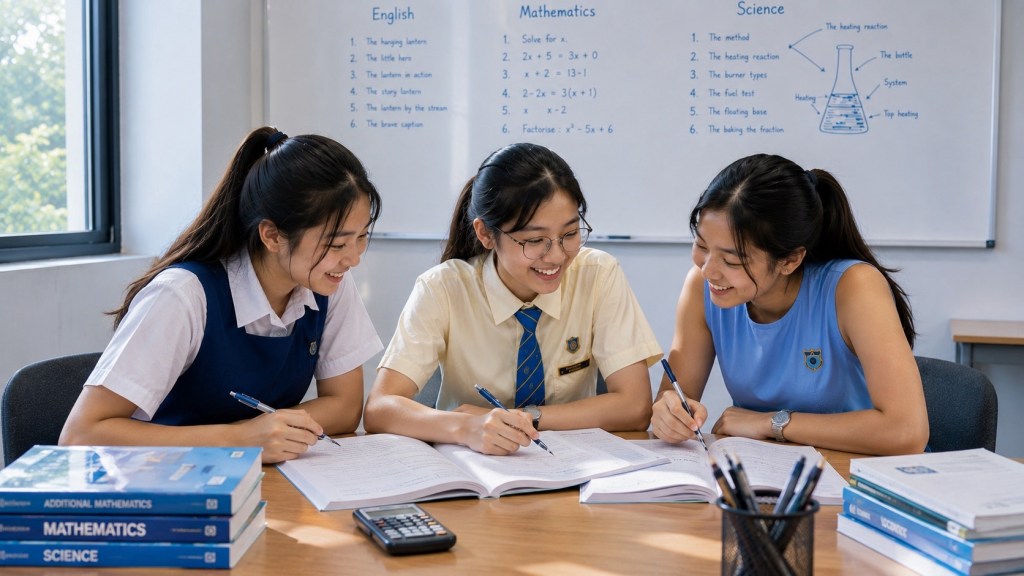
Primary 2 Mathematics is the year when number sense begins to carry more weight. Parents searching for Primary 2 maths tuition, Primary 2 Mathematics tuition in Sengkang, multiplication and division help, fractions practice or Primary 2 word problems are usually seeing the same transition: the child is no longer learning only to add and subtract; the child is beginning to coordinate operations, equal groups, sharing, fractions, measurement, money, time and increasingly varied problem structures.
This is where strong Primary Mathematics teaching must move beyond page completion. Multiplication should grow out of equal groups and repeated addition. Division should be understood as both sharing and grouping. Fractions should be tied to equal parts of the same whole. Word problems should be read as relationships rather than as keyword hunts. These are high-value search topics because they are also genuine learning bottlenecks.
For families in Sengkang and nearby Punggol, the important question is not whether a Primary 2 child can finish a familiar worksheet. It is whether the child can recognise the same mathematical structure when the numbers, wording, picture or context changes. That transfer is what protects the learner from later difficulty in Primary 3, Primary 4, fractions, ratio, percentage and PSLE Mathematics.
The MOE Primary Mathematics syllabus places problem solving at the centre of the curriculum and builds learning through concepts, skills, processes, metacognition and attitudes. Primary 2 is therefore not a race to calculate faster. It is a year for making relationships explicit and gradually making useful knowledge fluent.
Quick answer: what should Primary 2 Mathematics build?
Primary 2 should turn early arithmetic into connected structure: larger numbers, multiplication, division, fractions, measurement, money, time, geometry, data and word problems that the child can explain, not merely imitate.
- Place value beyond simple tens and ones, with flexible decomposition.
- Addition and subtraction with stronger mental strategies and written accuracy.
- Multiplication as equal groups, repeated addition and structured counting.
- Division as sharing equally and as finding how many groups.
- Fractions as equal parts of the same whole or set.
- Money and time as quantities with units and real-life meaning.
- Measurement and geometry through comparison, estimation and attributes.
- Word problems through relationship reading, representation and checking.
Why Primary 2 is more important than it looks
Primary 2 often appears manageable because the numbers are still relatively small and the problems may fit on short worksheets. This can hide weak foundations. A child may get multiplication correct by skip-counting but not understand equal groups. Another may share objects accurately but not connect sharing to division notation. A third may name one-half but fail when the whole changes shape.
Those weaknesses matter because later Mathematics assumes that these ideas are connected. Multiplication and division support fractions, ratio and algebraic structure. Fractions support decimals and percentages. Measurement supports geometry and real-world applications. Word-problem interpretation supports almost every later topic.
The goal is therefore not maximum speed in Primary 2. It is stable meaning plus growing fluency.
Multiplication should start from equal groups
A multiplication fact such as 4 × 3 should not first be a sound pattern. It represents a relationship. Depending on convention and context, it can describe four groups of three or three groups of four. The important idea is equal groups.
Concrete objects, arrays and drawings make this visible. If a child can arrange 12 counters as 3 groups of 4, 4 groups of 3, 2 groups of 6 and 6 groups of 2, the learner is beginning to see factor structure rather than one memorised sentence.
Arrays are especially useful because they connect multiplication to geometry later. Rows and columns make commutativity visible: 3 × 4 and 4 × 3 describe different orientations of the same total.
Once meaning is secure, fact fluency matters. Facts that require laborious counting every time increase cognitive load in later multi-step work. The progression should be understand, derive, practise, retrieve and automate.
Division has two meanings parents should know
Division is commonly introduced as sharing equally, but that is only one structure. If 12 sweets are shared among 3 children, each child gets 4. This is partitioning: the number of groups is known and the group size is unknown.
Division can also ask how many groups fit. If 12 sweets are packed in bags of 3, there are 4 bags. Here the group size is known and the number of groups is unknown.
The arithmetic 12 ÷ 3 = 4 is the same, but the story structure differs. Teaching both meanings gives the child more flexible access later, especially in fractions, rates and algebra.
A useful diagnostic is to ask the child to invent two different stories for the same division sentence. If only one type appears, representation may still be narrow.
Multiplication and division should be learned as an inverse family
Just as addition and subtraction are related, multiplication and division are inverse operations. If 4 × 6 = 24, then 24 ÷ 6 = 4 and 24 ÷ 4 = 6.
This relationship supports checking. It also helps children reconstruct forgotten facts. A learner who knows 5 × 8 = 40 can solve 40 ÷ 8 without learning a completely separate fact.
Fact-family thinking is more efficient than storing every operation as an isolated rule.
Fractions: equal parts before symbols
Fractions are one of the most searched and most persistent Primary Mathematics difficulties because the notation is compact. Before a child sees 3/4 as two numbers separated by a line, the child should understand that a whole has been partitioned into four equal parts and three of those parts are being considered.
Equal is the critical word. If the parts are not equal, the fraction language is not valid in the intended sense. This is why cutting, folding, fraction discs and area models can be useful in early learning.
Children also need to understand that the size of a fraction depends on the whole. One-half of a large pizza is not the same quantity as one-half of a small pizza, even though the fraction is the same.
This prevents a common misconception: comparing only numerators and denominators without considering the whole.
Why a larger denominator can mean a smaller part
Many learners think a denominator of 8 must represent something larger than a denominator of 4 because 8 is a larger number. Unit fractions reverse that intuition: if the same whole is divided into more equal parts, each part becomes smaller.
Concrete models make this obvious. One-half is larger than one-fourth of the same whole because dividing into four equal pieces creates smaller pieces than dividing into two.
This conceptual understanding matters before formal fraction comparison becomes more demanding.
Addition and subtraction still need attention
Primary 2 does not replace addition and subtraction. It extends them. Larger values, regrouping, mixed problem types and more complicated word problems require stable place value.
A child who still relies heavily on counting by ones may struggle when two-digit or three-digit calculations appear. The teacher should therefore strengthen decomposition, compensation and place-value thinking alongside written algorithms.
For example, 47 + 28 can be seen as 47 + 20 + 8, or 47 + 3 + 25, or as vertical addition. Multiple routes are useful because they reveal structure and provide checking options.
Place value should become flexible
A learner should know that 326 is 3 hundreds, 2 tens and 6 ones, but also that it can be 32 tens and 6 ones or 300 + 20 + 6. Flexible decomposition supports mental calculation and later regrouping.
One of the most useful questions is: ‘Can you make this number another way?’ This trains the child to see quantity independently of one fixed representation.
Place-value flexibility later supports decimals, standard algorithms and algebraic manipulation.
Word problems should not be solved by keywords
Children are often taught that ‘altogether’ means add and ‘left’ means subtract. These clues can help, but they are not dependable enough to drive problem solving.
The learner should identify the quantities and the relationship. Is this a total? A comparison? A missing part? Equal groups? Sharing? Repeated addition? The operation should come from the structure.
A practical routine is to ask: What do I know? What am I finding? How are the quantities related? What drawing or model would make that relation visible? Only then should calculation begin.
Bar models and drawings are thinking tools
Singapore Mathematics is widely associated with visual models because they help learners represent relationships that words alone can obscure. A model should not become another template to copy mechanically. It is valuable when it makes the unknown and the relationship visible.
For a part-whole problem, a bar can show how two known parts form a total. For comparison, two bars can show a difference. For equal groups, repeated equal sections can represent multiplication or division.
The goal is not artistic drawing. It is structural clarity.
Money: a real-life place-value application
Money questions look familiar because children encounter dollars and cents outside school, but familiarity can hide mathematical complexity. Learners must coordinate place value, addition, subtraction, comparison and units.
Parents can use ordinary shopping situations carefully: compare prices, count change, estimate a total and discuss whether an answer is reasonable.
The focus should remain on mathematical reasoning rather than turning every outing into a test.
Time: one of the most language-heavy topics
Time combines notation, units and language. ‘Quarter past’, ‘half past’, ’15 minutes later’, ‘from 2:35 to 3:10’ and calendar contexts all require careful reading.
A child who can read a clock may still struggle with elapsed time because the task involves transformation between representations and units.
Number lines are useful here. A child can jump from 2:35 to 3:00, then from 3:00 to 3:10, and combine the intervals.
Measurement: estimate before calculating
Measurement is stronger when learners develop a sense of reasonable magnitude. Which is more plausible for a pencil: 15 centimetres or 15 metres? Which unit belongs to a classroom door, a packet of rice or a bottle of water?
Estimation builds an internal error detector. A child who expects a reasonable range is more likely to notice an incorrect unit or copied number.
This habit later becomes valuable in mensuration, science and real-world Mathematics.
Shapes and geometry: learn properties, not just names
A child may recognise a square visually but still have weak geometric knowledge. Stronger learning asks what properties define the shape: number of sides, equal lengths, corners, symmetry and relationships between shapes.
Classification matters. A square belongs to broader shape families; it is not simply an isolated picture in a flashcard set.
Early property thinking prepares the learner for later geometry, where diagrams cannot be solved by appearance alone.
Data: reading before calculating
Simple tables, picture graphs and bar graphs teach an important habit: understand the representation before performing arithmetic.
Ask what each symbol represents, whether the scale starts at zero, what the labels mean and which comparison is actually being requested.
A correct subtraction performed on misread data is still wrong reasoning.
Common Primary 2 error patterns
- Counts multiplication by ones: equal-group structure is not yet efficient.
- Can share but cannot divide symbolically: representation connection needs work.
- Thinks 1/8 is larger than 1/4 because 8 is bigger: denominator meaning is unstable.
- Uses the right operation only when a keyword appears: problem structure is not secure.
- Gets arithmetic correct but answers the wrong quantity: question reading needs an explicit routine.
- Confuses dollars and cents: unit and place-value control need work.
- Reads time but cannot find duration: elapsed-time representation is weak.
- Memorises shape names but cannot state properties: classification knowledge is shallow.
Fluency: what should become automatic?
By the end of Primary 2, some number facts and multiplication facts should be increasingly available without rebuilding them from scratch. Automatic access reduces cognitive load.
But fluency does not mean racing every worksheet. The child should be accurate first. A fact that is memorised incorrectly becomes an efficient error.
Short retrieval practice is often better than long speed sessions. Five focused minutes across several days can be more effective than one exhausting block.
How to practise multiplication facts without losing meaning
Use fact families, arrays, patterns and derived facts. If a child knows 5 × 6 = 30, then 6 × 6 can be seen as 30 + 6. If 10 × 7 = 70, then 9 × 7 can be derived as 70 – 7.
These strategies build a network rather than a list. Eventually many facts become automatic, but the network remains useful for checking and for unfamiliar tasks.
How parents can support Primary 2 Mathematics at home
- Ask the child to explain one multiplication or division story.
- Use arrays with household objects to show equal groups.
- Compare fractions using the same whole.
- Ask for an estimate before an exact answer.
- Use money and time naturally in daily routines.
- Let the child draw a model before giving an operation.
- Keep an error log of repeated patterns rather than recording every mistake.
- Stop practice when attention collapses; low-quality repetition can reinforce errors.
When extra Mathematics support may be useful
A single low score is not enough to diagnose a problem. Look for repeated evidence: slow counting for every calculation, confusion between multiplication and division, unstable fraction meaning, persistent difficulty reading word problems or very high adult dependence.
Another sign is non-transfer. The child completes a familiar page but cannot solve the same idea when the layout changes.
A third sign is widening effort. If simple homework requires disproportionate time because each item feels new, a prerequisite may be missing.
Primary 2 Mathematics tuition in Sengkang
For parents comparing Primary 2 Mathematics tuition in Sengkang, the useful question is not how many worksheets a centre gives. Ask how the tutor sees the child’s working, identifies the first weak link and changes practice after diagnosis.
The Primary 2 Mathematics Tuition Sengkang page explains the local programme, while the Primary 2 Mathematics Learning Hub carries the year-level learning guides.
This Advanced Mathematics Tutorials article sits above those pages as a parent education route. It explains how the pieces connect so families can interpret performance more accurately.
Why three-student tutorials can work
In a group of three, students can compare methods without disappearing into a large class. One child may draw equal groups, another may use a known fact and a third may skip-count. The tutor can make the differences visible.
Individual accountability remains essential. Each learner must still solve and explain independently. Group discussion should expose reasoning, not hide weak understanding behind the strongest student’s answer.
A twelve-week Primary 2 growth route
Weeks 1-2: diagnose
Sample place value, addition, subtraction, multiplication meaning, division meaning, fraction recognition, time, money and one-step word problems.
Weeks 3-4: repair
Choose the prerequisite that blocks the most current learning. Do not repair everything at once.
Weeks 5-6: connect
Link multiplication and division, fractions and division, place value and written calculation, and word problems to their representations.
Weeks 7-8: retrieve
Add short delayed practice so facts and ideas remain available after time has passed.
Weeks 9-10: mix
Blend operations and contexts so the child must identify the method independently.
Weeks 11-12: transfer
Change wording, numbers and representation. Reduce tutor prompts and check whether the learner can start alone.
Preparing for Primary 3
Primary 3 brings larger numbers, more developed multiplication and division, equivalent fractions, measurement and more multi-step reasoning. The best preparation is not racing ahead through a Primary 3 workbook.
Instead, make sure Primary 2 foundations are reusable. Equal groups should make sense. Division should have both meanings. Fractions should describe equal parts. Word problems should be represented structurally.
A stable Primary 2 base makes Primary 3 feel like extension rather than reinvention.
Frequently asked questions
Should my child memorise multiplication tables in Primary 2?
Yes, fact fluency should grow, but meaning should come first. Equal groups, arrays and fact relationships make memorisation more durable and useful.
Is division too abstract for Primary 2?
Not when it begins with sharing and grouping situations the child can represent concretely. The symbol comes after the relationship.
Why are fractions difficult?
Fractions ask the learner to coordinate a whole, equal partitioning, numerator, denominator and comparison. Concrete and pictorial representations reduce the abstraction.
Should every word problem use a bar model?
No. A model is useful when it reveals structure. Some problems can be solved mentally or with another representation. The child should learn to choose tools, not obey a ritual.
How much practice is enough?
Enough to build accuracy, retrieval and transfer. More is not automatically better. Practice should stop being useful when the learner is only copying a pattern.
Continue the Advanced Mathematics Tutorials route
Start with Primary 1 Mathematics Foundations That Prevent Later Gaps, then continue to the Primary 3, Primary 4, Primary 5 and Primary 6 articles in this lane.
Use the Mathematics Hub for the complete eduKate Sengkang Mathematics estate. For Sengkang and Punggol families, the best first diagnostic remains a recent worksheet or test with the child’s working left intact.
