
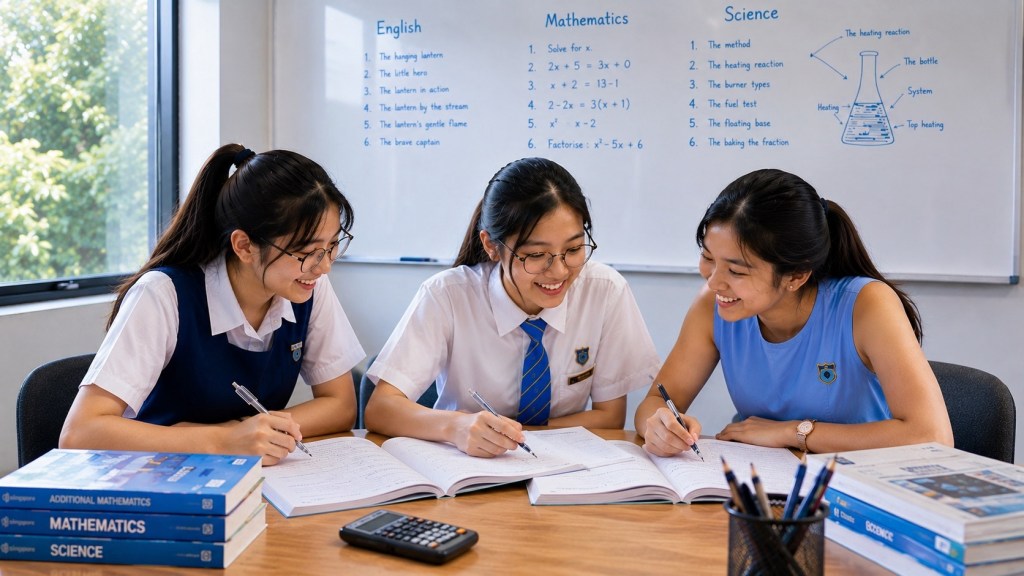
How to write strong English paragraphs with topic sentences, evidence, explanation and cohesion is a fundamental writing question because paragraphs are the units that hold longer writing together. A Primary 2 learner may need only two or three related sentences around one idea. A Primary 5 student must develop composition paragraphs instead of producing a list of events. A Secondary G1, G2 or G3 student needs paragraphs that make claims, use evidence, explain relationships, maintain focus and connect logically across an essay.
Parents in Sengkang and Punggol often see writing that is technically grammatical but still feels thin or disorganised. The problem may not be vocabulary. It may be paragraph architecture: the learner states an idea but does not develop it, adds an example without explaining it, changes topic halfway through the paragraph or repeats the same point in several sentences. Paragraph writing is therefore a thinking skill as much as a sentence skill.
British Council writing guidance repeatedly emphasises planning paragraphs, using topic sentences, developing ideas and linking them coherently. This Advanced English Tutorials guide turns those broad principles into a Primary-to-SEC system and routes students into eduKate Sengkang’s existing year-specific writing and paragraph-development pages rather than competing with them.
Quick Read
One-sentence answer: write a strong paragraph by giving it one clear job, stating the controlling idea, developing that idea with explanation or evidence, keeping every sentence relevant, and linking the paragraph smoothly to the wider text.
- Primary 1–2: one topic, two or three related sentences, simple sequence and clear endings.
- Primary 3–4: topic sentence, detail, cause, example and paragraph boundaries.
- Primary 5–6: composition development, situational writing organisation, evidence and revision.
- Secondary G1/G2/G3: claims, examples, explanation, counterpoints, cohesion, paragraph flow and timed writing.
- A paragraph should earn its space by doing one meaningful job.
1. A Paragraph Needs One Main Job
A paragraph can introduce a situation, explain a reason, develop an example, show a consequence or argue one point.
If a paragraph tries to do several unrelated jobs, readers lose the thread and the writer struggles to decide what belongs.
2. Primary 1: Related Sentences
Primary 1 paragraphs can begin with two or three sentences about one familiar topic.
The aim is simply to keep the sentences connected instead of jumping to a new idea.
3. Primary 2: Add Sequence
Primary 2 learners can organise simple events or explanations in a sensible order.
Words such as first, then and finally can help, but the sequence should make sense even without them.
4. Primary 3: Topic Sentences
A topic sentence introduces the paragraph’s controlling idea.
It does not need to sound formulaic; it simply tells the reader what the paragraph is mainly about.
5. Primary 4: Development
Primary 4 students should move beyond stating an idea.
Ask what, why, how, when or with what consequence. Development answers the reader’s likely questions.
6. Primary 5: Composition Paragraphs
Primary 5 composition needs paragraphs that slow down important moments and develop motive, reaction or consequence.
One event per paragraph is not a universal rule; paragraphing follows meaning and change.
7. Primary 6: PSLE Writing
Primary 6 students need paragraph control under time.
The plan should identify paragraph jobs before drafting so the story or situational response does not become a stream of sentences.
8. Secondary 1: Point and Development
Secondary 1 learners should begin building paragraphs around a claim or central idea.
The existing Secondary 1 paragraph-development page gives year-level depth.
9. Secondary 2: Evidence and Explanation
Secondary 2 students need to distinguish evidence from explanation.
An example supports the point; explanation tells the reader why the example matters.
10. Secondary 3: Argument Architecture
Upper-secondary paragraphs may need claim, qualification, evidence, explanation and link to the question.
The argumentative-writing tutorial develops this reasoning further.
11. Secondary 4 and SEC
By Secondary 4, paragraph structure should be sufficiently automatic that the writer can focus on content and judgement.
Timed revision should target relevance and development before surface polish.
12. G1, G2 and G3
The core paragraph system is shared across subject levels while development and language range increase.
Practice should match the actual task complexity.
13. Topic Sentence Functions
A topic sentence can introduce a reason, claim, contrast, stage or focus.
It should orient the reader without repeating the essay question mechanically.
14. Supporting Detail
Details make a point concrete.
Choose details that advance the paragraph rather than decorate it.
15. Examples
Examples illustrate ideas but do not replace explanation.
After the example, state what it demonstrates.
16. Evidence
Evidence can be textual, factual, observed or sourced depending on the task.
The writer should use evidence that actually supports the claim rather than merely shares the topic.
17. Explanation
Explanation connects evidence to the point.
This is often the missing sentence in weak Secondary paragraphs.
18. Consequence
A paragraph can deepen by explaining what follows from the idea.
Ask who is affected, what changes or why the result matters.
19. Comparison
Comparative paragraphs need a clear basis of comparison.
Do not switch criteria halfway through.
20. Contrast
Contrast can reveal difference or limitation.
Use it when the relationship is genuine rather than adding “however” mechanically.
21. Cause and Effect
Cause paragraphs should distinguish what caused the outcome from what merely happened before it.
This protects reasoning from simple sequence errors.
22. Narrative Paragraphs
Narrative paragraphs can manage scene, action, dialogue, reflection and time shifts.
Paragraph breaks should help the reader follow change.
23. Descriptive Paragraphs
Description should select details that create a specific impression.
A list of adjectives is weaker than details organised around one effect.
24. Explanatory Paragraphs
Explanatory writing should move from idea to mechanism or process.
The reader should understand not just what happens but how or why.
25. Argumentative Paragraphs
Argument paragraphs need a defensible point and relevant support.
Use the argument tutorial when paragraphs become lists of unsupported opinions.
26. Cohesion Within a Paragraph
Pronouns, repeated key terms, synonyms and logical transitions help sentences connect.
Cohesion should reduce reader effort, not create artificial linking-word density.
27. Reference
Pronouns such as this, it and they need clear referents.
Ambiguous reference can make a paragraph grammatically correct but hard to follow.
28. Repetition
Strategic repetition can maintain topic focus, but needless repetition adds length without development.
Ask whether the repeated sentence advances the idea.
29. Sentence Variety
Variety should serve meaning and rhythm.
Do not force complex sentences into every paragraph merely to appear advanced.
30. Paragraph Length
There is no universal ideal number of sentences.
A paragraph is long enough when it completes its job and short enough to remain focused.
31. Paragraph Order
The order of paragraphs should support the whole text.
Reasons can move from strongest to weakest, events can follow time, or explanation can follow cause and effect.
32. Transitions Between Paragraphs
A transition can connect the previous idea to the next without sounding mechanical.
Sometimes repeated key concepts create a smoother link than a formal connector.
33. Paragraph Planning
Before drafting, write one line for each paragraph job.
This reduces mid-draft confusion and keeps the text aligned with purpose.
34. Paragraph Revision
After drafting, write a three-word label beside each paragraph.
If the label is difficult to write, the paragraph may lack focus.
35. Remove the Off-Topic Sentence
One irrelevant sentence can blur an otherwise strong paragraph.
Ask whether every sentence helps the paragraph perform its job.
36. Develop the Thin Sentence
A paragraph may contain the right idea but insufficient development.
Ask for reason, evidence, example or consequence depending on the genre.
37. Merge Repetition
Two sentences may express the same idea in slightly different words.
Combine or delete them and use the saved space for deeper explanation.
38. Split Overloaded Paragraphs
A paragraph containing two major ideas may need to be divided.
Look for a natural shift in time, focus, argument or purpose.
39. Reading Models
Study how strong texts organise paragraphs.
Identify paragraph jobs rather than copying wording.
40. Oral Paragraph Planning
Ask the learner to say the paragraph before writing.
Oral rehearsal can reveal missing logic or weak development before transcription adds extra load.
41. Timed Paragraph Writing
Time one paragraph before timing whole essays.
This isolates planning and development speed.
42. Parent Feedback
Comment on paragraph function and development, not every sentence at once.
One clear target is easier to apply in the next paragraph.
43. Small-Group Practice
Three students can compare paragraph structures for the same prompt.
The tutor can show that different organisations may work if the logic remains clear.
44. When Tuition Adds Value
Tuition may help when writing remains list-like, paragraphs lack development or the learner cannot organise longer responses.
Use the year-specific writing pages and Secondary Continuous Writing Tutor owner for deeper local support.
45. What Progress Looks Like
Progress appears when paragraphs stay focused, develop ideas sufficiently and connect smoothly.
The learner should need fewer prompts such as “elaborate” or “explain”.
46. Final Transfer Test
Give an unfamiliar topic and ask for a three-paragraph response with one line of planning per paragraph.
If each paragraph has a clear job and sufficient development, the structure is transferring.
Frequently Asked Questions
How many sentences should a paragraph have?
There is no fixed number. A paragraph should contain enough sentences to complete one coherent job.
What makes a good topic sentence?
It clearly establishes the paragraph’s main idea or function without merely copying the question.
How do I teach elaboration?
Ask specific questions: why, how, what example, what evidence or what consequence?
Why does my child write long paragraphs that still feel weak?
The paragraph may repeat ideas instead of developing them or may contain several unrelated points.
How can paragraph writing improve essay marks?
Clear paragraph architecture improves organisation, evidence use, explanation and reader understanding across many writing tasks.
Where to Go Next
Use the writing skills tutorial, the argumentative/discursive tutorial, and year-specific paragraph-development pages in the Secondary English Learning Hub.
External reference: British Council LearnEnglish | Essay writing tips, including topic sentences, paragraph planning and idea development.
Advanced Paragraph Diagnostic Lab
Paragraph weakness can come from several different causes. One student may not know the main idea. Another may have a clear idea but no supporting detail. Another may include useful evidence but fail to explain why it matters. A fourth may develop several ideas in one block without signalling the shift. The first teaching task is therefore diagnosis, not simply telling the learner to “write more”.
Take one independent paragraph and label each sentence by function: point, explanation, example, evidence, consequence, transition or repetition. Sentences that cannot be given a useful function deserve closer inspection. The exercise shows whether the paragraph has an architecture or is merely a sequence of related statements.
Paragraph Focus
A focused paragraph develops one controlling idea. This does not mean every sentence repeats the same noun. It means every sentence helps the reader understand one main claim, event, reason or stage. When a new major idea appears, the writer should decide whether it belongs in a new paragraph.
Ask the learner to summarise the paragraph in six words or fewer. If that is impossible, the paragraph may be overloaded or unfocused. This quick diagnostic works for narrative, explanation and argument.
Topic Sentences Without Formula Writing
A topic sentence should orient the reader, not announce a memorised structure. In an argumentative paragraph it may state the claim. In an explanatory paragraph it may identify the mechanism. In a narrative paragraph the opening sentence may establish a new stage, setting or focus without sounding like an essay topic sentence.
Compare several possible openings for the same paragraph and ask which gives the reader the clearest expectation. Students learn that topic control is a function, not one fixed sentence pattern.
Development Is a Reader Question
When a paragraph feels thin, ask what the reader still needs to know. Why is this reason important? How did the event happen? What example makes the point concrete? What evidence supports the claim? What consequence follows? Specific questions produce useful development; the vague instruction “elaborate” often does not.
The required kind of development depends on genre. Narrative may need action, reaction and consequence. Argument may need evidence and explanation. Informational writing may need mechanism, example or comparison. Students should learn to choose the development move that serves the paragraph’s job.
Evidence and Explanation Are Different Jobs
Students often believe that giving an example automatically develops a point. Evidence shows something; explanation tells the reader what the evidence demonstrates and why it matters. In a strong paragraph, the writer makes that relationship explicit rather than expecting the reader to infer it.
A useful drill is to underline the evidence and circle the explanation. If a paragraph contains several examples but no explanation, remove all but the strongest example and use the saved space to interpret it. This usually creates more depth with fewer words.
Cohesion Without Overusing Connectors
Cohesion comes from clear reference, logical order and repeated key concepts as well as linking words. A paragraph can use many connectors and still feel disconnected if the ideas do not actually follow from one another.
Ask the learner to remove obvious connectors and read the paragraph again. If the logic collapses, the problem may be deeper than transition vocabulary. Repair the relationship between sentences first, then add only the connector that accurately names it.
Narrative Paragraph Development
A narrative paragraph may begin with an event, but the important development often lies in reaction and consequence. An event becomes meaningful when the writer shows what the character notices, feels, decides or does because of it. This creates movement rather than a simple list of actions.
Use the sequence event → reaction → decision → consequence when a story feels flat. It is not a rigid template. It is a diagnostic that helps students identify which layer is missing and decide where more detail will improve the reader’s understanding.
Explanatory Paragraph Development
An explanatory paragraph should show how or why. If the point is that regular reading improves vocabulary, the next sentence can explain the mechanism: repeated exposure lets readers meet words in varied contexts, strengthening meaning and collocation. An example can then make the mechanism concrete.
This progression—point, mechanism, example—teaches students that explanation is not simply adding more sentences. Every added sentence should deepen the reader’s understanding of the central idea.
A strong paragraph can still weaken the whole piece if it appears in the wrong order. Before drafting, arrange paragraph jobs logically: chronology for narrative, stages for explanation, or a deliberate sequence of reasons for discussion. After drafting, read only the first sentence of each paragraph. The sequence should still reveal the structure of the text. If those openings feel disconnected or repetitive, the larger organisation may need revision.
Paragraph revision should begin with function, not grammar. Give every paragraph a short label such as setting, problem, first reason, example, counterpoint or consequence. Then ask whether the paragraph fully performs that job and whether another paragraph is doing the same job unnecessarily. Only after the structure is sound should the student polish sentence grammar and vocabulary. This order prevents time being spent perfecting a paragraph that may later need to move, split or disappear. It also helps students understand that revision and editing are different stages: revision improves the architecture and meaning, while editing improves the accuracy and clarity of the sentences that remain.
Paragraph Planning Under Time
Timed writing becomes easier when paragraph jobs are decided before drafting. A plan can be extremely short: one line per paragraph containing the main point and the type of development needed. For a narrative, the line might name the event and consequence. For an essay, it might name the claim and supporting example. The plan should reduce decision-making during writing rather than become a second draft.
If a student repeatedly runs out of time, compare planning, drafting and checking separately. A learner who spends too long deciding what each paragraph should do needs a different intervention from one who knows the structure but writes every paragraph too slowly.
Paragraph Transfer Across Subjects
Strong paragraph habits transfer beyond English. Science explanations need a clear idea, mechanism and evidence. Humanities responses need a claim, support and explanation. Project writing needs organised information and cohesive references. Using the same paragraph language across subjects can strengthen the learner’s sense that paragraphing is a general communication skill rather than an English-only rule.
Ask the student to compare one English paragraph with one paragraph from another subject. Identify the paragraph job, supporting information and link between sentences. The content differs, but the architecture often has recognisable similarities.
Paragraph Case Study: From Repetition to Development
A weak paragraph may say that exercise is useful, then repeat that it is beneficial, healthy and good. The vocabulary changes but the idea does not. A stronger revision chooses one claim and develops it: exercise can improve cardiovascular fitness because sustained movement raises the body’s demand for oxygen, and regular practice can strengthen the system over time. The paragraph has moved from repeated evaluation to mechanism.
This example shows why synonym variety is not the same as development. Students should ask whether each sentence adds a new layer—reason, mechanism, example, evidence, consequence or qualification. If it only restates the point, the paragraph needs deeper thinking rather than more vocabulary.
Paragraph Case Study: From Evidence to Explanation
A student may write that many young people use public transport and assume the statistic proves public transport is convenient. The evidence may be relevant, but the connection still needs explanation. High usage could reflect convenience, cost, limited alternatives or policy. The paragraph should explain which interpretation is justified and avoid claiming more than the evidence supports.
This habit links paragraph writing with evidence control. Strong paragraphs do not merely contain facts; they show the relationship between facts and claims.
Final Paragraph Independence Standard
A learner has strong paragraph control when an unfamiliar task does not require a memorised template. The student can decide the paragraph’s job, state or establish the controlling idea, select the right kind of development, keep every sentence relevant and connect the paragraph to the larger text.
Parents should also see fewer vague teacher comments such as “elaborate” or “organise your ideas”. When the student can diagnose a thin, repetitive or overloaded paragraph and revise it independently, paragraph architecture has become part of the writing process rather than an external correction.
Paragraph Revision Case Study: Too Many Ideas
A student may write one long paragraph about school transport that begins with cost, moves to environmental impact, then shifts to student punctuality and ends with convenience. Every sentence may be relevant to the overall topic, yet the paragraph feels unfocused because it contains several major ideas. Revision should separate the ideas into paragraph jobs or choose one controlling point and remove the rest.
This is an important distinction for parents: relevance to the essay topic is not the same as relevance to the paragraph. A sentence can belong somewhere in the essay but not belong in this particular paragraph. Strong writers manage both levels at once.
Paragraph Revision Case Study: Thin Development
Another paragraph may contain a clear topic sentence followed by two brief examples and a closing sentence. The structure looks complete, but the reasoning remains thin because the student never explains the examples. Instead of adding a third example, choose the strongest one and explain what it demonstrates, why it matters and how it connects to the question.
This revision often makes the paragraph shorter yet stronger. Depth comes from relationships between ideas, not from sentence count alone.
Paragraph Revision Case Study: Repetition
A paragraph can repeat one claim using different vocabulary: something is important, beneficial, useful and valuable. The words change but the idea does not. Ask the learner to underline what genuinely new information each sentence contributes. If two sentences perform the same job, merge them and use the space for mechanism, evidence or consequence.
This exercise helps students understand why a paragraph can be long without being developed. Vocabulary variety is useful, but it cannot substitute for new reasoning.
Paragraph Editing Under Examination Time
When time is limited, paragraph checking should begin with high-value questions. Does the paragraph answer the required part of the task? Does it stay on one controlling idea? Is the main development complete? Are any sentences obviously repetitive or off-topic? Only after these questions should the learner use remaining time on sentence-level polish.
Practise this as a separate timed drill. Give the student a completed paragraph and two minutes to identify one structural problem and one language problem. This teaches prioritisation and makes final checking more purposeful than simply rereading every line at the same level of attention.
Paragraphs as a Thinking Tool
Paragraph architecture helps students think because it forces them to separate ideas and decide what evidence or explanation belongs with each one. A learner who can organise a difficult idea into clear paragraphs usually understands the relationships more deeply than a learner who writes one uninterrupted block.
This is why paragraph work should not be reduced to visual formatting. The paragraph break is a decision about meaning, focus and reader navigation.
Final Paragraph Transfer Standard
A strong learner can receive an unfamiliar prompt, decide the paragraph jobs, develop each one with the appropriate kind of support, connect them into a coherent sequence and revise weak paragraphs without being told exactly what to add. When this control appears across narrative, explanatory and argumentative tasks, paragraph writing has become a transferable English skill.
A useful paragraph exercise is to begin with five sentences in random order and ask the learner to arrange them into the clearest sequence. The student should explain why one sentence needs to come before another. This makes cohesion visible because the learner must use reference, cause, sequence and topic development rather than relying only on linking words.
Another useful exercise is paragraph compression. Give the student an overlong paragraph with repeated ideas and ask for a shorter version that keeps the main claim, strongest support and necessary explanation. The learner must decide what is essential and what is redundant. This strengthens paragraph focus, editing and summary skills at the same time.
A final paragraph routine can be applied to any genre: name the paragraph’s job, identify the controlling idea, mark the sentence that develops it most strongly, remove repetition, and check the link to the paragraph before and after it. If the learner can do this independently on an unfamiliar task, paragraph architecture has moved beyond a teacher checklist and become part of the student’s normal writing process.
A final paragraph routine can be applied to any genre: name the paragraph’s job, identify the controlling idea, mark the sentence that develops it most strongly, remove repetition, and check the link to the paragraph before and after it. If the learner can do this independently on an unfamiliar task, paragraph architecture has moved beyond a teacher checklist and become part of the student’s normal writing process.
A useful final paragraph check is to read only the first sentence and the last sentence. The opening should establish the paragraph’s job, while the ending should show what the development has achieved. If those two sentences feel unrelated, the middle may have drifted or the paragraph may contain more than one main idea. This quick check is especially useful under examination time because it reveals structural problems without requiring a full rewrite.
Continue through the English Learning Hub for the wider language map, or use the Complete English Index to find related guides and tutorials.
