
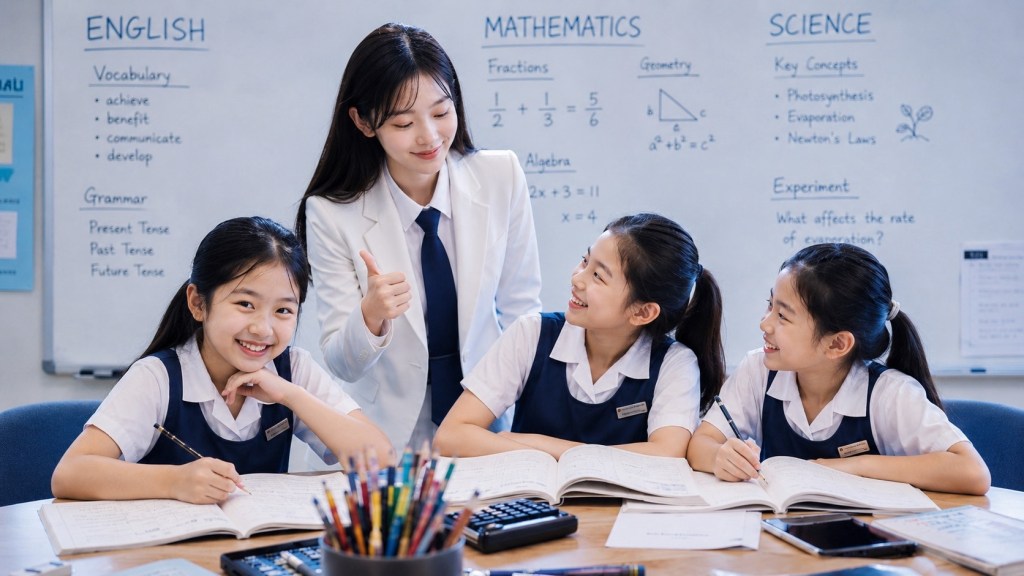
Primary Math Tuition in Sengkang by eduKateSG helps students build strong foundations, solve word problems, reduce careless mistakes, prepare for PSLE and achieve Math excellence with confidence.
Primary Math excellence is not about memorising more steps. It is about understanding numbers, solving word problems clearly, building strong foundations, reducing careless mistakes and developing the confidence to handle PSLE Mathematics with calm, structured thinking.
Summary
Primary Mathematics is not only about getting the answer.
It is about learning how to think.
For many children in Sengkang, Primary Math begins with simple numbers, addition, subtraction and multiplication. But very quickly, the subject grows into fractions, decimals, percentages, geometry, measurement, graphs, data, patterns, model drawing, multi-step word problems and eventually PSLE problem-solving.
This is where some students begin to lose confidence.
They may know the operation but not the story behind the question. They may memorise steps but not understand why the method works. They may complete homework but still struggle in tests. They may be careful most of the time, then lose marks through small careless mistakes, unclear working or poor question reading.
Primary Math Tuition in Sengkang by eduKateSG helps students build the foundations, habits and confidence needed to achieve Mathematics excellence. The aim is not to create panic. The aim is to create clarity.
When Mathematics is properly taught, students stop seeing Math as a wall.
They begin to see it as a system.
And once they can see the system, they can learn to move through it.
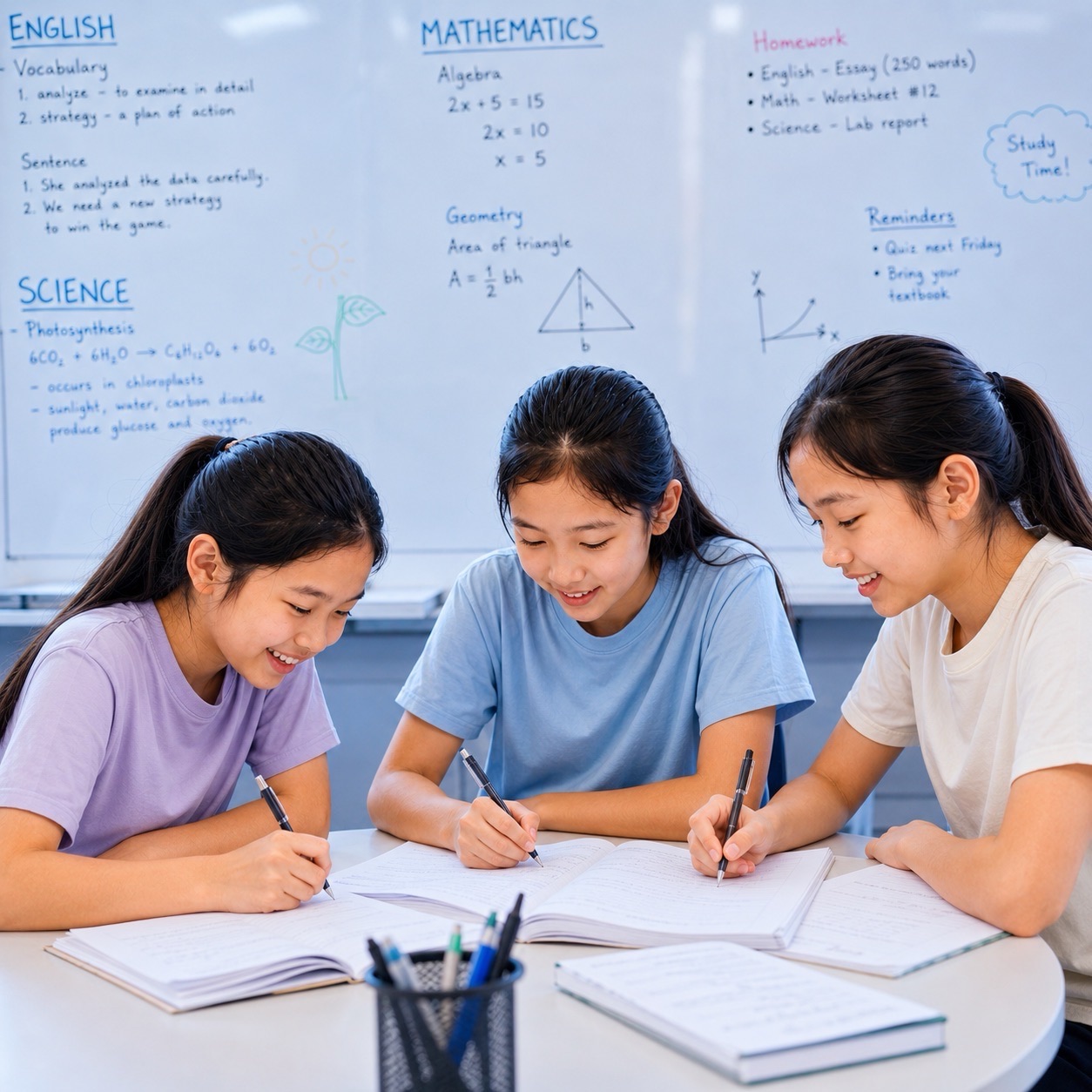
Primary Math Excellence Starts with Understanding
Many parents want their child to be “good at Math”.
But what does that really mean?
It does not only mean the child can calculate quickly. Speed helps, but speed without understanding can create fragile confidence. A child may finish a worksheet quickly and still not understand the deeper logic behind the question.
Math excellence means the child can understand the situation, choose the correct method, show clear working, check the answer and explain why the solution makes sense.
That is a much stronger skill.
A strong Primary Math student can look at a problem and ask:
What is given?
What is being asked?
What do I know?
What is hidden?
Which model, operation or strategy should I use?
Does the answer make sense?
This is the thinking that Primary Mathematics is meant to build.
At eduKateSG Sengkang, Primary Math Tuition is designed to help students move from guessing to understanding, from memorising to reasoning, and from fear to calm problem-solving.
Why Primary Mathematics Becomes Difficult
Primary Math often looks simple at the beginning.
Then it becomes layered.
In Primary 1 and Primary 2, students build number sense, basic operations, place value, comparison, simple money, time, length and basic problem sums. At this stage, many children can still cope by following instructions.
In Primary 3 and Primary 4, the subject becomes more demanding. Multiplication and division become more complex. Fractions become serious. Decimals begin to appear. Word problems become longer. Students must understand units, diagrams, tables, bar models and multi-step logic.
In Primary 5 and Primary 6, the jump becomes sharper. Ratios, percentages, speed, volume, geometry, circles, angles, area, data, algebraic thinking and PSLE-style word problems require students to connect many ideas together.
This is where the hidden problem appears.
A child may not actually be weak in the newest topic.
The weakness may sit much earlier.
A Primary 5 student struggling with percentage may still be weak in fractions.
A Primary 6 student struggling with ratio may not understand units clearly.
A child struggling with speed may have weak multiplication and division.
A student making careless mistakes in problem sums may not know how to organise working.
A child who “does not know what to do” may actually be struggling with question reading.
This is why good Primary Math Tuition should not only teach the current chapter.
It must find the leak.
Then repair it properly.
The Real Problem Is Not Always Difficulty
Parents often say, “The Math is getting harder.”
That is true.
But it is not the whole story.
The real issue is usually that the child’s thinking system is not yet strong enough for the new level of questions.
Primary Mathematics grows in layers. Every new topic sits on an earlier foundation. When that foundation is weak, the student may still survive for a while. But as the questions become longer and more connected, the weakness begins to show.
The child may say:
“I don’t know how to start.”
“I understand in class, but I cannot do it alone.”
“I know the formula, but I don’t know when to use it.”
“I always make careless mistakes.”
“I forgot the method.”
“I hate problem sums.”
These are not random complaints.
They are signals.
They tell us where the child’s mathematical system is unstable.
At eduKateSG Sengkang, we treat these signals seriously. A mistake is not just a mistake. It is data. It tells the tutor what the student does not yet understand, what habit needs correction, and what foundation needs rebuilding.
That is how Math improvement begins.
What Primary Math Tuition in Sengkang Should Do
Good Primary Math tuition should not simply give more worksheets.
Worksheets are useful only when they are used properly.
A child who already understands the topic needs practice, challenge and speed training. But a child who does not understand the foundation needs explanation, modelling, correction and guided confidence first.
If the problem is conceptual, more questions alone will not solve it.
If the problem is careless working, more questions without better habits may simply create more careless mistakes.
If the problem is weak question reading, more speed may make the child rush even more.
Good tuition must know what the problem is before choosing the solution.
Primary Math Tuition in Sengkang should help students:
Build strong number sense.
Understand concepts instead of memorising blindly.
Use model drawing correctly.
Read word problems with discipline.
Show clear and systematic working.
Learn problem-solving heuristics.
Repair weak topics before they spread.
Practise exam-style questions progressively.
Reduce careless mistakes.
Build confidence through repeated small wins.
The aim is not just to complete the syllabus.
The aim is to build a student who can think.
The Four Pillars of Primary Math Excellence
1. Concepts: Understanding What the Math Means
A child must understand what the numbers mean before using them.
This is especially important in fractions, decimals, percentages, ratio and speed. These topics are not just formulas. They represent relationships.
A fraction is not just a number with a numerator and denominator. It is a part of a whole.
A percentage is not just “move the decimal place”. It is a comparison out of 100.
A ratio is not just two numbers with a colon. It is a relationship between quantities.
Speed is not just distance divided by time. It is a rate of movement.
When students understand meaning, they become more flexible. They can solve unfamiliar questions because they are not trapped by memorised steps.
This is the first pillar of excellence.
2. Skills: Carrying Out the Method Accurately
Understanding is important, but students must also calculate accurately.
Primary Math requires strong basic skills: addition, subtraction, multiplication, division, fractions, decimals, percentage conversion, unit conversion, area, perimeter, volume, angles and data interpretation.
Weak calculation skills slow the child down.
Slow calculation increases stress.
Stress increases careless mistakes.
Careless mistakes reduce confidence.
This is why skill fluency matters. Students need enough practice to make basic operations reliable, so their working memory is free to think about the harder part of the question.
3. Processes: Knowing How to Solve Problems
Problem-solving is where many students struggle.
They may know the topic, but they do not know the route.
A problem sum requires the student to read, interpret, organise information, choose a strategy, solve step by step and check the answer.
This is not just calculation.
This is thinking architecture.
Students need to learn how to use models, tables, systematic listing, guess-and-check, before-and-after thinking, units, comparison, drawing diagrams, looking for patterns and working backwards.
The stronger the student’s problem-solving process, the less frightening unfamiliar questions become.
4. Attitude: Staying Calm When the Question Is Hard
Math confidence matters.
Some children shut down the moment a question looks long. Others rush because they are afraid. Some erase correct work too quickly. Some give up before they have properly understood the question.
A good tutor must help the child build emotional steadiness.
Mathematics requires patience.
Hard questions are not punishment. They are training. The child must learn to stay with the problem long enough for the structure to appear.
This is why the best Math students are not always the fastest at first.
They are the ones who learn to think calmly.
Primary 1 and Primary 2: Building Number Confidence
Lower Primary Mathematics is the beginning of the child’s relationship with numbers.
At this stage, the most important goal is not speed alone.
It is confidence with quantity, place value, comparison, addition, subtraction, multiplication, division, money, time, simple measurement and basic word problems.
Children must learn that numbers represent real things. They need to see, touch, draw, count, compare and explain.
If a child rushes into abstract symbols too early without understanding, Math can become mechanical. The child may still get answers correct for a while, but the foundation remains shallow.
In Primary 1 and Primary 2 tuition, good teaching should help students:
Understand place value.
Recognise number patterns.
Add and subtract with meaning.
Begin multiplication and division clearly.
Read simple problem sums carefully.
Use drawings and diagrams.
Build confidence with Math language.
Avoid fear of mistakes.
At this stage, we want the child to feel: “I can understand Math.”
That feeling matters.
It becomes the emotional foundation for later learning.
Primary 3 and Primary 4: The Big Middle-Primary Shift
Primary 3 and Primary 4 are where many hidden gaps begin.
The child is no longer dealing only with simple number work. The questions become longer. Fractions become more important. Multiplication and division become more demanding. Word problems require more careful reading.
This is also where students begin to show different learning profiles.
Some are fast but careless.
Some are careful but slow.
Some can calculate but cannot understand word problems.
Some can do routine questions but cannot solve non-routine ones.
Some understand with help but cannot do independently.
Primary 3 and Primary 4 Math Tuition in Sengkang should therefore focus on stabilising the child before upper primary pressure arrives.
The tutor should build:
Strong multiplication and division fluency.
Clear fraction concepts.
Good model drawing habits.
Neat working.
Better question annotation.
Problem-solving stamina.
Confidence with multi-step questions.
At this stage, the student must learn that Mathematics is not just about “doing sums”.
It is about reading the question like a detective.
What changed?
What stayed the same?
Who has more?
How much more?
What is the total?
What is one unit?
What is the before-and-after relationship?
These are the questions that prepare students for upper primary excellence.
Primary 5: The Serious Jump
Primary 5 is often the year when parents realise that Primary Math has changed.
The questions become more complex. The topics become more connected. The child is expected to handle fractions, decimals, percentages, ratio, area, volume, angles, data and word problems with greater independence.
This is the year where weak foundations become expensive.
If fractions are weak, percentages become painful.
If multiplication is weak, ratio becomes slow.
If model drawing is weak, comparison questions become confusing.
If working is messy, the child loses track.
If the child relies on memorised methods, unfamiliar questions become frightening.
Primary 5 Math Tuition in Sengkang should therefore be both corrective and forward-looking.
It must repair earlier gaps while preparing the child for PSLE-level thinking.
A strong Primary 5 programme should help the student:
Understand fractions, decimals and percentages as connected ideas.
Use ratio with unit thinking.
Strengthen model drawing.
Handle multi-step word problems.
Improve speed without losing accuracy.
Learn how to check answers.
Build a mistake ledger.
Develop confidence before Primary 6 pressure arrives.
Primary 5 is not just another school year.
It is the year where the PSLE runway begins.
Primary 6 and PSLE Math: Turning Knowledge into Performance
Primary 6 Mathematics is different.
The student is no longer only learning topics. The student must now perform under examination conditions.
That means the child must be able to read questions accurately, choose methods quickly, show clear working, manage time, avoid careless mistakes and recover when a difficult question appears.
This is where many students discover that knowing a topic and scoring well in the paper are not the same thing.
A child may understand ratio but lose marks because the units were unclear.
A child may know percentage but misread “increase by” and “increase to”.
A child may know area but forget to subtract the hidden part.
A child may know speed but mix up time units.
A child may know model drawing but draw the wrong relationship.
PSLE Math preparation must therefore be strategic.
It should include:
Topic revision.
Mixed-topic practice.
Paper timing.
Error analysis.
Challenging question exposure.
Clear working discipline.
Method selection.
Confidence training.
The goal is not to make the child panic with endless papers.
The goal is to make the child calm enough to think clearly in the examination.
That is real PSLE readiness.
Why Word Problems Are the Main Battlefield
Many students can do calculations.
Then the word problem arrives.
This is where Mathematics becomes language.
The student must understand the story, identify the quantities, notice the relationship, decide the operation and organise the working.
A word problem is not just a Math question.
It is a thinking test.
This is why some students say, “I know the Math, but I don’t know what the question wants.”
That sentence is important.
It means the child may not need more formulas first.
The child needs better question reading.
Good Primary Math Tuition teaches students to slow down at the right moment. Not everywhere. Just at the point where the question must be understood.
Students should learn to underline key information, identify the final question, mark units, draw models, label diagrams and check whether the answer matches the story.
This is how word problems become manageable.
Not easy.
Manageable.
And manageable is where confidence begins.
The Model Method: Why It Matters
The model method is one of the most important tools in Singapore Primary Mathematics.
It helps students see relationships.
A good model can turn a confusing word problem into a clear visual structure. It shows the whole, the parts, the difference, the comparison and the units.
But model drawing must be taught properly.
Some students draw models mechanically without understanding. Others avoid models because they think it takes too long. Some draw models that do not match the question.
That is why tuition must train model thinking, not just model drawing.
Students should understand why the model works.
What does each bar represent?
Which quantity is bigger?
What is the difference?
What is one unit?
What changed from before to after?
Where is the total?
What is the question really asking?
When students learn to model relationships clearly, they become stronger not only in Primary Math, but also in preparation for Secondary Math and algebraic thinking later.
A model is not just a drawing.
It is a bridge from story to structure.
Careless Mistakes Are Not Always Careless
Parents often say, “My child is careless.”
Sometimes that is true.
But many careless mistakes are actually system mistakes.
The child may not have a checking routine.
The working may be too messy.
The child may be rushing.
The child may be copying numbers wrongly.
The child may not understand place value.
The child may be weak in multiplication facts.
The child may be anxious.
The child may be mentally tired.
The child may not know how to estimate whether an answer makes sense.
If careless mistakes repeat, they are no longer random.
They are patterns.
Good tuition should identify the pattern.
For example:
If the student always loses units, train unit labelling.
If the student copies numbers wrongly, train question marking.
If the student makes sign or operation errors, train step-by-step checking.
If the student skips working, train method discipline.
If the student rushes, train timing control.
If the student freezes, train confidence and recovery.
Carelessness can be reduced.
But it must be treated as a habit problem, not just a scolding point.
How eduKateSG Sengkang Helps Students Improve
At eduKateSG Sengkang, Primary Math Tuition is built around clarity, foundation repair and steady growth.
We help students catch up, keep up and move ahead.
For students who are behind, we slow down and repair the concepts that were missed earlier. We rebuild number sense, basic operations, fractions, model drawing and word-problem confidence.
For students who are keeping up but unstable, we strengthen accuracy, topic recognition, working discipline and test performance.
For students aiming higher, we stretch their thinking with harder problem sums, mixed-topic questions, PSLE-style challenges and stronger explanation habits.
Different students need different kinds of support.
A child who is afraid of Math should not be thrown immediately into the hardest questions.
A child who is already strong should not be kept repeating only easy questions.
A child who is careless needs working discipline.
A child who is slow needs fluency and confidence.
A child who struggles with word problems needs reading strategy and structure recognition.
Good tuition sees the child clearly.
Then it teaches from there.
Small Group Tuition: Why It Works for Primary Math
Primary Math is personal.
One student may be stuck at fractions. Another may be stuck at models. Another may be making careless mistakes. Another may need PSLE challenge questions.
In a small-group setting, the tutor can see more of the child’s thinking.
The tutor can look at the working, not only the final answer.
The tutor can ask, “Why did you choose this method?”
The tutor can spot the exact line where the mistake entered.
The tutor can correct habits before they become permanent.
The tutor can give each child enough attention while still allowing students to learn from others.
This is especially useful in Primary Mathematics because mistakes often happen quietly.
A child may write an answer that looks almost correct, but the thinking underneath may be shaky. A good tutor must catch that early.
Small corrections, made consistently, become big improvement over time.
That is how confidence is built.
What Parents in Sengkang Should Watch For
Parents do not need to know the whole Primary Math syllabus to know when their child needs help.
Look for patterns.
If your child takes very long to finish homework, there may be a fluency or confidence issue.
If your child can do simple sums but struggles with word problems, there may be a question-reading or modelling issue.
If your child understands during tuition or school but cannot do independently, the concept may not yet be stable.
If your child keeps making careless mistakes, there may be no checking system.
If your child avoids Math, confidence may already be affected.
If marks fluctuate strongly, the child may not yet have examination stability.
If your child relies heavily on answer keys, independence needs to be rebuilt.
These problems can be repaired.
But they should not be ignored for too long.
Math gaps compound. A small weakness in Primary 3 can become a serious problem in Primary 5. A weak Primary 5 foundation can become PSLE anxiety in Primary 6.
Early support gives the child more time to rebuild calmly.
The Goal: AL1 Thinking, Not Just AL1 Drilling
Many parents want AL1.
That is understandable.
But AL1 performance does not come from drilling alone.
It comes from strong thinking, accurate working, flexible problem-solving and calm examination execution.
A child aiming for Math excellence must learn how to handle easy, moderate and challenging questions differently.
Easy questions require speed and accuracy.
Moderate questions require method selection.
Challenging questions require patience, structure and recovery.
The strongest students do not panic when they see a hard question. They know how to break it apart.
They ask:
Can I draw a model?
Can I form units?
Can I work backwards?
Can I make a table?
Can I find the difference?
Can I compare before and after?
Can I use a smaller case?
Can I estimate?
Can I eliminate impossible answers?
This is AL1 thinking.
It is not magic.
It is trained.
Primary Math Tuition Should Build Future Readiness
Primary Mathematics is not only for PSLE.
It prepares students for Secondary Mathematics.
A child who understands number sense, fractions, ratio, percentage, geometry and model thinking will enter Secondary school with a stronger foundation.
A child who learns to show clear working will handle algebra better later.
A child who understands relationships will adapt more easily to functions, graphs and equations.
A child who learns to think calmly through difficult questions will be better prepared for future academic pressure.
This is why Primary Math matters so much.
It is not just a subject.
It is a foundation for future learning.
When students learn Mathematics properly, they learn precision. They learn patience. They learn reasoning. They learn how to recover from mistakes. They learn how to test whether an answer makes sense.
These are life skills.
And they begin with simple numbers.
Achieving Math Excellence in Sengkang
Sengkang families want their children to do well.
But good results should not come at the cost of fear.
A child can be trained strongly and still feel supported.
A child can aim high without feeling crushed.
A child can improve without being labelled weak.
At eduKateSG Sengkang, Primary Math Tuition is designed to bring clarity back into the subject. We want students to understand what they are doing, why they are doing it, and how to improve when they make mistakes.
The journey is simple, but not always easy.
First, repair the foundation.
Then, build the method.
Then, practise with purpose.
Then, train examination control.
Then, stretch towards excellence.
This is how students grow.
Not through panic.
Through structure.
Not through blind drilling.
Through understanding.
Not through fear.
Through confidence.
Conclusion: Properly Taught Math Builds Strong Children
Mathematics excellence is not born overnight.
It is built.
One corrected mistake at a time.
One clearer model at a time.
One stronger fraction lesson at a time.
One better problem-solving habit at a time.
One calmer test at a time.
Primary Math Tuition in Sengkang helps students build the confidence, clarity and discipline needed to succeed in school and beyond. Whether a child needs rescue, steady improvement or high-performance PSLE training, the right tuition can help turn confusion into structure and fear into progress.
Math is not just about answers.
It is about learning how to think.
And when children learn how to think clearly, they carry that strength far beyond the classroom.
At eduKateSG Sengkang, we help students catch up, keep up and move ahead.
Properly taught kids shine a bright light into the future.
FAQ
Why do students struggle with Primary Math?
Students often struggle because earlier foundations are weak. Fractions, multiplication, division, model drawing, question reading and working discipline all affect later performance. The newest topic is not always the real problem.
Is Primary Math tuition useful before PSLE year?
Yes. Early support helps repair gaps before they become larger. Primary 3, Primary 4 and Primary 5 are important years for building confidence before the pressure of Primary 6.
How does tuition help with word problems?
Tuition helps students read questions carefully, identify relationships, draw models, choose strategies and show clear working. Word problems become easier when students can see the structure behind the story.
Why does my child understand in class but cannot do questions alone?
This usually means the concept is not yet independent. The child may understand when guided but still struggle with method selection, question reading or applying the idea in a new situation.
Can tuition reduce careless mistakes?
Yes, if careless mistakes are treated as habits to repair. Students can be trained to check units, copy numbers carefully, show working clearly, slow down at key points and review answers systematically.
What should Primary 5 Math Tuition focus on?
Primary 5 tuition should strengthen fractions, decimals, percentages, ratio, model drawing, word problems, geometry, working discipline and early PSLE-style thinking.
What should Primary 6 Math Tuition focus on?
Primary 6 tuition should focus on PSLE readiness: topic revision, mixed-topic problem-solving, time management, accuracy, challenging questions, error analysis and calm examination performance.
Is Math excellence only for naturally talented students?
No. Math excellence can be trained. Students improve when concepts are explained clearly, foundations are repaired, mistakes are corrected properly and practice is guided with purpose.
Primary Math Tuition lays the foundation for a student’s entire academic journey, making it essential to build strong mathematical skills and confidence from the start. At eduKate Singapore in Sengkang, our Primary Math Tuition program is designed to help students excel in math through structured lessons, targeted practice, and a supportive learning environment. Our experienced tutors work with students from Primary 1 to Primary 6, guiding them toward academic success and preparing them for the PSLE.
Why Primary Math Tuition is Essential for Academic Success
Mathematics requires both conceptual understanding and problem-solving skills, and building these from a young age is key to long-term success. Our Primary Math Tuition in Sengkang provides students with the foundational skills, critical thinking abilities, and confidence needed to tackle more advanced math in the future.
1. MOE-Aligned Curriculum for Comprehensive Learning
Our Primary Math Tuition program follows the MOE syllabus, ensuring students are well-prepared for school assessments and exams. We cover essential math topics for each level, including:
- Whole Numbers and Operations: Building fluency in addition, subtraction, multiplication, and division.
- Fractions and Decimals: Understanding fractions, decimal concepts, and applications.
- Measurement and Geometry: Learning about shapes, spatial reasoning, and measurement units.
- Data Analysis: Interpreting information through charts, graphs, and tables.
By aligning our lessons with the MOE curriculum, we ensure students are learning relevant and necessary content that will support their success in class and beyond.
2. Personalized Attention in Small Group Tuition
In our Primary Math Tuition small group classes, each student receives personalized attention from our tutors, allowing for targeted instruction and individualized feedback. With smaller class sizes, our tutors can assess each student’s unique strengths and weaknesses, adapt lessons to meet their needs, and provide support for areas requiring extra practice.
This approach also fosters a collaborative learning environment where students feel comfortable asking questions, participating actively, and developing greater confidence in their abilities.
3. Experienced Tutors with a Passion for Math Education
Our Primary Math tutors at eduKate Singapore are experienced in teaching Primary Math to students of all levels. They bring a passion for math education and a commitment to helping students achieve their full potential. Using effective teaching strategies, our tutors make math engaging and accessible for young learners, ensuring they understand the concepts thoroughly before moving on.
- Interactive Teaching Techniques: Our tutors use visual aids, hands-on activities, and real-world examples to make math concepts easier to understand.
- Regular Feedback: We provide continuous feedback, helping students understand their progress and focus on areas needing improvement.
4. Building Exam Readiness for PSLE Success
Our Primary Math Tuition program includes exam-specific preparation for the PSLE, equipping students with the skills and strategies necessary to perform well in their Primary 6 exams. Our exam readiness focus includes:
- Question Analysis: Teaching students to break down questions, identify key details, and plan their answers.
- Time Management Skills: Practicing time management to ensure they can complete exams within the allotted time.
- Mock Exams and Practice Papers: Regular mock exams familiarize students with the exam format, improve their timing, and build confidence.
5. Developing Confidence Through Consistent Practice
Confidence plays a critical role in math success. Our Primary Math Tuition program emphasizes consistent practice through problem-solving exercises, quizzes, and targeted assignments. By practicing regularly and mastering each topic, students develop a positive attitude toward math, boosting their confidence in tackling new and challenging problems.
Tuition Rates and Packages
At eduKate Singapore, we offer competitive and transparent tuition rates for Primary Math, allowing families to select options that best meet their needs.
Here’s an overview of Singapore Primary Math tuition rates by tutor category:
| Tutor Type | Primary 1 | Primary 2 | Primary 3 | Primary 4 | Primary 5 | Primary 6 |
|---|---|---|---|---|---|---|
| Part-Time Tutors | $25-$35/h | $25-$35/h | $25-$35/h | $31-$44/h | $30-$40/h | $30-$40/h |
| Full-Time Tutors | $35-$45/h | $35-$45/h | $35-$45/h | $44-$56/h | $40-$50/h | $40-$50/h |
| Ex/Current MOE Teachers | $50-$70/h | $50-$70/h | $50-$70/h | $63-$88/h | $60-$80/h | $60-$80/h |
| Professional Tutors | $80-$100/h | $80-$100/h | $90-$100/h | $92-$110/h | $100-$140/h | $100-$190/h |
Our Primary Math Tuition program combines affordability with quality instruction, ensuring students receive the support they need to achieve academic success.
Key Components of Our Primary Math Tuition Program
Our Primary Math Tuition program in Sengkang is designed to cover essential topics, build foundational skills, and equip students with the strategies needed for PSLE success:
1. Comprehensive Coverage of Key Math Topics
We ensure students master the essential areas of the MOE Primary Math syllabus, from whole numbers to geometry and data analysis. This foundation equips students with the skills they need to progress through each level with confidence.
2. Intensive Exam Preparation for PSLE
Our Primary Math Tuition program includes targeted preparation for the PSLE, focusing on exam strategies and effective problem-solving techniques:
- Answering Techniques: Teaching students how to interpret questions accurately and present their solutions clearly.
- Mock Exams: Providing regular practice under timed conditions to improve time management and reduce exam anxiety.
3. Real-World Math Applications
Our Primary Math tutors use practical examples to show how math applies to real-world situations, making learning more engaging and relevant. This approach also helps students develop a deeper appreciation of math and its importance beyond the classroom.
Conclusion
At eduKate Singapore, we believe that every child can excel in math with the right support and guidance. Our Primary Math Tuition program in Sengkang not only prepares students for PSLE success but also nurtures their confidence, critical thinking skills, and love for learning.
- Integrity: We foster an environment where honesty and accountability are central, helping students become responsible learners.
- Empathy: Understanding that math can be challenging, we create a supportive space where students feel comfortable asking questions and seeking help.
- Critical Thinking: Our program emphasizes analytical skills, encouraging students to approach problems logically and solve them effectively.
- Responsibility: We teach students to take ownership of their learning, preparing them for both academic and personal success.
Our Primary Math tuition program is designed to help students excel academically and build valuable skills for lifelong success.
Join Our Primary Math Tuition Program in Sengkang Today
Empower your child with the skills and confidence to excel in Primary Math. At eduKate Singapore, we are dedicated to nurturing each student’s potential through quality education and personalized support.
Contact Us to Enrol or Learn More:
Phone: +65 82226327
Email: admin@edukatesg.com
Website: eduKate Singapore Homepage
Follow us on Facebook for updates, educational tips, and more:
Useful Links
- MOE Primary Education: Learn more about primary education in Singapore at the Ministry of Education.
- MOE Syllabus Information: View the official syllabus at the MOE Curriculum Syllabus.
- SEAB PSLE Information: For details on the PSLE examinations, visit the Singapore Examinations and Assessment Board.
 eduKate Sengkang